
The German government has attributed an attempted drone attack at Leipzig/Halle Airport to Russian actions. On August 4, authorities defused an explosive-laden drone located near a Ukrainian aircraft. Officials labeled the incident as a new safety threat.
Russian efforts to undermine European stability have been widely alleged by Western leaders. German Interior Minister Alexander Dobrindt cited specific evidence tying the drone’s components and configuration to previous Russian operations against Ukraine. These elements indicate a high level of technical skill and strategic planning, yet the execution may have involved lower-ranking operatives.
Dobrindt affirmed that intelligence indicates the involvement of individuals connected to Russian state entities, without detailing which specific agencies are implicated. He stated that the compiled police investigation and intelligence corroborate Russia’s role in this attempted attack.
Germany plans significant diplomatic measures in response. Foreign Minister Johann Wadephul announced the closure of the Russian consulate in Bonn on September 18 and the withdrawal of the operational contract for a cultural center in Berlin. Germany will push for the inclusion of more Russian figures in E.U. sanctions lists related to hybrid attacks. Increased entry checks for Russians and heightened scrutiny of tankers shipping Russian oil, dubbed as the ‘shadow fleet,’ are also planned.
In total, hundreds of ‘shadow fleet’ vessels have faced E.U. sanctions. The Russian ambassador received a summons from Berlin’s Foreign Ministry following these developments.
Moscow rejected German claims, with Russian Foreign Ministry spokesperson Maria Zakharova calling allegations of Russian involvement a fabricated excuse for tension. She criticized the absence of convincing evidence in the drone incident.
The airport significant for NATO missions, has seen prior incidents suspected to involve Russian intelligence, including an incendiary device at its logistics center in 2024. The Associated Press has documented around 200 sabotage incidents in Europe linked to Russia since Ukraine’s invasion. These activities span arson, drone deployment, cyberattacks, and espionage.
Russian President Vladimir Putin has denied such operations, challenging AP to provide verified evidence of sabotage accusations against Russia.
The E.U.’s extensive sanctions on Russia involve nearly 3,000 individuals and entities. E.U. representatives, including Ursula von der Leyen, assert that hybrid attacks will encounter strong responses.
Mid-August saw the German Cabinet approve expanded powers for intelligence agencies to counter sabotage and cyber threats, pending legislative consent.
Similarly, Poland reports new sabotage attempts targeted at key installations. Polish Prime Minister Donald Tusk disclosed incidents such as the arson at WB Electronics, a leading drone manufacturer. Polish investigators are examining potential foreign intelligence involvement in these acts.
 Inside the Secret Deals Powering the President’s Push to Deport Migrants to Countries Not Their Own
  Navigating the Challenges of Third-Country Deportations
  Midair Altercation on Bangladesh to London Flight
 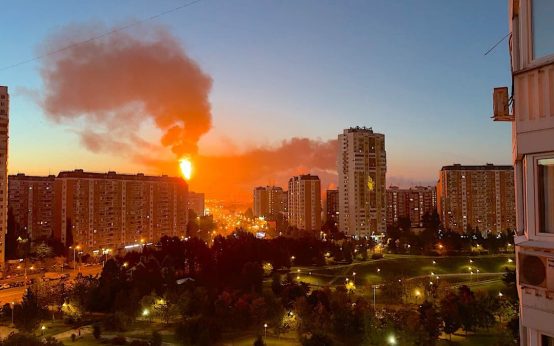 Ukraine Missile and Drone Barrage Hits Russia Amidst Elections
  U.S. Strategic Goals Remain Unmet Amid Prolonged Conflict
  New Photos Reveal Damage from Iranian Strikes in the Middle East