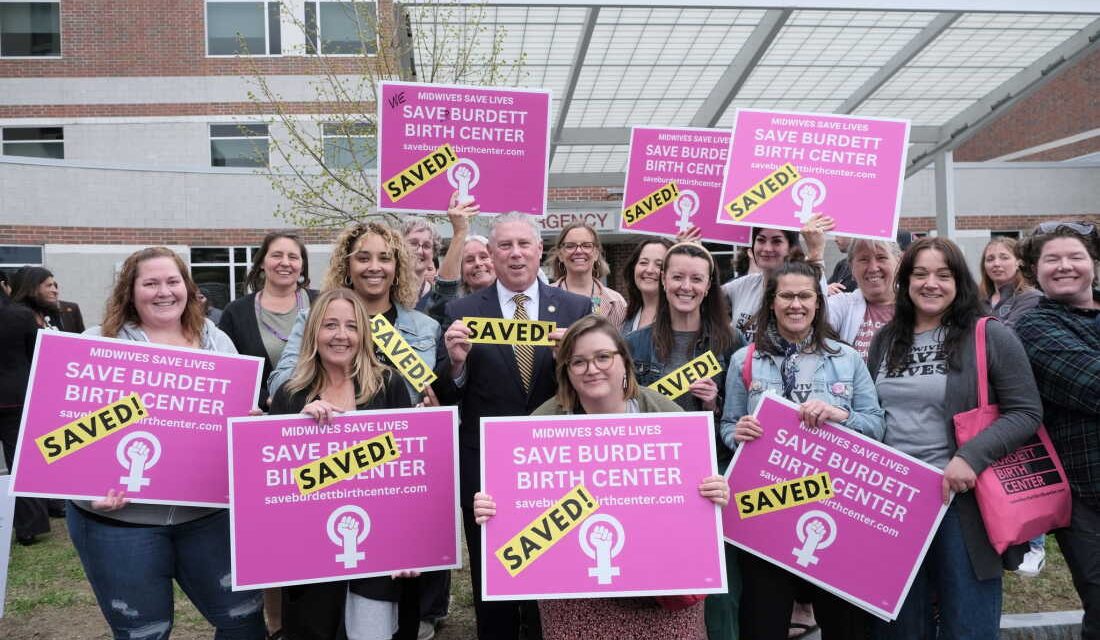
State Assembly member John T. McDonald III, a Democrat, was instrumental in securing $5 million in state funding to ensure the Burdett Birth Center in Troy, New York remained operational. The announcement to close the city’s last birthing center shocked many, including local YWCA head Starletta Washington.
It was devastating,
Washington shared, reflecting the sentiments of residents who were concerned about the prospect of traveling to distant hospitals for childbirth. In response, the community rallied together, crossing political and social lines to oppose the closure.
A Community’s Reaction to Closure Plans
Like other cities, Troy faced the challenge of hospitals closing maternity units as populations shrank and healthcare providers consolidated. This community, however, found a way forward. Residents, guided by a strong historical connection to Samaritan Hospital, where the center is located, united in protest against Trinity Health’s decision to close Burdett.
Mothers, midwives, health advocates, and public officials from both parties joined forces to resist the closure. Republican Mayor Carmella Mantello emphasized the unity effort, noting the rare alliance among different groups, including Planned Parenthood and the Catholic diocese, to protect the birthing center.
The Value of Burdett Birth Center
For generations, Samaritan Hospital’s Birthing Center provided care in Troy, a city with deep manufacturing roots. The center became a model of patient-centered care, favoring natural births over cesarean sections unless necessary. Statistics showed it achieved lower preterm and low birthweight instances compared to state averages.
Lidia Zambrano-Madera, a local resident, praised the facility, crediting it with outstanding service. Proximity was another key factor, as families valued having a birthing center only minutes from home, alleviating long-distance travel during labor.
Challenges and Corporate Dynamics
Trinity Health, based in Michigan, announced plans to close Burdett citing financial losses. The plan left community members, both liberal and conservative, frustrated. Republicans and Democrats together opposed what they viewed as a corporate focus on finances over community needs.
Jessica Hayek, a birth educator, criticized Trinity Health for not recognizing the local importance of Burdett. Families voiced concerns over potential hardships, especially those without easy access to transportation.
Achieving a Bipartisan Solution
Despite the initial insistence by Trinity Health on closing, state officials, including Attorney General Letitia James, intervened, launching an investigation and holding discussions in Troy. Assemblyman McDonald’s bipartisan effort helped obtain crucial state funding.
Ultimately, Trinity reversed the decision to close Burdett. The unified effort reflects a growing skepticism towards large healthcare systems and illustrates the power of bipartisan collaboration in protecting community services.
McDonald concluded with optimism, encouraging greater cooperation in addressing such challenges.
KFF Health News, dedicated to comprehensive health journalism, reported the story as part of its mission to provide insights into healthcare issues.
 Florida Man Claims ‘Lion Diet’ Transformed Health and Life
  Concerns Over Food Safety and Its Impact on Families
  A Mother’s Tragic Journey Under Abortion Ban
  Medical Diagnosis Errors: Understanding the Crisis
  Lymphatic Drainage and Ice Sculpting: Emerging Wellness Trends
  The Rising Trend of GLP-1 Medications Among College Students