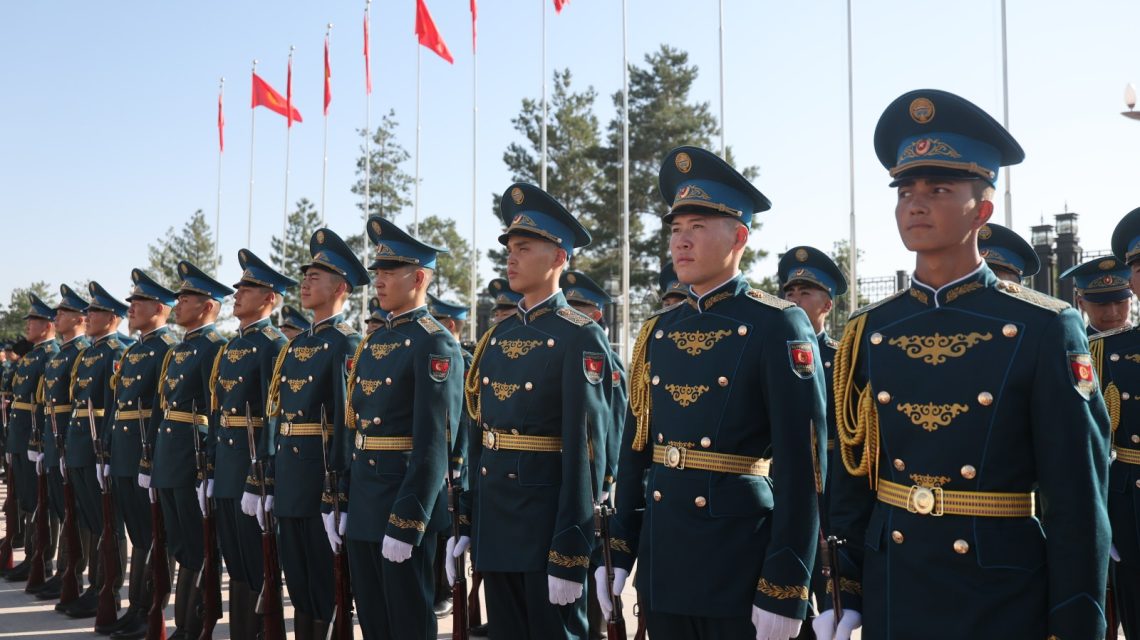
The humanitarian crisis at the Nepal-Tibet border poses significant challenges. However, it hasn’t dominated China’s agenda, as one might expect. Instead of focusing on this issue, Xi Jinping has traveled west to Kyrgyzstan for the Shanghai Cooperation Organization (SCO) summit.
The Significance of the SCO Summit
Celebrating its 25th anniversary, the SCO summit in Bishkek sees the attendance of notable leaders such as Vladimir Putin of Russia, Narendra Modi of India, and Iran’s President Masoud Pezeshkian. Xi’s presence here is not merely ceremonial. After engaging with major Western leaders and hosting President Donald Trump in China, Xi prepares for a crucial state visit to the U.S. in late September.
Xi plans to leverage platforms like the SCO and an upcoming BRICS gathering, along with a symbolic visit to North Korea in June, to project China’s global leadership.
The Role of the Shanghai Cooperation Organization
The SCO, initially called the “Shanghai Five,” addressed border tensions after the Cold War. China’s long border with Russia, where territorial disputes were officially settled in 2008, underscores the importance of this organization. Since 2001, the SCO has facilitated grand strategy discussions among member states wary of America. Xi uses it to promote initiatives like the Global Security Initiative and boost the Chinese yuan’s global use.
Countries like Kyrgyzstan, a former Soviet republic hosting the summit, strategically engage with the SCO to counterbalance Moscow’s influence by fostering Chinese interests.
For Russia’s Putin, this situation presents a complex dynamic. While he once interacted with advanced economies in the G8, the current landscape offers different alliances. India, meanwhile, navigates a delicate path between major global powers, managing its strategic autonomy amidst shifting alliances.
Shifting Global Alliances
The SCO’s ten members represent over 40% of the world’s population and a quarter of its GDP. This makes it a potential alternative to Western-centric models. China, never aspiring to join the West, seeks equal treatment in a new multipolar world order, aiming for legitimacy in global governance, notably within the United Nations.
Challenges and Opportunities
Critics question the SCO’s capability to rival the “collective West” effectively. Internal conflicts, like those involving Russia and Iran, or India and Pakistan, highlight the complexities. Yet, adversaries of America are organizing strategically, establishing trade routes that circumvent U.S. naval power.
China holds significant economic influence, being the largest trading partner for most SCO members last year. Its capacity to challenge the U.S. in economic disputes positions it as a significant player in global trade.
This year’s SCO summit aims to reinforce narratives opposing Western dominance. Xi’s forthcoming visit to the U.S. on September 24 carries the weight of leading this anti-Western sentiment. Demonstrating control, Xi aims to show Trump there’s stability at home, as observed by Alexander Stubb, Finland’s president.
Stubb mentioned in an interview that Xi has the influence to deter aggressive moves, even suggesting China’s restraint concerning Russia’s actions, apart from crossing certain lines.
As Trump faces political challenges, particularly with ongoing conflicts like the Iran situation, Xi seeks to assert power and stability. His recent actions, including purging a close ally from China’s military decision-making body, aim to present a unified front.
Overall, Xi’s message to global leaders, especially Trump, underscores confidence and control, questioning whether others maintain similar stability.
 The War on Poverty: A Lesson on Intentions and Outcomes
  Reporters Blocked from White House by Trump Administration
  Universities Should Reject Political Influence on Research Funding
  Trump’s Approach to China: Trade Dynamics and Challenges
  Media Outlets Sue After White House Ban
  American Public Opinion on Press Freedom