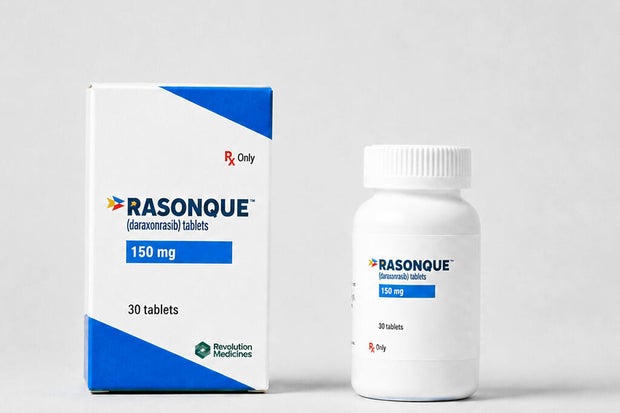
The Food and Drug Administration recently approved a new treatment for advanced pancreatic cancer. This drug, named daraxonrasib, offers hope to patients battling one of the deadliest cancers with limited treatment options. The medication, marketed by Revolution Medicines as Rasonque, inhibits a mutated protein responsible for tumor growth in over 90% of pancreatic cancer cases.
Drug Specifics and Pricing
The daily pill form of daraxonrasib aims to provide a new route for targeting pancreatic cancer. The cost is set at approximately $39,800 for a month’s supply. In a significant clinical study, patients taking daraxonrasib experienced nearly double the survival time compared to those on traditional chemotherapy. This study, funded by Revolution Medicines, included 500 patients with metastatic pancreatic cancer unresponsive to previous treatments.
Most patients get the diagnosis of pancreatic cancer quite late, at which point it’s already metastatic, it’s already spread.
Dr. Céline Gounder, CBS News medical correspondent, explains the mechanism of the drug. The focus is on blocking the protein RAS, whose mutations are present in nearly all pancreatic cancer types. Previously dubbed ‘undruggable,’ RAS mutations have been without effective drug treatments for decades.
Clinical Trial Outcomes
In the recent study, patients using daraxonrasib lived for a median of 13.2 months, significantly longer than the 6.7 months median survival for chemotherapy recipients. Reported side effects include skin rash, mouth sores, and digestive issues. Despite not being a cure, as noted by Dr. Andrew Coveler from Fred Hutch Cancer Center, the medication marks significant progress.
Pancreatic cancer has a notoriously low survival rate due to its difficulty in early detection and rapid spread. The American Cancer Society projects around 67,000 new cases this year in the United States, with more than 52,000 fatalities. Former Senator Ben Sasse, diagnosed with stage-four pancreatic cancer, participated in the drug’s clinical trials. He reported a 76% reduction in tumor size and significant pain relief, dubbing the drug a “miracle.”
FDA and Future Implications
The FDA fast-tracked the approval process, acting more than six months before their intended deadline. Kyle Diamantas, the FDA’s acting commissioner, highlighted the agency’s dedication to delivering meaningful treatments efficiently.
Unlike other cancers that have seen breakthroughs with non-chemotherapy treatments, pancreatic cancer posed unique challenges. The drug targets KRAS mutations within the RAS gene family, essential in cell growth regulation. Revolution Medicines’ innovation involves using molecular glue to attach to these KRAS subtypes. The company is exploring similar technology for other cancers, including lung cancer.
Experts like Dr. Pashtoon Kasi from City of Hope Orange County anticipate the approval will lead to more trials in targeting different tumor types, signaling a new chapter in cancer treatment research.
 Understanding Addiction Risks After Presley Gerber’s Death
  Managing Distress: Insights and Techniques
  Best Practices for Safe Consumption of Fresh Produce
  The Complexity and Prevention of Suicide
  A Journey Through Cancer: Reflections on Diagnosis and Metaphor
  Impact of Sleep Types on Disease Risk