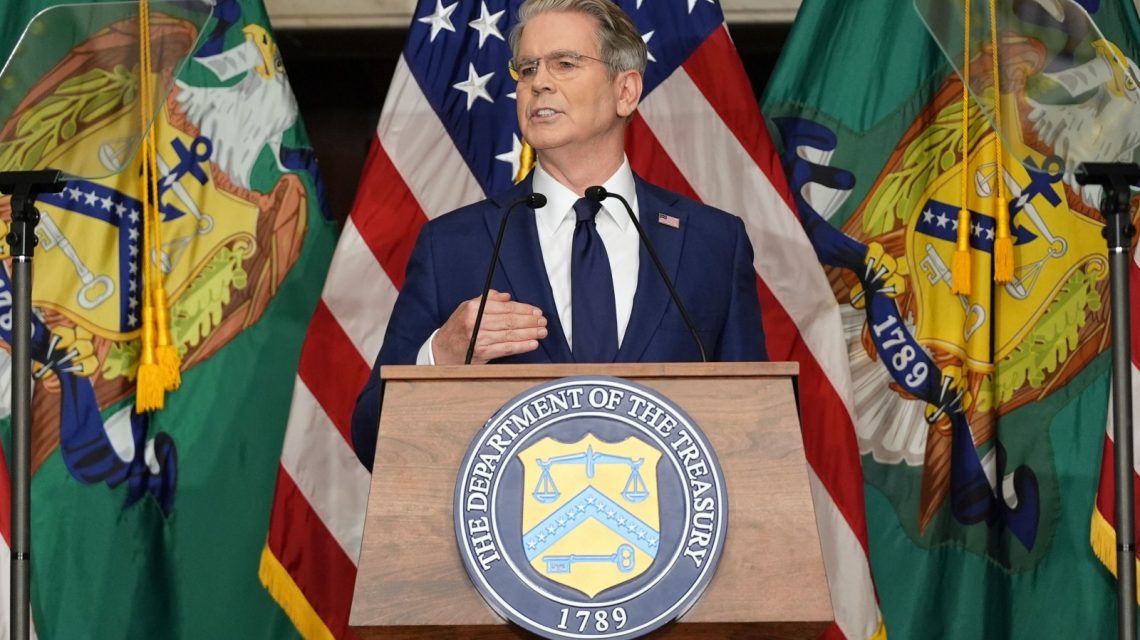
The Trump administration unveiled a new economic plan against Iran on Monday, focusing on sanctions and diplomatic pressure to cut the nation’s financial ties. This initiative, termed “Operation Economic Outcast,” aims to target any entities still trading with Tehran while broadening sanctions across important areas of Iran’s economy. “Economic engagement of any kind with this murderous regime will expose those responsible to the full reach of American power,” stated Treasury Secretary Scott Bessent during the announcement.
Major Escalation in Pressure Campaign
The announcement marks a significant increase in President Donald Trump’s campaign against Iran as the administration aims to further isolate the economically struggling nation. Inflation, a declining currency, and increasing trade restrictions have already burdened Iran. Bessent emphasized that their goal is to “sever every economic lifeline” that supports the Iranian government and its Islamic Revolutionary Guard Corps.
Some experts view this move as a change in enforcement strategy rather than a new sanctions approach. Pierre Pahlavi, a professor at the Canadian Forces College, remarked, “The label is new; the toolbox is not entirely new.” He explained the focus now extends to third-country actors who aid Iran in oil trading, financial dealings, and sanctions evasion.
Iran quickly condemned the U.S. actions. Foreign Ministry spokesperson Esmail Baghaei warned of a strong response to further sanctions, while Iran’s top security official labeled support for these measures as an “act of war.” The recent decision by the United Arab Emirates to halt all trade with Iran further adds to Iran’s challenges, while the country still maintains influence over the strategically vital Strait of Hormuz.
Expanding Sanctions Across Key Sectors
The expanded sanctions now cover five critical sectors for Iran’s economic survival: digital assets, technology, gold, aviation, and shipping. These measures aim to make it easier to target foreign entities supporting these sectors. Iran has resorted to cryptocurrency, gold markets, and international shipping to bypass existing limitations.
On the economic front, Iran’s currency has reached a new low against the U.S. dollar. The open market rate hit approximately 2.02 million rials per dollar, significantly higher than the central bank’s official exchange rate. The continual loss of value reflects years of economic instability, further exacerbated by recent conflicts.
The economic strain on ordinary Iranians has been significant, with substantial rises in staple goods prices. The International Monetary Fund (IMF) anticipates a more than 5% contraction in Iran’s economy this year.
Entities, Individuals and Maritime Targets Sanctioned
The Office of Foreign Assets Control announced sanctions on nearly 60 entities, individuals, and vessels linked to Iranian oil networks, cyber activities, missile development, and procurement strategies. The sanctions impact entities in jurisdictions like Hong Kong, the UAE, Singapore, and China. The aim is to disrupt Iran’s revenue generation, technology acquisition, and sanction circumvention efforts.
A significant part of the sanctions targets Iran’s oil trade and maritime network. Shipping companies, brokers, and vessels involved in so-called “shadow fleet” operations moving Iranian crude are affected. The guidance warns businesses of the risks linked to shipping activities in the Strait of Hormuz.
Cyber and Weapons Network Sanctions
Sanctions also cover cyber actors compromising U.S. infrastructure, targeting institutions such as defense contractors and healthcare systems. Several individuals connected to Iran’s Ministry of Intelligence and Security face sanctions for cyber operations against U.S. interests.
Additionally, a network spanning East Asia and the Middle East is implicated in helping Iran’s missile and nuclear endeavors through front companies and covert finances.
Global Impact and China’s Role
The initiative’s focus on third countries represents its widest reach. U.S. officials plan to engage globally to set timelines for halting Iran-linked activities. Non-compliance may lead to secondary sanctions and exclusion from the U.S. financial system.
This holds particular weight for China, Iran’s largest oil buyer. In 2025, China absorbed over 80% of Iran’s oil exports, approximately 1.38 million barrels daily. However, purchases declined drastically with the onset of U.S.-Israeli conflicts in February. Imports fell to around 785,000 barrels per day in June, the lowest in over three years, then slightly improved and dropped again by August.
Pierre Pahlavi pointed out China’s significant role in achieving the campaign’s objectives, noting that reducing Iran’s oil revenue relies on whether foreign companies prioritize U.S. financial system access over Iranian crude. Bessent’s announcement reinforced that no one is exempt from U.S. sanctions, calling attention to foreign actors monetizing Iranian oil.
These measures by the Trump administration present a strong move to isolate Tehran economically, setting the stage for potential confrontation as Iran vows to respond to increased pressure.
 The War on Poverty: A Lesson on Intentions and Outcomes
  Reporters Blocked from White House by Trump Administration
  Universities Should Reject Political Influence on Research Funding
  Trump’s Approach to China: Trade Dynamics and Challenges
  Media Outlets Sue After White House Ban
  American Public Opinion on Press Freedom