Kim Stanley Robinson’s novel, “The Ministry for the Future,” begins with a catastrophic heat wave in India, where the collapse of the electrical grid leads to the deaths of 20 million people. This fictional scenario prompts global unity against climate change. Scientists have been cautioning that extreme weather events like heat waves, storms, floods, and droughts will become more frequent. What once might have seemed fictional is now a genuine concern.
Experts investigate large-scale geoengineering to mitigate glacier melting.
Warning of potential “extremes of extremes” can be challenging, as exact timing of such disasters remains unpredictable. However, factors conducive to major disturbances are accumulating, increasing concern. Daniel Swain, from the California Institute for Water Resources, highlights the risk of being perceived as exaggerating, yet emphasizes the need for awareness of real threats.
The potential dangers have been recognized for over 150 years. In the 1850s, Eunice Newton Foote, an amateur scientist, conducted experiments showing that carbon dioxide, which intensifies when fossil fuels are burned, increases heat retention. Today, massive greenhouse gas emissions have substantially raised global temperatures, resulting in frequent and intense extreme weather.
Despite being the leading emitter of greenhouse gases, the United States lacks recognition and substantial efforts to address climate change. Statements from prominent figures, like former President Donald Trump, dismiss the issue, further complicating governmental action.
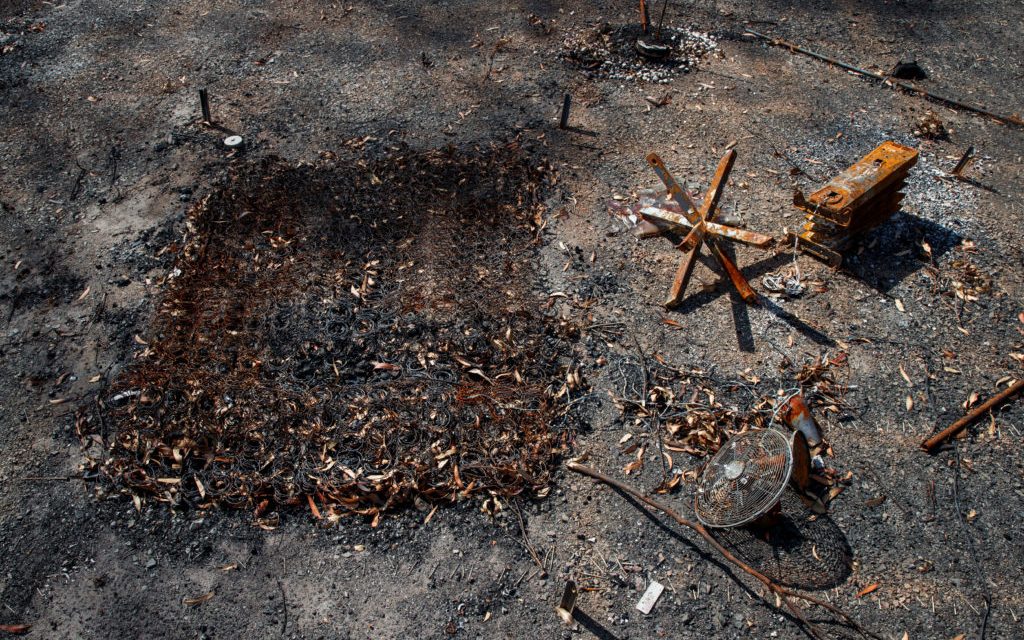
Globally, extreme weather events are increasingly significant. The Australian “Black Summer” wildfires in 2019 and 2020 burnt over 19 million hectares. In 2022, Pakistani floods submerged a third of the nation. Hurricanes Milton and Helene devastated the southern United States in 2024, among other disasters.
Sarah Perkins-Kirkpatrick from Australian National University realized that persistent extreme weather events might continue even if net-zero targets are achieved. This presents challenges, as accumulated carbon dioxide impacts could persist for centuries, with emissions continuing to increase.
The analogy of a frog adjusting to boiling water reflects gradual acclimatization to climate threats.
No country is adequately prepared for major climate disasters. Robinson’s narrative would likely include growing wildfire intensity if revisited today. His concerns remain relevant, as disaster likelihood has surged.
A psychological challenge involves our tendency to avoid processing worst-case scenarios. Consequently, radical greenhouse gas reduction or infrastructure transformation to handle persistent extreme weather is largely ignored. The scientific community struggles with discussing extreme events accurately, given complexities in prediction.
The Trump administration halts funding for Arctic climate research.
Sonia Seneviratne from the Intergovernmental Panel on Climate Change compares climate risk to smoking-related health concerns, urging clear communication of increased event probabilities.
Preparation akin to earthquake-prone regions like California could illustrate necessary precautions against climate extremes. Lucy Jones advocates for action based on acknowledging real risks and viable solutions.
Cinematic portrayals of extreme weather events often culminate in improbable outcomes, either ensuring safety or depicting utter doom. Discrepancies highlight the unrealistic nature of cinematic resolutions.
Scientific understanding emphasizes the inevitability of worsening extreme weather scenarios. Human activities have unlocked massive emissions over the past 50 years, reshaping ecosystems and weather patterns. Precisely anticipating when or where major disturbances will occur remains challenging.
Coral degradation, exemplified by widespread bleaching due to heat stress, highlights accelerating tipping points. The Amazon rainforest’s potential transition to emitting rather than storing carbon dioxide exemplifies another critical system endangered by combined environmental stresses.
El Niño’s upcoming severe cycle could further escalate record temperatures and subsequent damage.
Professor Tim Lenton stresses the importance of discussing potential major shocks looming on Earth’s trajectory. Addressing climate issues should prioritize proactive solution development.
AP climate and environmental reporting is funded by various foundations, with AP retaining content control. Integrity in journalism underpins democratic health. Support for trustworthy reporting and constructive discourse is vital.
 Data Centers in Virginia face Growing Opposition
  EPA Dismantles Greenhouse Gas Rules, Causing Concern
  How Battery Innovations Transform Renewable Energy
  Data Centers Stir Controversy in Texas Amid Growth Boom
  Urgent Archaeological Efforts in Quinhagak Stay Ahead of Erosion
  Concerns Rise Over NIPSCO Permit In Jasper County