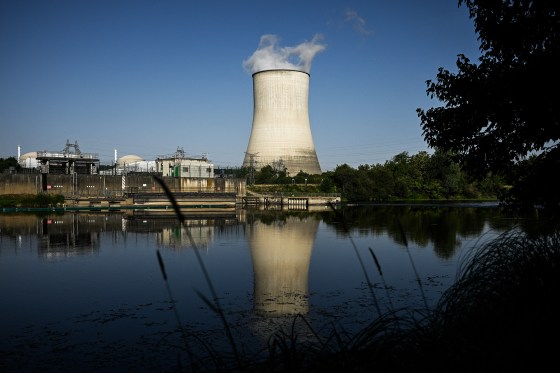
The United States is a leader in nuclear energy production, contributing approximately 30% of the world’s electricity generation derived from this source. In contrast, the Civaux Nuclear Power Plant found in southwestern France, produces about 70% of its electricity from nuclear power, making it the highest globally in terms of percentage dependency on nuclear energy.
Philippe Lopez / AFP via Getty Images
By Roxy Ekberg
This content was initially published on CFR.org and subsequently updated by NBC News.
Recent conflicts in Ukraine and the Middle East have intensified the focus on energy security concerns, prompting a global resurgence in nuclear energy. Across Asia, Europe, and other regions, governments are increasingly considering nuclear energy to be a reliable source of electricity, especially when facing geopolitical challenges, growing demand for electricity, and a fast-moving climate change agenda.
The United States exemplifies this trend, as evidenced by its recent signing of a thirty-year civil nuclear cooperation agreement with Saudi Arabia, which awaits implementation. This renewed interest marks a significant turnaround after setbacks experienced due to notorious accidents like the 1979 Three Mile Island and the 1986 Chernobyl disasters, which had previously dampened public confidence in nuclear technology.
 How Battery Innovations Transform Renewable Energy
  Data Centers Stir Controversy in Texas Amid Growth Boom
  Urgent Archaeological Efforts in Quinhagak Stay Ahead of Erosion
  Concerns Rise Over NIPSCO Permit In Jasper County
  Reader Reactions on Grizzlies and Data Centers
  Managing the Crisis of Drying Rivers