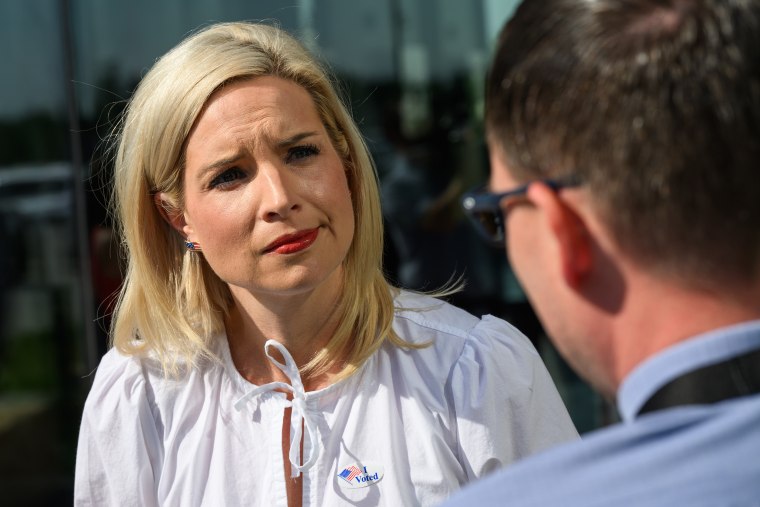
New focus group discussions in Iowa and Georgia reveal economic worries among undecided voters. As Election Day approaches, the two states play a key role in the Senate races. Economic pressures dominate voter concerns.
Nothing has gotten better as far as the cost of living, inflation — food is astronomical, gas,
stated Patty O., a 59-year-old Republican from Georgia who supported Donald Trump in 2024. High living costs worry her, as do many voters in the focus groups conducted by Syracuse University alongside research firms Engagious and Sago. NBC News observed these groups of six independents, five Republicans, and one Democrat.
Of the participants, nine voted for Trump two years prior when he claimed victory in both states. Three supported then-Vice President Kamala Harris. All but three voters feel more anxious about the economy now compared to when Trump took office. Half believe Trump does not focus enough on the economy.
Economic Concerns Dominate Midterm Decisions
Voter feedback highlights that the economy will heavily influence their decisions during the midterms. Nearly all voters indicated that economic factors will impact their choices in the Senate races. Rich Thau from Engagious, who moderated the sessions, noted that economic anxiety leads these discussions. Issues like Iran, immigration, or the Israel-Gaza conflict took a backseat to economic concerns.
Overall, eight of the 12 undecided voters disapprove of how Trump managed the economy during his second term. This sentiment is shared even among former Trump supporters. Jamie G., a 55-year-old independent from Iowa, expressed disillusionment with Trump’s unmet promises to end conflicts and blamed tariffs for rising costs.
Diverse Feedback on Trump’s Presidency
Voters who generally approve of Trump’s presidency cited immigration policies or his unique style compared to traditional politicians. Tyler R., a 24-year-old Republican from Iowa, supported Trump’s immigration policies and attempts to engage with Russia. However, concerns about tariffs and foreign conflicts persist among voters.
Drew G., a 59-year-old Republican from Georgia, appreciated stock market gains but criticized Trump’s persona. Jennifer B., a 43-year-old independent from Iowa, echoed this view. Despite investments doing well, she cannot access funds for daily expenses. She expressed frustration over Trump’s unmet economic promises.
Broad Economic Anxiety
Focus group participants expressed worries about various costs, from healthcare to utilities. Many are cutting expenses or selling personal items to make ends meet. For instance, Sarah M., a 47-year-old from Iowa who backed Harris, lamented her rising tax burden and increased grocery and fuel costs. Patty O. reduced expenses by giving up favorite activities like gym memberships.
The Iran conflict garnered less attention among voters, though some noted its economic impact. Drew G. from Georgia commented that issues at the Strait of Hormuz disrupt supply chains and contribute to rising prices.
Midterm Election Preferences
Despite disapproval of Trump, several voters remain hesitant to let this sentiment sway their midterm voting. Margaret Talev from Syracuse University highlighted that while disappointment with Trump is evident, many voters do not view midterms as checks on presidential power.
In Iowa, Tyler R. expressed concerns about political polarization and openness to Democratic candidates, yet unfamiliarity with local contenders like Josh Turek kept many from committing. In contrast, State Auditor Rob Sand gained bipartisan appeal for his moderate stance, challenging the Republican nominee Zach Lahn, who critics accuse of spending too much time outside Iowa.
Georgia voters in the focus group are still learning about Senate candidates Jon Ossoff and Mike Collins. Other factors, such as data center policies and their economic impact, also influence decisions. Ron S., a Georgia independent, supports candidates opposing data center expansion due to energy concerns, while Patty O. views potential job creation favorably.
In conclusion, economic issues remain the predominant focus for undecided voters like Alice N., a 47-year-old Georgia Republican. She prioritizes candidates who aim to lower living costs, especially gas and grocery prices.
 An Angel Father’s New Role in ICE: A Personal Mission
  Atlanta Mayor Faces Criticism For Response to Constituent’s Concerns
  Melania Trump Launches $2 Million Scholarship for Foster Care Youth
  Concerns Over Harvard Education and Christian Values
  U.S. Courthouses Management Debate
  Record High LGBTQ+ Identification in the U.S. Amid Changing Public Sentiment