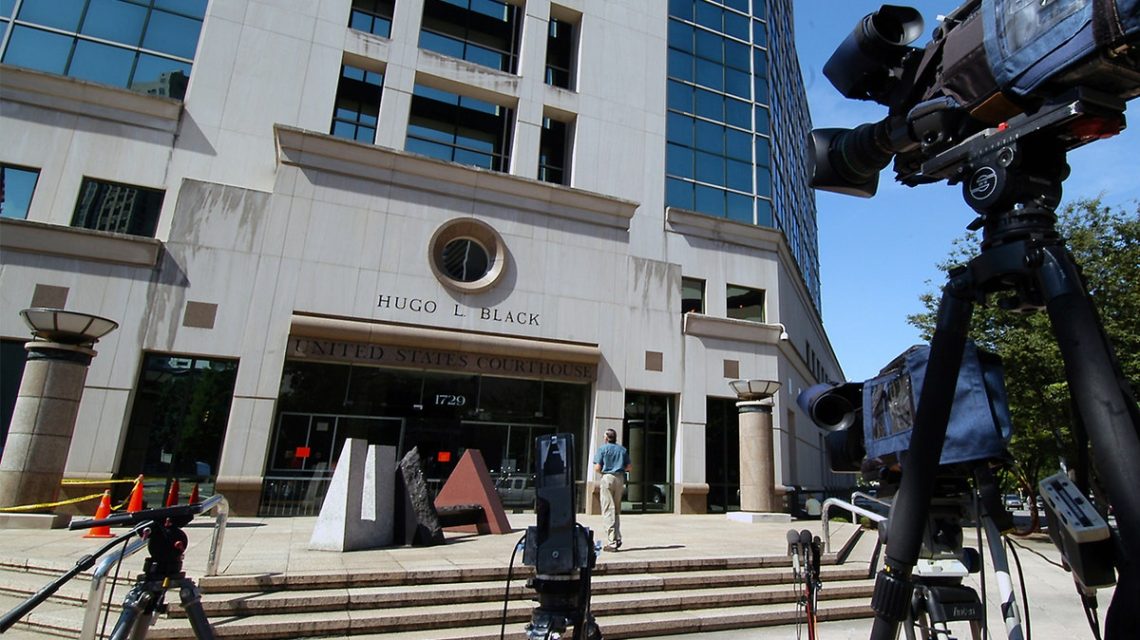
The U.S. General Services Administration (GSA) is resisting a proposed bill that would grant the judiciary increased control over courthouse properties. Historically, the judiciary has been criticized for mismanaging its buildings, leading to substantial costs for taxpayers.
Judicial Space and Facilities Management Effectiveness Act
Introduced on July 30, the bill aims to transfer real property authority over buildings in up to ten federal judicial districts from the GSA to the judiciary. This includes responsibilities for repairs and maintenance of these facilities.
The bill, sponsored by U.S. senators Dick Durbin, Kevin Cramer, and John Boozman, suggests that U.S. courts could maintain their facilities more effectively. However, the GSA refers to a 1988 pilot program where two out of three courthouses under judiciary oversight withdrew from participation due to excessive repair costs.
VIDEO EXPOSES DISREPAIR LURKING BENEATH TRUMP KENNEDY CENTER AS $257M RENOVATION LOOMS
Only the Hugo Black Federal Courthouse in Birmingham, Alabama remained under judiciary management. This courthouse experienced significant deterioration, leading to $57.7 million in maintenance debt.
Safety Concerns and Maintenance Struggles
An analysis of the Hugo Black building revealed serious safety hazards, such as improper chemical storage and faulty fire protection systems. A 2024 evaluation indicated the necessity for nearly $19 million in urgent repairs, with 83% of these repairs deemed top-priority.
The judiciary has consistently sought GSA technical help for complex repairs. Even with autonomy, they relied on GSA service contract templates for contracting needs.
During a 2013 budget hearing, Judge Julia S. Gibbons described the repair responsibilities as a major liability, detracting from the judiciary’s core mission.
GSA’s Stance and New Construction
The GSA noted success with a new U.S. courthouse project in Huntsville, Alabama. Completed $7 million under budget, it includes advanced security and energy-efficient features.
Edward Forst, GSA Administrator, criticized outdated congressional funding rules as a core issue. He has spearheaded initiatives to enhance federal building management and funding. According to him, necessary changes lie in increasing access to the Federal Buildings Fund rather than Judiciary management.
Multiple Government Accountability Office (GAO) studies show breaking our model apart would not make courthouse projects faster, cheaper or better-built. It would make them more fragmented, more expensive, less accountable and less safe,
The GAO supports the GSA’s position, cautioning that transferring property authority can fragment efforts without providing additional funding.
Judiciary’s Defense
An Administrative Office spokesperson defended the judiciary’s capability regarding facility upkeep. They claim that justice administration inherently demands a safe and functional environment and that the judiciary has managed complex operations successfully in the past.
The spokesperson emphasized the judiciary’s potential to manage property effectively through the proposed pilot program.
 Serbia’s Political Shift as Opposition Triumphs
  Fiery Exchanges and Personal Attacks in November’s Midterms
  Justice Department Challenges Alaska Senate Ballot Certification
  Mary Peltola Reschedules Events After Car Accident
  Trump Criticizes Macron’s Immigration Policies Amid European Unrest
  Controversial Figure Itamar Ben-Gvir’s Impact on Israel’s Political Landscape