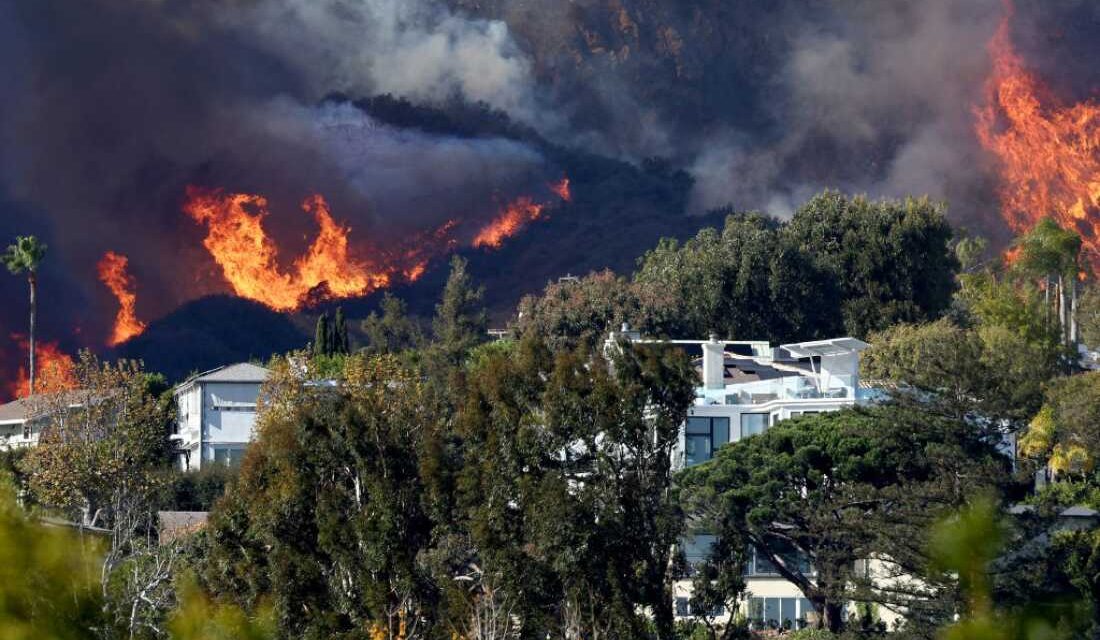
Wildfire experts have identified homes surrounded by dense vegetation as being at a higher risk of burning. This was clearly seen in events like the Palisades Fire in 2025. In response to this risk, California has implemented new regulations. These require homeowners to manage plants within five feet of any structure.
As wildfires continue to devastate the Western United States, California has enacted strict rules to protect its communities. Homeowners in areas prone to wildfires must limit vegetation within five feet of their homes. Experts suggest that this measure can help prevent homes from catching fire. Dry, dense vegetation can facilitate the spread of wildfires. Under extreme conditions, high winds carry burning embers far beyond the source of the fire. These embers can ignite surrounding vegetation, leading to flames reaching nearby structures.
On Wednesday, the California Board of Forestry and Fire Protection voted on these regulations after prolonged debate. Initially, the state considered banning all vegetation within five feet of a house, except for well-maintained trees. This proposal faced opposition over concerns about losing garden greenery and the costs associated with maintaining yards. A compromise was reached, allowing certain plants in the five-foot zone, termed Zone Zero. Lawns, flowers, and non-woody plants up to 18 inches tall are permitted unless they’re under the roofline. Trees are allowed if their branches are trimmed five feet away from the house.
The rules will immediately apply to new buildings, but existing constructions will see a phased implementation, affecting nearly two million homes in risk areas. Rising temperatures due to climate change are partly driving more severe wildfires. Over the past decade, wildfires have destroyed more than 57,000 homes and buildings in California. “California faces an existential crisis affecting our health and finances,” testified Yana Valachovic of the University of California Cooperative Extension. She also advised the state on these regulations.
Increasing Challenges in Western States
California’s discussions highlight growing challenges across the Western U.S. regarding community preparedness for wildfires. Experts warn that fires starting in open areas can rapidly become urban fires. This was seen in the 2025 Los Angeles fires. In Spokane, Washington, three wildfires destroyed over 800 homes this summer.
“You are about to approve a set of regulations that will cost millions of California homeowners tens of billions of dollars,” stated Dave Lefkowitz, president of the Mandeville Canyon Association.
Vegetation management rules faced defeat in Oregon and Washington after public resistance. Some communities urged regulators to wait for more scientific insights into wildfire spread.
Research Supports Vegetation Management
Experiments demonstrate that even green plants can ignite under extreme wildfire conditions. Analyses of past California wildfires revealed a higher risk for homes with vegetation within six feet of their exterior walls. Vegetation management improves defensible space for firefighters, facilitating structure defense.
California has led in wildfire policy, influencing other states. For two decades, its building codes have mandated fire-resistant materials. Some states have adopted similar protocols. While no assurances exist regarding a house’s survival in a fire, combined protections of building materials and vegetation management offer the best defense.
Voluntary measures haven’t achieved adequate protection. Full compliance by all homeowners ensures community safety. A single house with dense vegetation poses a risk to its surroundings. Insurance companies are obliged to discount homeowners who enhance fire resistance.
Inspection and Implementation
California’s new regulations grant homeowners flexibility, but some experts feel they’re insufficient. Combustible materials next to a house remain a risk. Local fire departments and state agencies conducting annual inspections will enforce these rules. These inspectors play a key role in educating homeowners and ensuring adherence.
“A clean Zone Zero is a five-minute inspection with one question: Is anything combustible within five feet? Easy for the homeowner to understand and take action on,” remarked Todd Lando of the Central Marin Fire Department.
Inspections will initially focus on educating homeowners, with mandatory compliance steps starting later. For existing homes, these vegetation rules will be enforceable by 2029 at the earliest.
 Black Bear Incident Highlights Colorado’s Rising Bear Encounters
  U.S. Border Agents Uncover Reptile Smuggling Attempt
  Alaska and Arctic Environmental Changes Amidst NOAA’s Transition
  Legal Environmental Group Challenges U.S. Government on Deep-Sea Mining Plans
  Trump Suspends Canadian Tariffs, Suggests Keystone XL Pipeline Revival
  Trump Administration Proposes Changes to Roadless Rule on Public Forest Lands