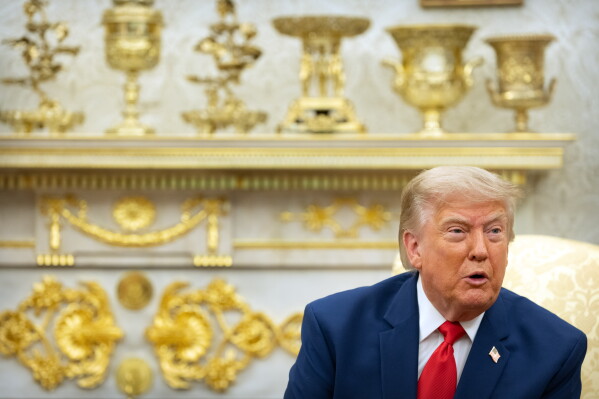
President Donald Trump’s decision to scale back joint military exercises with South Korea has raised concerns regarding the security interests of the United States in Asia. Trump claimed the South Korean stance on his conflict with Iran and his relationship with North Korea’s leader influenced his decision. This approach, based on personal relationships and transactions, characterizes the Republican’s foreign policy.
Dan Fried, a former assistant secretary of state, criticized this move, asserting there are no discernible American interests in such a decision. He highlighted that it undermines alliances with South Korea and Japan, causes unease in Taiwan, and worries NATO allies, while emboldening China and North Korea.
Similarly, Danny Russel, a former assistant secretary of state, stated Trump is punishing an ally and encouraging an adversary. He noted the decision protects Kim Jong Un’s feelings at the cost of U.S.-South Korean security. Trump’s order to downsize the 11-day Ulchi Freedom Shield exercises caught many in South Korea off guard, given the nation’s long-standing alliance with the U.S. and its focus on national security due to threats from North Korea.
Rep. Greg Meeks of New York, a prominent Democrat, criticized Trump’s approach, stating that treating allies as adversaries undermines alliances, benefitting China and North Korea. On the other hand, Trump defended his decision by reinforcing his relationship with North Korea’s leader through social media.
Retired U.S. Ambassador Robert Wood emphasized the importance of these exercises in deterring North Korea, which refuses to discuss its nuclear program and has increased weapons testing. Wood cautioned against South Korea concluding that nuclear capability is its only security guarantee. Polls indicate increasing support among South Koreans for their own nuclear weapons, according to Matthew Kroenig of the Atlantic Council, who warned that scaling back exercises might undermine this protective message.
Despite this, the South Korean government had attempted to favorably influence Trump through diplomatic means, including a meeting where President Lee Jae Myung praised Trump’s office decor and his assertions regarding North Korea. Charles Kupchan of the Council on Foreign Relations remarked that Trump’s actions might force South Korea and other allies to reconsider their security dependence on the U.S.
Kupchan noted Trump’s correct inclination for allies to increase their defense contributions; however, Trump’s unpredictable approach has strained these alliances. Fried mentioned Trump’s resistance to claim victories, even after defense spending increases by NATO and Asian allies.
John Herbst, former ambassador to Ukraine, indicated the inconsistency in policy statements from the Trump administration, although traditionally, U.S. alliances have remained intact. Kupchan added that Trump’s language might suggest the end of alliances, but the U.S. still maintains its forward bases and essential alliances.
Whether Trump’s actions towards South Korea will result in a lasting policy change or merely reflect a transient sentiment is uncertain. As Matthew Kroenig suggested, if the exercises proceed as initially planned, the issue might not resurface.
This report includes contributions from AP reporters Collin Binkley, Jesse Bedayn, Lisa Mascaro, and Seung Min Kim in Washington, and Farnoush Amiri in New York.
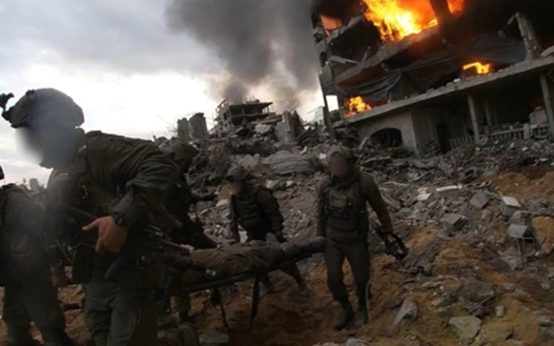 Advancements in Israeli Military Medicine Aid U.S. Efforts
  EPA Contract Cancellation Sparks Legal Battle
 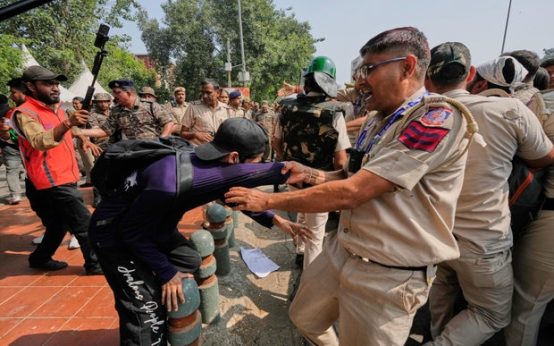 Mass Arrests in New Delhi During Protest Against Voter List Revision
  Press Secretary Criticizes El-Sayed Amid Michigan Senate Race Polls
 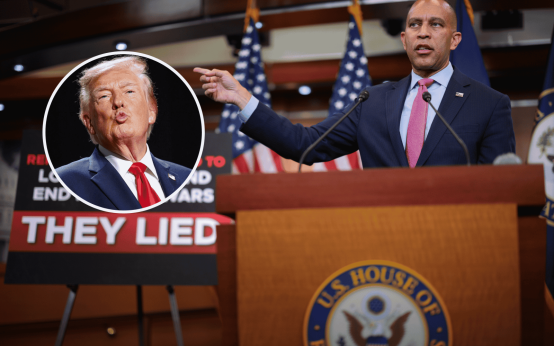 Democrats Weigh Impeachment Strategy Ahead of Midterms
  DSA Influence on State Legislative Elections and Its Impact on the Democratic Party