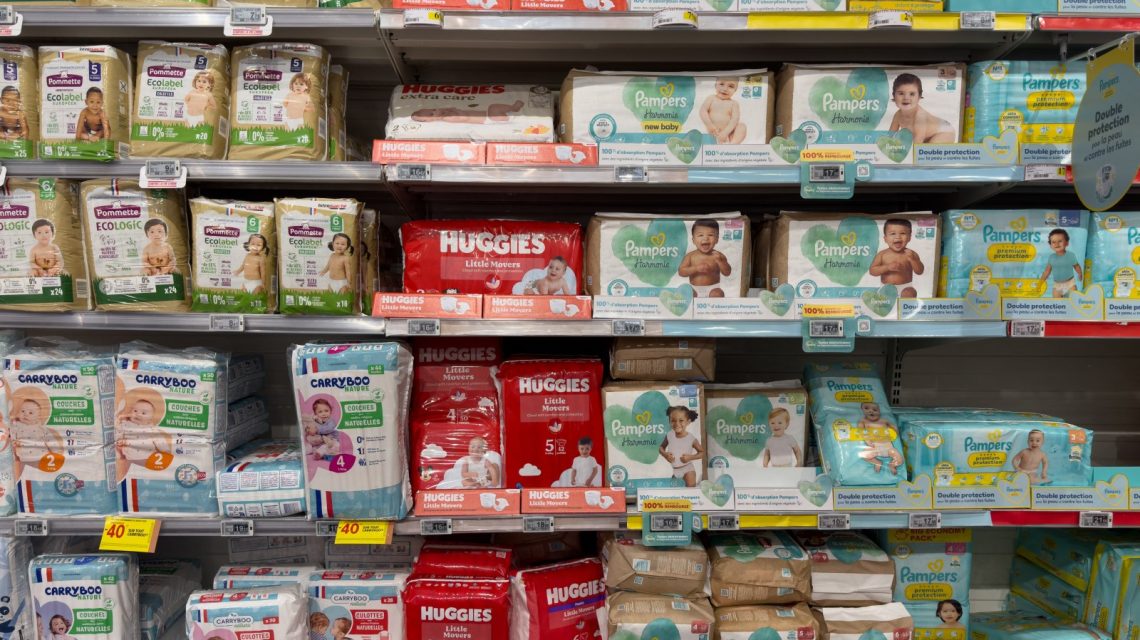
California has introduced a new bill aimed at requiring diaper manufacturers to disclose toxic chemicals in their products. Currently, many companies do not report chemicals beyond those considered significant health risks due to business confidentiality rules. However, Assembly Bill 1901 seeks to change this. By January 1, 2028, diaper manufacturers, sellers, and distributors in California must publicly disclose all intentionally added ingredients and their specific purposes. A year later, this information must be printed on all product packaging.
Assemblymember Marc Berman, who authored the bill, emphasized the importance of informed decisions by parents regarding their children’s health. The bill passed the California Assembly with a 68-1 vote and is expected to advance to the state Senate soon, facing minimal opposition in committee votes.
Background and Motivation
A study in Environmental Science & Technology reports the average U.S. child uses approximately 7,000 disposable diapers before toilet training. With significant use among children, seniors, and about 20 million women, concerns over chemical exposure in diapers have intensified. Past reports indicate diapers might contain harmful substances like phthalates and PFAS, known as ‘forever chemicals.’
Unlike California, New York’s S2279C mandates disclosure of ingredients in all diaper types, including reusable ones, with civil penalties for non-compliance. California’s AB 1901, however, requires full disclosure of ingredients’ CAS numbers and functions on a public webpage, alongside packaging identification.
Consumer Reports highlights risks associated with umbrella terms such as ‘fragrance’ or ‘parfum’ in product labeling, which can hide potentially harmful ingredients. These terms can obscure substances linked to allergies, reproductive, and developmental toxicity.
The Environmental Working Group notes that these terms allow manufacturers to conceal numerous chemicals, thus preventing parents from making informed decisions. Both organizations co-sponsor the bill, along with other supporters such as the Consumer Federation of California and actress Hilary Swank.
Support and Opposition
Berman asserts that transparency in diaper ingredients is essential for parents wanting the best for their children. Yet, various groups oppose the bill, including the California Chamber of Commerce, California Manufacturers & Technology Association, and the Center for Baby and Adult Hygiene Products (BAHP), which represents diaper manufacturers.
BAHP and its spokesperson have defended current practices, citing that diaper manufacturers adhere to strict safety standards exceeding regulatory requirements.
Next Steps for the Bill
After its introduction in March, AB 1901 has passed through the California Assembly and the Senate Environmental Quality Committee with bipartisan support. It also passed the Senate Appropriations Committee unanimously, paving the way for a full Senate vote.
The Senate Appropriations Committee’s analysis estimates implementation costs of at least $535,000 in the 2027-2028 fiscal year, increasing to $750,000 the following year, then decreasing to $685,000 annually thereafter.
 Concerns and Legal Actions Arise Over GLP-1 Drugs and Vision Loss
  Partner’s GLP-1 Use Spurs Financial and Dietary Concerns
  Starbucks Faces Lawsuit Over ‘Sugar-Free’ Protein Drinks
  Rising Antibiotic Resistance in Shigella Infections
  Parent’s Journey Through Their Child’s Congenital Cataract Diagnosis
  Vicky Titcomb’s Cancer Journey and Treatment Advances