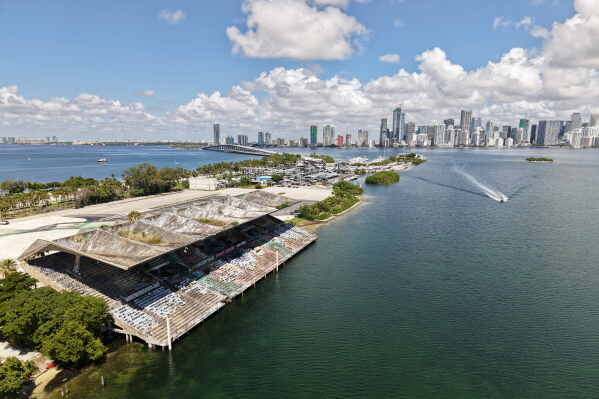
The Miami Marine Stadium, celebrated for its midcentury Brutalist architecture, opened in 1963 as a unique race venue for powerboats, symbolizing South Florida. Designed by Cuban refugee Hilario Candela, this landmark also served as a backdrop for Elvis Presley’s 1967 film “Clambake.” Notable performers like Gloria Estefan and Jimmy Buffett graced its floating stage.
In 1992, Hurricane Andrew caused significant damage, leading to the stadium’s closure. Despite its listing on the U.S. National Register of Historic Places, the venue is now fenced off and covered in graffiti. On Tuesday, voters will decide if a private partnership will help restore the stadium located on Virginia Key, opposite downtown Miami. This initiative aims to bring back its original glory.
“It encapsulated a time period in Miami that’s incredibly unique with an incredible story that touches all Miamians.” – Miami Commissioner Damian Pardo
During its heyday, President Richard Nixon and Sammy Davis Jr. made appearances at the stadium, and the venue hosted events like Easter sunrise services and celebrations for Our Lady of Charity. Jimmy Buffett, in a letter before his passing in 2023, urged Miami officials to save this cultural site. His 1985 concert here remains memorable, ending with him jumping into the water to join cheering fans. Today, Buffett’s daughter, Savannah, collaborates with Restore Miami Marine Stadium to protect this legacy.
Donald Worth, co-founder of the restoration group, describes the site’s architecture as its standout feature, enriched by the history and memories of Miami residents. In 2008, Worth initiated efforts to save the stadium after city officials considered demolishing it. Restoration plans seek to both preserve its historic value and modernize its amenities.
Emi Guerra, of Breakwater Hospitality Group, believes that the stadium’s view of Biscayne Bay positions it to rival venues like Denver’s Red Rocks Amphitheatre. Miami Commissioner Pardo highlights the management plan, which ensures city ownership of the stadium while leveraging private expertise for operation.
Ernesto Cuesta, from the Brickell Homeowners Association, expresses support for preserving the landmark but raises concerns about potential noise and traffic impacting nearby residents and wildlife. The stadium’s specific role and design remain a point of discussion among stakeholders.
Richard Heisenbottle, the project architect, points out the stadium’s structural resilience. The city’s approved restoration plans include modern amenities and accessibility updates, while emphasizing the stadium’s historical design elements. The financing model involves revenue-sharing from events to fund repairs without taxpayer expense.
Voters now hold a key role in determining whether this historic venue can be renewed to continue serving as a cultural hub.
 Tragic Loss of a Young Life in Chicago: 7-Year-Old Victim of Fatal Stabbing
  Exploring Orange County’s Anti-Mexican Political History
  Search Underway for Missing Aircraft Near Nantucket
  Tennessee Prison Chief Resigns After Failed Execution
  Revelations in Thomas Crooks’ Assassination Attempt on Donald Trump
  Challenges in Prosecuting Assault Cases Involving Alcohol or Drugs