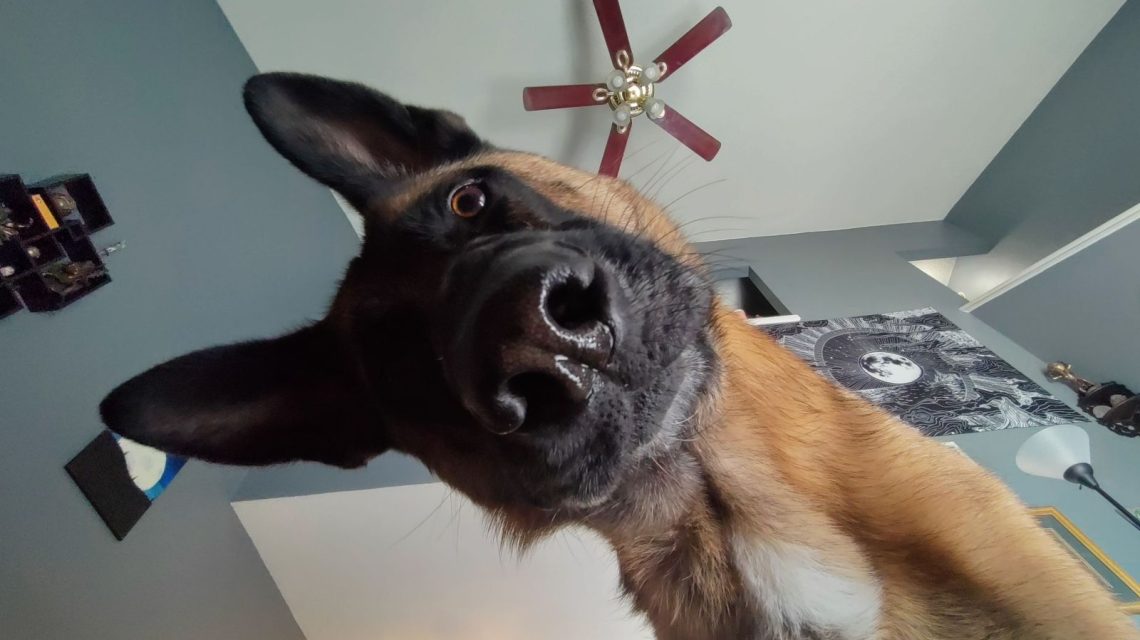
If your dog often rushes to inspect a strange noise, sniffs a visitor’s bag, or explores behind the fence, you might have a ‘nosy’ dog. While owners may use this term humorously, it often indicates curiosity and a natural urge to gather information about their surroundings.
Dr. Noe Galvan, a DVM and MPH, and member of the Fetch Pet Veterinary Advisory Board, noted to Newsweek that ‘Nosy and curious are synonymous because being nosy achieves and answers similar questions as being curious.’ Dogs have a keen perception. When your dog sticks its head out the car window or dedicates time to sniff a new spot on a walk, it is not just getting distracted; it is collecting data about the environment.
What Makes a Dog Curious?
Dogs primarily experience the world through their sense of smell. While humans depend mainly on sight, dogs use their noses to explore and comprehend their environment. A dog sniffing new surroundings seeks to answer questions like: Who was here before? What occurred here? Is there something interesting nearby?
Dr. Galvan explained some possible signs of a curious or attentive dog: maintaining a neutral body position, having erect ears, focusing eyes on strangers or unfamiliar areas, and, naturally, sniffing the environment. Additional signs of a curious dog, as noted by Wag, a pet care app, may include:
- Tasting and licking objects
- Closely listening
- Pawing at objects
- Watching unfamiliar people or animals
- Growling or barking at new stimuli
Dr. Galvan added, ‘Outside, a dog might pace along the fence line or sniff areas where other animals marked, gathering information on past visitors.’
Why Some Dogs Investigate More Than Others
Some dogs seem more investigative than others, though no specific breeds are universally more curious. Certain breeds developed traits for investigation, such as hunting, tracking, or herding.
Curiosity varies depending on the dog. A scent-focused breed might follow a trail outdoors, while another may investigate a household noise anticipating a treat.
Dr. Galvan commented, ‘Equally investigative, a French bulldog might hear chips opening in another room and seek a potential treat.’
A dog’s curiosity stems from several factors, including scent instincts, social curiosity, boredom, and a natural exploratory drive. Dogs have a remarkable smell detection ability, but noticing a scent does not automatically indicate higher intelligence.
How a dog acts on curiosity depends on training and drive, as seen with working dogs like police and bomb detection dogs.
When Curiosity Becomes a Problem
Curiosity typically represents healthy behavior, but it can sometimes lead to risks. For instance, when hiking, a dog investigating a sound might accidentally meet wildlife such as a rattlesnake. However, this awareness can alert owners to possible dangers.
Dr. Galvan emphasized, ‘The main concern is when a dog cannot disengage from whatever caught its attention.’
Is My Dog Curious or Anxious?
Not every investigative act implies curiosity. Some behaviors can relate to stress or anxiety. Distinguishing between curiosity and anxiety requires owners to recognize subtle differences. Dr. Galvan stated, ‘A stressed or anxious dog may struggle to settle down.’
Signs a dog may be stressed include:
- Whining
- Panting without a clear reason
- Constantly following the owner
- Difficulty relaxing
- Repetitive behaviors
A curious dog generally investigates and returns to normal, while an anxious dog might remain fixated, find settling difficult, or show discomfort signs.
How to Channel a Curious Dog’s Behavior
Owners can channel a dog’s curiosity healthily through enrichment and training. ‘Dogs are naturally inquisitive, especially breeds bred to work with high performance drives,’ said Dr. Galvan. These breeds often need more stimulation to channel their enthusiasm effectively, such as extra sniffing during walks, puzzle toys, training exercises, hide-and-seek with toys or treats, and scent-based activities.
Ultimately, a dog that constantly investigates its environment is likely acting on its instincts to learn more about the world. So, if your dog seems like the local gossip, checking every visitor, sniffing every corner, and responding to every sound, it might be trying to understand what is happening around it.
 Evaluating Protein-Rich Foods and Their Effectiveness
  Utah Man’s Viral Video Exposes Shake Shack Pricing Error
  Improving Breakfast for Better Blood Sugar Management
  Tragic Accident Claims Life of Elite Rock Climber Jake Whisenant
  Jibarito’s Enduring Influence on Chicago’s Culinary Scene
  Choosing the Best Mikasa Flatware for Your Dining Needs