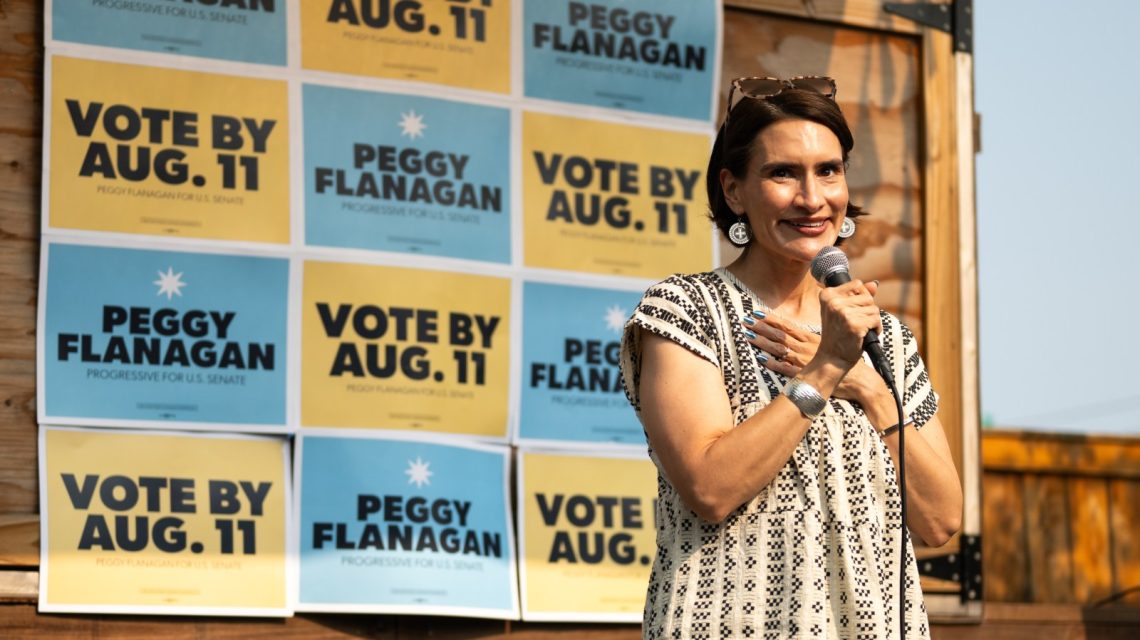
Minnesota’s Democrats have signaled their preference for organizing and change over adherence to party establishments. In the race for the U.S. Senate seat vacated by Tina Smith, Lieutenant Governor Peggy Flanagan emerged victorious. She defeated Representative Angie Craig with 59 percent of the vote compared to Craig’s 39.4 percent, with nearly all votes counted.
Flanagan’s strategy was clear. She opposed Israel’s actions in Gaza and rejected corporate PAC money, painting Craig as aligned with Washington interests and disconnected from voters. Craig, who raised $12.6 million, saw backing from House Minority Leader Hakeem Jeffries and former House Speaker Nancy Pelosi. Meanwhile, Flanagan, who raised $6.4 million, was endorsed by Senators Elizabeth Warren and Bernie Sanders.
This primary race reflected an ideological clash between progressive views akin to Bernie Sanders and centrist beliefs in the style of Bill Clinton. Equally significant were the campaign strategies. Flanagan focused on grassroots efforts, modestly spending $1.9 million on ads compared to Craig’s $9.6 million. Instead, Flanagan held over 300 events in 112 communities across Minnesota, promoting Medicare for All, a higher national minimum wage, and universal childcare.
Flanagan’s approach generated a strong turnout at the Minnesota Democratic-Farmer-Labor (DFL) Party state precinct caucuses, amassing an early wave of support that carried through to securing the DFL endorsement. Her campaign emphasized connecting with voters. “We had 30,000 doors knocked the weekend before the race,” Flanagan said, highlighting many first-time volunteers. “People care about what kind of Democrat they’re electing.”
As Flanagan prepares to face Republican nominee Michele Tafoya, the race anticipates extensive attention and funding from external sources. The Cook Political Report rates it as “Likely D,” reflecting Minnesota’s history of voting Democratic since 1972. Tafoya’s campaign has criticized Flanagan’s stances, framing the election as ‘common sense versus crazy.’
Flanagan plans to continue pressing her economic populist platform and anti-PAC narrative, engaging in a general election against Tafoya. She voiced her opposition to President Trump, predicting Tafoya would align closely with him. Flanagan’s anti-establishment stance includes refusing to support Senate Democratic Leader Chuck Schumer, while expressing support for Maryland Senator Chris Van Hollen.
Upon entering the Senate, Flanagan intends to align with progressive associates to pursue Congressional shifts and establish bipartisan links through “99 coffees,” acknowledging the necessity of working with Republicans on common goals. Progressive gains include representatives rejecting traditional political frameworks, aiming instead to reflect and act on the public’s needs.
Flanagan asserts the importance of new voices in American politics, emphasizing discontent with the existing political order. “We have folks who are getting elected who represent people and not corporations,” she noted, indicating a broader wave of transformation in current electoral trends.
 Political Strategists Karl Rove and David Axelrod Discuss Voting and Predictions
  The Trump Team Targets Military Leadership
  Trump’s Crypto Ventures Stir Controversy
  Maryland Bans Dynamic Pricing in Grocery Stores
  Democrats Eager to Flip Senate Amid Polling Challenges
  Challenges Faced by Republicans in the Upcoming Midterms