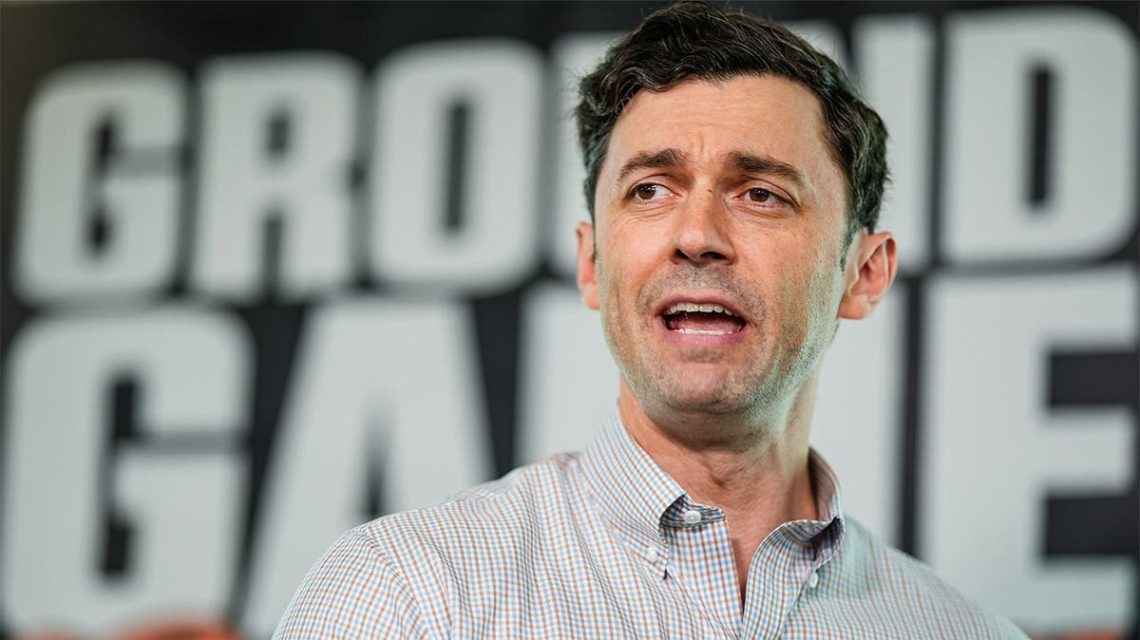
After declaring his candidacy for the U.S. Senate, Sen. Jon Ossoff, D-Ga., has affirmed his support for reparations legislation. This involves government efforts to address the social harms of slavery and other injustices against Black Americans. In a 2019 radio interview, Ossoff expressed that the debate centered on the amount the government owed. He stated, “There is a debt unpaid. I think it is a difficult question: how to pay it.” His statements echo a longer ongoing discussion in political and social arenas.
As Ossoff campaigns for re-election in a highly competitive race, his earlier comments bring attention to his views on government’s role in addressing social inequality. Political figures and groups like Movement for Black Lives (M4BL) and the Democratic Socialists of America (DSA) have long included reparations in their agendas. In 2019, the DSA underscored that despite legal advancements in equality, Black communities still face discrimination.
“Formally equal treatment on the basis of inequality means the perpetuation of inequality,” the DSA declared in 2019.
Ossoff expressed support for legislative efforts to examine reparations. He referenced Sen. Cory Booker’s initiative to establish a commission aimed at studying ways to address historical grievances, including the unfulfilled post-Civil War promise of “forty acres and a mule” to freed slaves.
Though Booker has frequently reintroduced the proposal, it remains in the Senate Judiciary Committee. Ossoff has not yet joined as a sponsor. Conservatives often oppose reparations, perceiving them as positive discrimination, contrary to the 14th Amendment. This debate is intertwined with legal cases like the 2023 Supreme Court’s review in Students for Fair Admissions v. Harvard, which examined affirmative action and race-based treatment.
The Supreme Court emphasized the need for individual assessment over racial considerations. “The student must be treated based on his or her experiences as an individual — not on the basis of race,” it ruled, spotlighting a constitutional approach against race as a primary identity factor.
Ossoff’s campaign has yet to clarify whether reparations could face constitutional challenges or whether his views have evolved since 2019. Having won the Democratic primary, Ossoff will compete with Rep. Mike Collins, R-Ga., in the upcoming November general election. He previously secured his Senate seat with a narrow victory in 2021 over then-incumbent Sen. David Perdue, R-Ga.
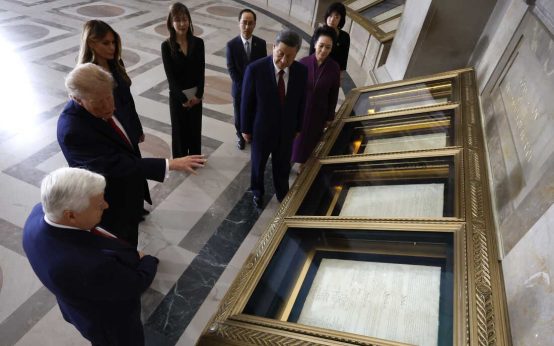 Historical Discrepancies and Diplomatic Sensitivities in U.S.-China Relations
  Zohran Mamdani’s Vision for Affordable Child Care in New York City
  Senator Ted Cruz Leads Effort to Reform College Athletics Regulation
  California Governor Signs Bills Challenging Federal Immigration Policies
 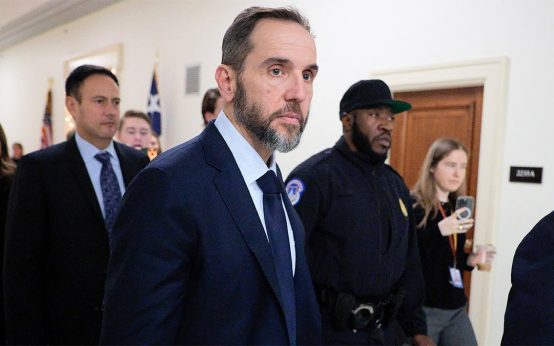 Jim Jordan Claims Jack Smith Misled Congress
  Why 1913 Marked a Turning Point for American Governance