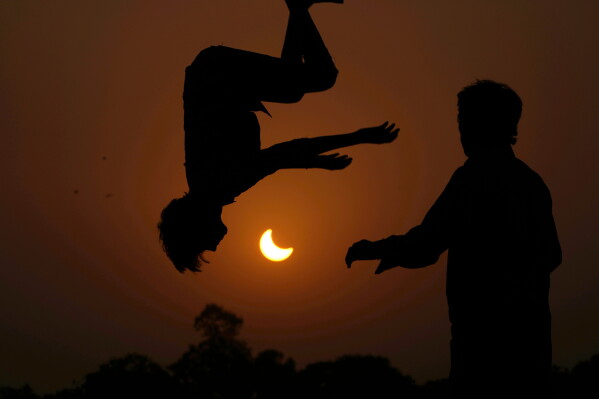
North Americans, turn your eyes to the sky on Wednesday. While Europe gets its chance with a total solar eclipse, those in the northern parts of the U.S. and Canada might witness a partial eclipse.
The path of totality kicks off near the North Pole, moving south over Greenland, Iceland, parts of Spain, and Portugal. This event marks the first total solar eclipse in continental Europe since 1999. Though brief in duration, it preludes another chance for totality in Spain, North Africa, and the Middle East next August.
In the U.S., the solar eclipse spectacle began with the Great American Eclipse in 2017. Spanning from Oregon to South Carolina, it offered more than two minutes of total darkness. The upcoming 2024 eclipse promises even more, stretching from Mexico’s Pacific coast to Newfoundland.
The next coast-to-coast total eclipse for the U.S. will not occur until 2045. Presently, partial views are available, but remember to use certified eclipse glasses to protect your eyes.
Partial Eclipse Viewing Times
Below are several locations in the U.S. and Canada where observers can experience the partial eclipse, depending on clear skies:
- Anchorage, Alaska: 28% coverage, beginning at 7:36 a.m., peaking at 8:21 a.m., ending at 9:09 a.m.
- Bangor, Maine: 24% coverage, beginning at 12:54 p.m., peaking at 1:53 p.m., ending at 2:49 p.m.
- Detroit, Michigan: 3% coverage, beginning at 1:03 p.m., peaking at 1:36 p.m., ending at 2:08 p.m.
- Montreal, Quebec: 18% coverage, beginning at 12:50 p.m., peaking at 1:45 p.m., ending at 2:38 p.m.
- New York City, New York: 9% coverage, beginning at 1:07 p.m., peaking at 1:54 p.m., ending at 2:38 p.m.
- Philadelphia, Pennsylvania: 7% coverage, beginning at 1:11 p.m., peaking at 1:53 p.m., ending at 2:35 p.m.
- St. Johns, Newfoundland and Labrador: 53% coverage, beginning at 2:28 p.m., peaking at 3:35 p.m., ending at 4:37 p.m.
- Toronto, Ontario: 8% coverage, beginning at 12:55 p.m., peaking at 1:40 p.m., ending at 2:23 p.m.
- Washington, D.C.: 4% coverage, beginning at 1:17 p.m., peaking at 1:53 p.m., ending at 2:27 p.m.
- Winnipeg, Manitoba: 5% coverage, beginning at 11:25 a.m., peaking at 12:02 p.m., ending at 12:40 p.m.
Take this opportunity to enjoy the partial eclipse and stay safe while observing.
Content was provided by the Associated Press, supported by the Howard Hughes Medical Institute’s Department of Science Education and the Robert Wood Johnson Foundation.
 Debate Surrounds Kamala Harris’s Potential 2028 Presidential Run
  Sally Yates to Lead Investigation on Cornell University’s Handling of Rape Allegations
  Controversy Erupts Over FBI’s Investigation of Trump Family and Aide
  Metro Proposes Fare Changes and Free Rides for Youths
  Former House Speaker Dennis Hastert Passes Away at 84
  Two Killed, Dozens Injured in Georgia Homecoming Party Shooting