
Despite scientific advancements, the corona, which is the outermost layer of the sun’s atmosphere, remains a puzzle. A total solar eclipse on Wednesday presents scientists with a chance to investigate this enigmatic region.
On August 9, 2026, at 6:00 a.m. EDT, a total solar eclipse will occur. This event will cast a shadow across parts of Greenland, Iceland, and Spain, enveloping these regions in an unexpected afternoon gloom. This phenomena will create a unique atmosphere as a deep twilight blue blankets the areas affected, breaking the regular daylight with a touch of celestial beauty.
In the moments of darkness, Venus will become visible, offering a rare chance to observe the planet in this setting. Such occurrences not only captivate observers but also hold significant potential for scientific study, especially in understanding the sun’s corona.
The corona is an area of intense interest because it is much hotter than the sun’s surface, a mystery that continues to intrigue scientists. During a total eclipse, the moon blocks the bright light of the sun, allowing the corona to be viewed without specialized instruments. This facilitates a closer analysis of its behavior and characteristics.
The European Space Agency’s Proba-2 minisatellite captured such an eclipse in March 2015, providing valuable data. The upcoming event promises further insights as scientists aim to uncover more about the processes at work in the sun’s corona.
 Gene Editing and Ethical Debates at Origin Genomics
  The Endangered American Red Wolf: A Conservation Story
 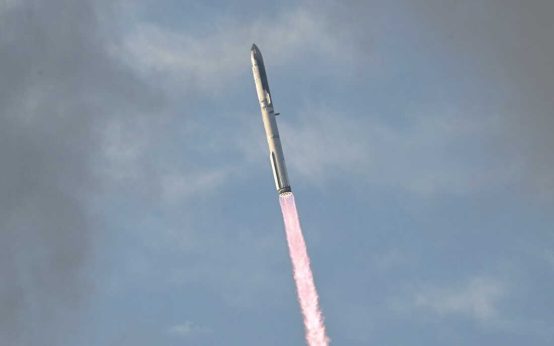 SpaceX Starship Completes Orbital Test Flight and Satellite Deployment
  Studying Black Bears’ Hibernation at Virginia Tech
  Tackling Plastic Pollution: A Shift Toward Flax-Based Alternatives
  Understanding the Impact of a ‘Super’ El Niño