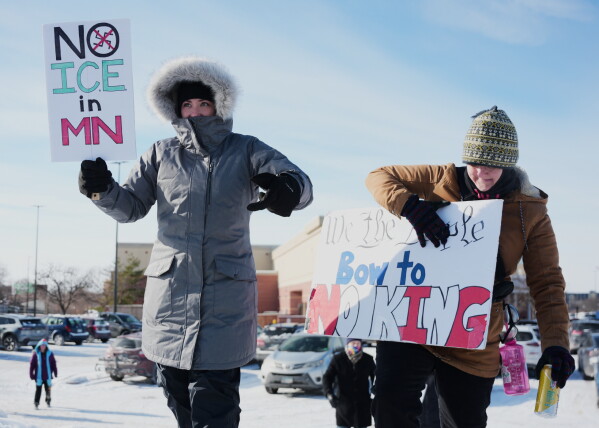
In Minneapolis, near a federal office complex next to the airport, resistance to President Donald Trump found momentum. U.S. immigration agents gathered at the Bishop Henry Whipple Federal Building for a prolonged deportation effort, prompting protesters armed with whistles and phones to oppose them. The protest left two dead before Trump finally relented. These events still echo as the Minnesota Democratic primary for the U.S. Senate approaches.
The primary sees U.S. Rep. Angie Craig, supported by the establishment, facing off against Lt. Gov. Peggy Flanagan, a more progressive candidate. The immigration debate introduces another layer to the familiar left versus center political divide seen across America this year.
“I think that’s when she lost my vote permanently and that’s why I will not vote for her no matter what,”
said Bryce Bohne, a Minneapolis teacher and educational tourism company owner, expressing support for Flanagan over Craig.
Outside the Whipple federal building, barriers have been removed, and the former sounds of protests have been replaced with the din of departing jets and buses. Yet, a few volunteers in bright vests maintain a presence to assist those released from immigration detention or attending court hearings.
A few miles away, memorials with flowers and notes still mark the locations where Renee Good and Alex Pretti lost their lives. Demonstrators continue to hold signs reading “Justice for Renee & Alex,” exemplifying the community’s ongoing grief and demand for justice.
Craig, experienced in tough election battles, managed to flip a Republican-held seat in 2018 and fend off significant opposition in her reelection campaigns. In her Senate run, Craig faced new challenges from her left, a shift from prior contests. At a recent event, she adopted progressive rhetoric, though not always comfortably.
“The working class keeps getting screwed,”
she told volunteers in Brooklyn Park, acknowledging the growing frustration among voters.
“I consider myself a progressive,”
Craig stated after a Saturday event, referring to her consistent Democratic voting record, despite criticism for the few votes against her party.
Craig’s vote for the Laken Riley Act, which mandates federal detention for migrants accused of crimes, has become contentious. Although she once supported it, Craig expressed regret in a Minnesota Star Tribune column, stating her opposition to bolstering ICE’s authority under Trump’s administration. This regrettable decision framed her as a defender against Trump, a narrative pushed by her campaign.
Flanagan counters Craig’s immigration vote as a betrayal rather than a strategic move.
“My primary opponent voted for Donald Trump’s immigration bill and was the only Minnesota Democrat to do so,”
Flanagan declared, emphasizing the importance of unwavering support for immigrants.
Flanagan aligns with progressive values, advocating for policies like Medicare for All and reduced military support for Israel. She challenges the financial support Craig receives, emphasizing grassroots contributions.
In terms of campaign spending, Craig’s campaign had outspent Flanagan significantly. Yet both candidates have garnered substantial outside support. Despite this, Flanagan has gained endorsements from figures such as Sen. Bernie Sanders, who rallied with her to emphasize the role of the people in standing against large financial interests.
 Alani Bankhead Denies Being a Republican Plant Amid Senate Campaign
  Debate Over Driverless Vehicles in Washington D.C.
  Democrats Turn to Content Creators to Rebuild Latino Support
  Efforts to Close Loopholes in Cash Welfare Spending
  Former State Trooper Criticizes Handling of Gang Violence in Twin Cities
  Controversy Surrounds Jack Smith’s Actions and Public Appearances