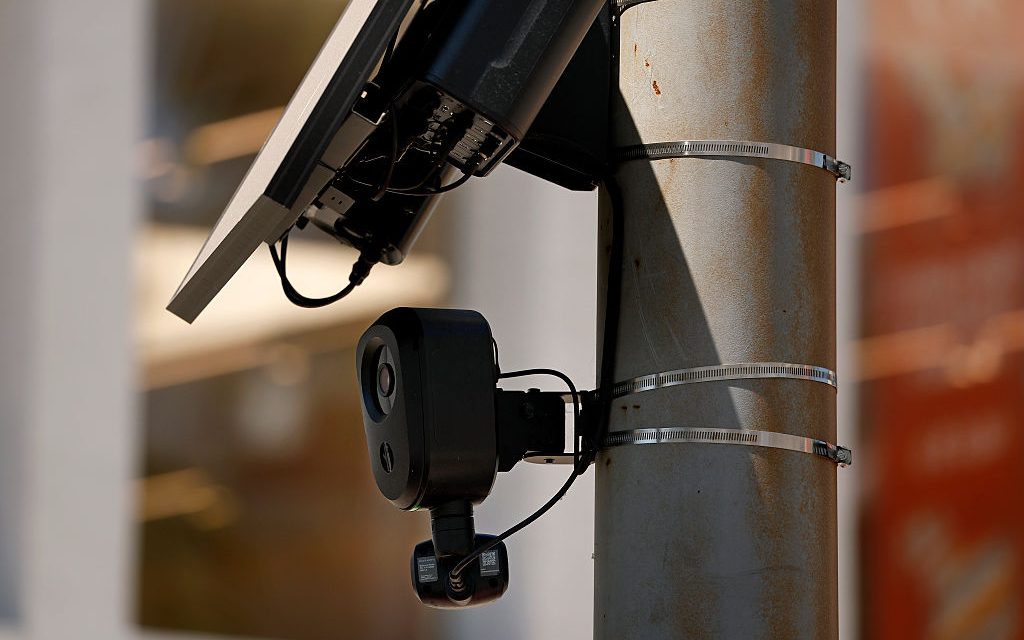
Flock Safety, a surveillance equipment firm, collaborates with over 5,000 law enforcement agencies in more than 6,000 communities. The question arises: is your city one of those utilizing their services? These solar-powered cameras are essential for recording vehicle data through license plate readers. Partner agencies can access a database to search for specific plate numbers, vehicle makes, models, or distinguishing features like bumper stickers.
Supporters believe these cameras assist in crime-solving efforts. In contrast, critics argue about potential misuse of data for tracking individuals without oversight, even those not involved in criminal activities. Flock cameras collect data continuously, capturing each vehicle’s license plate and creating a detailed ‘vehicle fingerprint’ that includes make, model, color, and more, explained Knox County Mayor Glenn Jacobs during a NewsNation interview. This information can be kept for 30 days or longer in a searchable database, challenging traditional uses of license plate readers by expanding the scope considerably.
The company’s origins trace back to Atlanta. Founder Garrett Langley shared during a TED talk how crime was a driving force in developing the technology. The difficulty of bringing criminals to justice sparked the creation of these license plate-reading cameras, intended to improve crime detection rates.
Locating Flock Cameras
Flock Safety has installed nearly 100,000 cameras across 6,000 communities in 49 states, but specific locations are not publicly disclosed. To address this, DeFlock, an organization focused on privacy issues surrounding these cameras, offers a crowd-sourced map showcasing purported camera locations across the U.S., compiled by volunteers and the OpenStreetMap community. Nexstar hasn’t verified these locations independently.
The map, accessible through DeFlock’s platform, includes data on cameras from other companies, broadening its scope beyond just Flock’s installations. However, growing public concern has led numerous city councils to discontinue or reject Flock cameras. Meanwhile, some jurisdictions seek to introduce additional protective measures.
An example of restrictive use appears in San Jose, California. Here, data retention is limited to 30 days, and cameras are prohibited near sensitive sites like abortion clinics, healthcare facilities, or worship places, as reported by San Jose Spotlight.
 Growing Backlash Against AI Data Centers
  Challenges Revealed in Drone Deliveries: Conor McGregor’s Experience
  Efforts to Limit AI Content Gaining Momentum on Popular Platforms
  Challenges and Opportunities: The Illinois Quantum and Microelectronics Park Development
  Closed-door AI Framework Surprises Tech Policy Sector
  FAA Orders Inspections for Boeing 737 Max Planes Over Structural Concerns