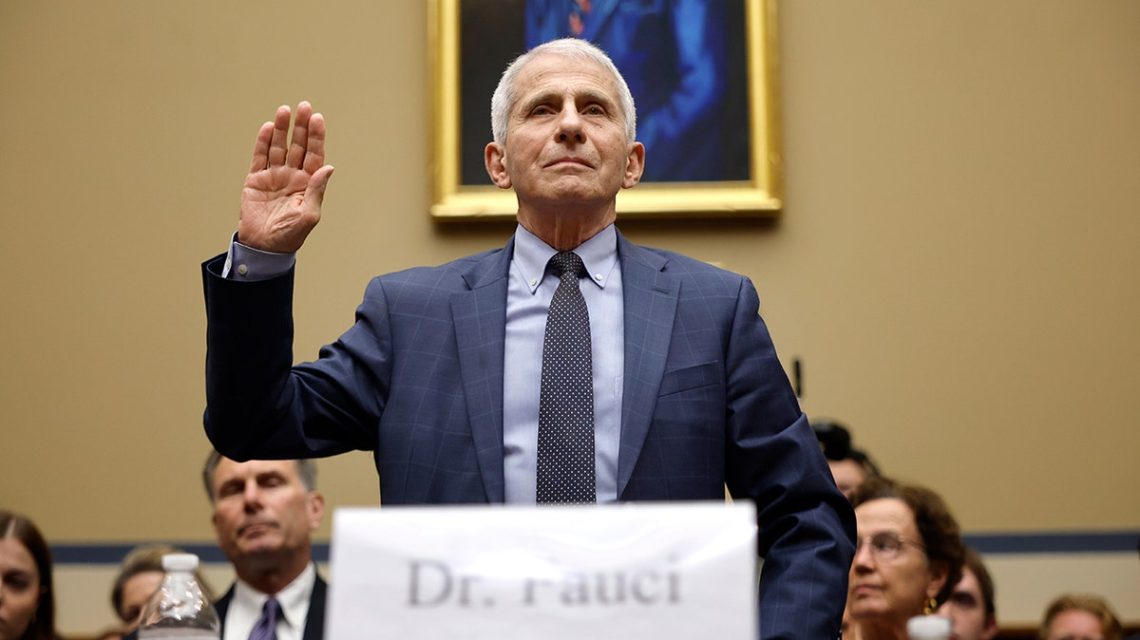
Contempt of Congress often arises when individuals refuse to testify before a House or Senate committee or decline to provide requested documents and information, especially when subpoenaed. Recently, the Senate Homeland Security and Governmental Affairs Committee voted to hold Dr. Anthony Fauci in contempt of Congress.
This decision came after Dr. Fauci invoked the Fifth Amendment during a hearing, declining to answer questions. Republican senators argue that Fauci’s previous pardon by then-President Joe Biden obligated him to respond to their inquiries. During his testimony, Fauci consistently stated, “On the advice of counsel, I respectfully decline to answer based upon my rights under the Fifth Amendment of the Constitution,” reportedly saying this 111 times.
Democrats claim this was a strategic move by Republicans. They suggest the goal was to catch Dr. Fauci in a misstatement, which could lead to criminal charges not covered by the pardon. Consequently, the committee, in an 8-5 party-line vote, held Fauci in contempt. Sen. Rick Scott, R-Fla., expressed his support for the decision, highlighting the significance of this action.
Sen. Gary Peters, D-Mich., warned against this approach, suggesting it could set a damaging precedent. According to Peters, criminal contempt is punitive and does not compel witnesses to provide information. He fears it might weaken future Congressional oversight.
Senate Homeland Security Committee Chairman Rand Paul, R-Ky., decided to personally deliver the contempt referral to the Attorney General and district court, bypassing the traditional full Senate vote. Typically, the entire Senate votes on such matters, but in this case, this did not occur. No precedent exists for circumventing the Senate floor in such a manner.
Democrats criticized Paul’s approach. They argue that no individual senator or committee represents the full Senate. The DOJ has stated it takes all Congressional referrals seriously, but Democrats emphasize that Fauci’s constitutional rights should not be ignored.
Fauci’s attorney, David Schertler, accused Sen. Paul of attempting to use the Justice Department for political purposes. Democrats claim they were excluded from the inquiry process, while Republicans counter that their findings were accessible online.
Republicans recently received a Health and Human Services phone used by Fauci during the pandemic. Sen. Ron Johnson, R-Wis., believes decrypting this phone could reveal information Fauci did not address during the hearing.
Since Fauci’s testimony, other noteworthy events include Jeannine Pirro, the U.S. Attorney for the District of Columbia, dropping charges against an individual for vandalizing the National Mall. This raised questions about the DOJ’s prosecution approach.
The decision to prosecute Fauci rests with New Attorney General Todd Blanche. Meanwhile, Sens. Lisa Murkowski, R-Alaska, and Susan Collins, R-Maine, expressed opposition to Fauci. Sen. Bill Cassidy, R-La., initially undecided, eventually supported Blanche’s confirmation.
Cassidy expressed concerns about the DOJ’s potential for unfair prosecution of political opponents. He sees this case as indicative of broader issues surrounding political weaponization.
 Iowa Senate Election: Turek Leads in Polls Amid Economic Concerns
  Kamala Harris Joins Abdul El-Sayed in Michigan Senate Campaign
  Public Confidence in the Supreme Court at Record Lows
  Federal Authorities Arrest California Lawmaker’s Aide for Visa Overstay
  Hasan Piker Addresses Controversial Comments and Political Involvement
  Lukashenko and Putin Share Light Moments While Strengthening Ties