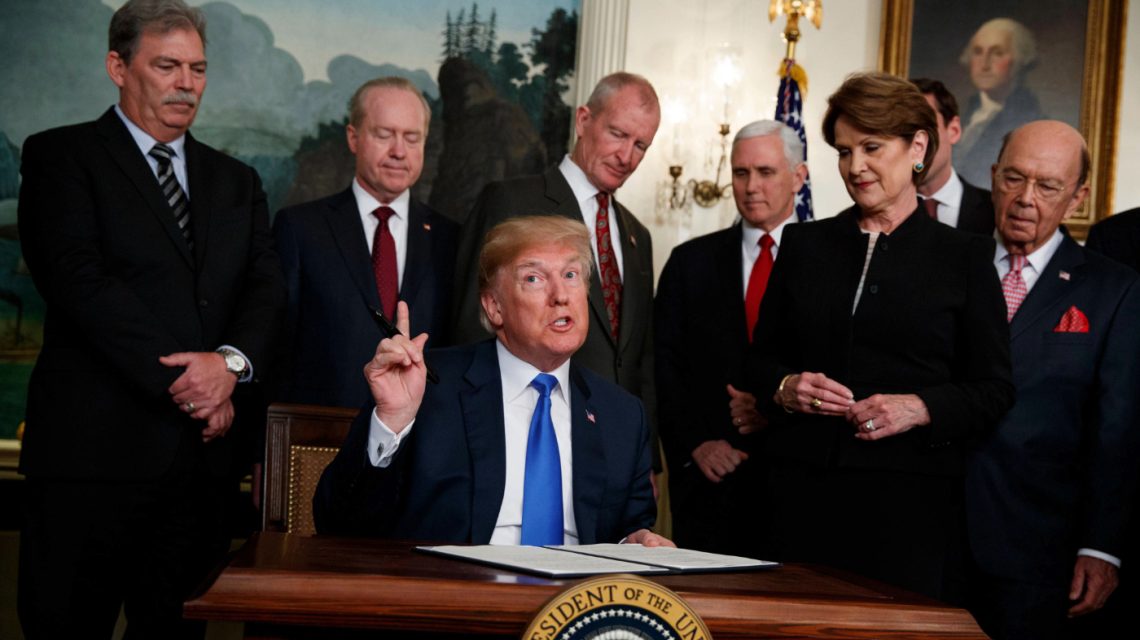
The Trump administration’s use of Section 301 tariffs is currently facing legal challenges. Congress did not intend Section 301 of the 1974 Trade Act to be a general tariff statute but rather a targeted trade remedy. This important difference is at the center of the lawsuit by the Liberty Justice Center.
This lawsuit focuses on tariffs applied to imports from 60 economies, allegedly due to their failure to fight forced labor. However, the core issue in the litigation is whether Section 301 remains a focused remedy or has shifted into a broad presidential tariff authority.
Section 301 explicitly outlines a procedure requiring the U.S. Trade Representative to identify specific foreign acts, policies, or practices. Then, they must determine if these affect U.S. commerce and explain why selected actions are suitable and likely to eliminate the issue. Congress intended this process to be precise and diplomatic.
The case questions the executive’s role in proving how tariffs can end identified foreign practices. If they don’t express this, Section 301 shifts from a targeted response to a general method for applying tariffs as desired.
American trade law supports that Congress never allowed tariff authority to be dispersed through one statute. Instead, it crafted specialized laws for different problems. For example:
- Section 232 deals with national security.
- Section 122 allows temporary tariffs during payment balance issues.
These tailored laws indicate Congress’s intent for different standards governing presidential powers.
Section 122 demonstrates concerns over broad tariffs affecting the entire economy. It allows these tariffs but with limits, such as a 15% cap and a 150-day duration without Congress’s approval. If Section 301 gets used for wide-ranging tariffs indefinitely, these restrictions become ineffective.
Courts often dismiss interpretations that lead to redundancy. Congress aims for statutes to complement each other, not allow one to dominate others. This principle should guide the Court of International Trade. The case focuses not on the efficacy of tariffs or the seriousness of forced labor but on maintaining Congress’s statutory limits on economic authority.
Congress didn’t delegate power to impose tariffs at will. Section 301 was intended for specific foreign acts or policies, requiring justification as a suitable and viable tariff measure. Breaking this statutory chain transforms Section 301 from a precise tool into an open-ended tariff authority.
Marc L. Busch is a professor at Georgetown University, and Petros Mavroidis is a professor at Columbia Law School.
Copyright 2026 Nexstar Media Inc. All rights reserved.
 North Carolina Senate Race Influenced by Abortion Policy Messaging
  Trump Pressures Republicans on Filibuster Threat
  Rep. Golden Endorses Rep. Lawler for Re-election
  Public Perception and Political Impact of Data Centers
  Jewish Democrats in Michigan Shift Support to GOP Candidate in Senate Race
  Mayor Mamdani and President Trump Discuss Major Housing Project in NYC