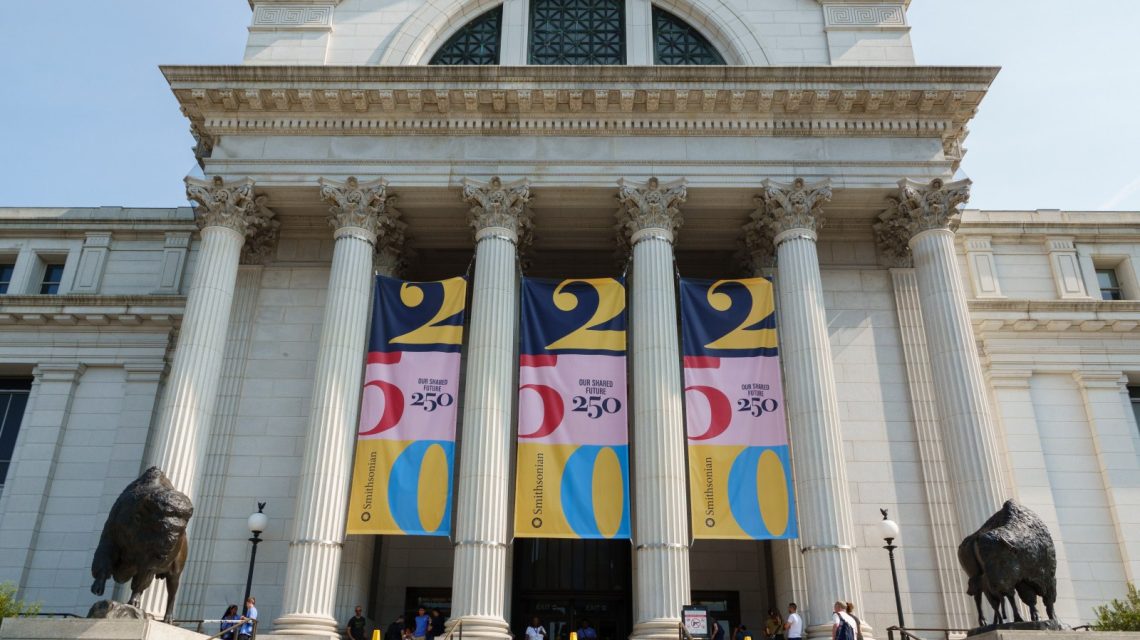
The Smithsonian Institution stands as the world’s most extensive museum, education, and research conglomerate. It draws visitors from every U.S. state and around the globe, offering entry without charge. As a prominent attraction in Washington, D.C., the Smithsonian has long been a celebrated fixture.
Though relatively young compared to ancient civilizations, American history holds unique significance. For generations, the Smithsonian has brought history to life for Americans. I have vivid childhood memories of exploring the National Museum of American History (NMAH), eager to discover the nation’s tales and treasures. I later ensured my children shared this experience, exposing them to the lessons learned and milestones achieved. Our nation’s history marks it as a beacon of hope and liberty.
With the 250th anniversary of America on the horizon, many anticipated a grand celebration and exhibits showcasing the country’s remarkable founding and ascent. However, the museum recently introduced an oppressor/oppressed narrative which frames the nation’s history as unsettling. This shift reflected the Smithsonian’s allegiance, a notion confirmed by a recent House Oversight hearing.
Smithsonian leadership appears to view American history as one to critique rather than honor. A White House Domestic Policy Council report dated July 4 presented this institutional drift. During a 2024 address, Director Anthea Hartig suggested abandoning an ‘America First’ mindset. She proposed that ‘America’ should encompass all of the Americas, not solely North America. Critics argue that a museum dedicated to U.S. history should not erase borders. This sentiment is rooted in the Center for Restorative History, where Hartig acknowledges a mission to address historical harms attributed to the Smithsonian’s actions.
“Since when is preserving America’s history something the Smithsonian needs to apologize for?”
The center aims to rectify exclusions by applying restorative justice principles. Meanwhile, museum personnel study “white supremacy culture” and deem components like the nuclear family, the scientific method, and work ethics as ‘white culture.’ Such perspectives suggest that foundational societal concepts are viewed through a political lens, causing concern.
The ideological stance influences exhibits like “Girlhood (it’s complicated),” which, instead of lauding influential American women, includes a biological male in a tribute to women and girls. Additionally, this exhibit highlights gun control and illegal immigration, perceived as infringing on the concept of womanhood. Despite possessing significant women’s history collections, including the popular “First Ladies” exhibit, the NMAH is accused of prioritizing modern political narratives over historical achievements.
Current museum mandates require all exhibits to engage with topics such as race, gender, environmental change, immigration, economic inequality, technological progression, and globalism. Critics argue this list resembles a partisan agenda rather than an educational framework for history.
Critics assert the NMAH should motivate visitors, especially the youth, to uphold and bolster the nation. Although complex, history’s allure resides in understanding both triumphs and challenges. Teaching children to disdain their heritage jeopardizes its preservation.
The Smithsonian, a cherished American institution funded by taxpayers, is seen as a workplace privilege, not a political platform. These are locations for historical appreciation, not apologies. Smithsonian curators are urged to resist altering history to suit present narratives, as manipulating truth equates to falsehood.
Representative Michael Cloud represents Texas’s 27th Congressional District. This article reflects his personal views.
 RNC Sues New Jersey Over Voter Roll Transparency
  Karoline Leavitt on Trump’s Tense Calls with Putin and Xi
  Political Strategies for the Upcoming Midterm Elections
  Trump Considers Diesel Export Ban Amid Rising Fuel Prices
  Texas Senate Race: Talarico Takes Lead in Youth Vote
  Criticism Arises Over Michigan Senate Nominee’s Association with Streamer