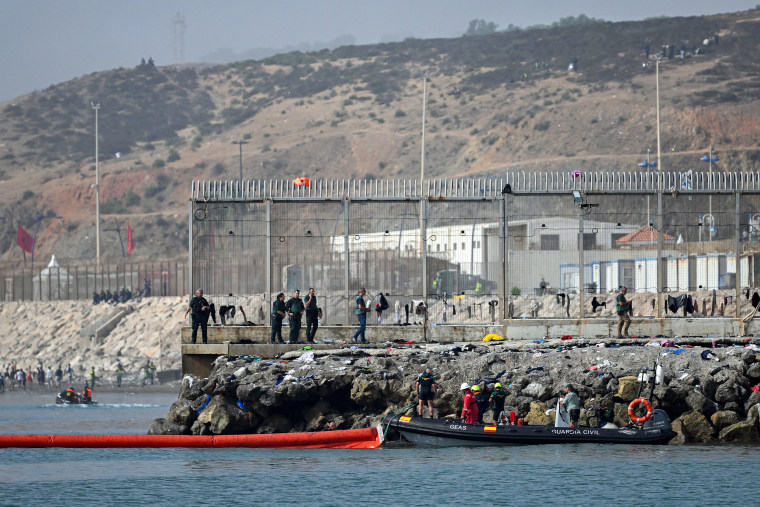
Spain is installing a 500-meter-long containment barrier on the sea border between its North African territory of Ceuta and Morocco. This follows a massive breach where between 50,000 and 60,000 migrants crossed the frontier earlier this week. Tragically, the death toll has risen to 67, including fatalities from drowning and stampedes. Authorities in Ceuta reported 86 deaths, according to Sky News.
Spanish Prime Minister Pedro Sánchez criticized the reaction of some EU leaders. He stated that calls for Spain’s suspension from the Schengen zone were based on prejudice, fake news, and political motives.
Exhausted migrants swam to Ceuta’s Tarajal beach, met by soldiers who escorted them back to Morocco. Spain’s Interior Ministry noted that most migrants have returned to Morocco. “We are relentless against those who break the law,” said Interior Minister Fernando Grande-Marlaska.
Marlaska defended Morocco, stating that cooperation with Spain helped stabilize the situation within 24 hours. He emphasized that Morocco is a reliable partner.
A pneumatic barrier is deployed in the water by Spain’s Guardia Civil near the border post to enhance security following illegal crossings into Ceuta.
EU Leaders Call for Coordinated Response
Leaders of 22 EU nations urged for a coordinated response to the situation. They wrote to EU officials, requesting a videoconference of interior ministers to address uncontrolled crossings and migration threats.
The letter, signed by leaders from countries including Italy, Denmark, and others, stated that perceptions of illegal entry turning into legal stay could encourage further attempts. It urged action to maintain confidence in the EU’s migration policy.
Sánchez requested a similar conference to establish a common response and reaffirm shared border security responsibility.
He criticized EU nations calling for Spain’s exclusion from the Schengen Area. Italian Premier Giorgia Meloni threatened border control reimpositions.
“The EU cannot afford selfish, polarizing reactions,” Sánchez wrote.
Migrants Return to Morocco
Many migrants returned to Morocco, preferring to go back after facing difficult conditions in Ceuta. They slipped back into Morocco through breaches in the fence.
Those returning described harsh treatment in Ceuta. Some claimed physical abuse by Spanish police, while others struggled for food and shelter.
Migrants shared experiences of sleeping in forests and lacking basic needs. Burned-out vehicles, smoke smells, and police barriers marked the unrest along the road to the border.
Ceuta’s President Juan Jesús Vivas commented on the disruption caused by the border incident.
In Tangier, the railway station accommodated returnees from Ceuta, exhausted and seeking rest.
Despite hardships, some migrants like Mohamed Hatri chose to remain in Ceuta, determined to stay regardless of food shortages.
 Ukraine Missile and Drone Barrage Hits Russia Amidst Elections
  A Mother’s Tragic Journey Under Abortion Ban
  U.S. Strategic Goals Remain Unmet Amid Prolonged Conflict
  New Photos Reveal Damage from Iranian Strikes in the Middle East
  Assassin of Chilean Diplomat Orlando Letelier Faces Deportation 50 Years After Assassination
  Gorillaz and Macklemore Respond to Controversy Over Israel-Palestine Statements