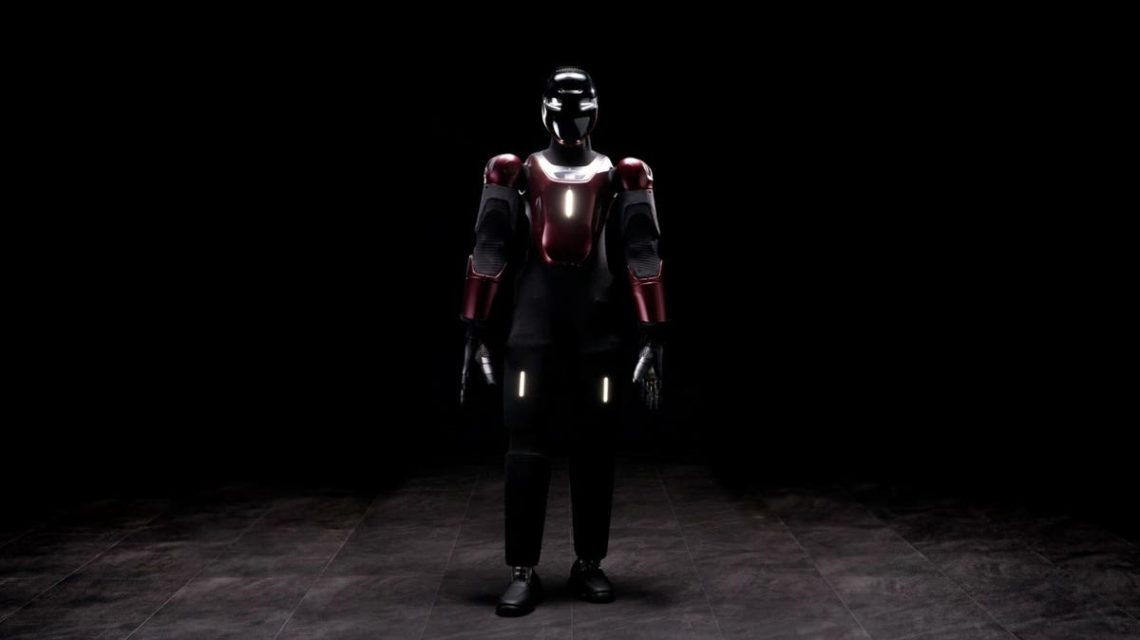
Working alongside a humanoid robot can raise safety concerns due to potential collisions. An Italian company, Generative Bionics, seeks to mitigate these risks with their Gene.01 robot, covered by sensor-equipped skin. This technology allows the robot to detect nearby humans before physical contact.
The sensors provide information on touch, temperature, and force, enabling Gene.01 to understand its surroundings during interactions. Despite these features, questions remain about the responsiveness of the sensors and software when humans work alongside the robot.
Understanding Gene.01’s Sensor Technology
Gene.01’s advanced sensing skin is distributed across its body and limbs. It can detect touch, temperature, proximity, and force simultaneously. The proximity sensors provide an early warning if someone enters its immediate area. This functionality resembles the way humans naturally avoid heat from a stove before contact.
The safety technology aims to allow robots to operate closer to people by using sensors alongside traditional cameras, which sometimes lose sight of individuals. Full-body proximity sensing improves the robot’s ability to detect human activity nearby.
Interactive Learning Approaches
Gene.01’s sensory capabilities could transform the way it learns new tasks. Workers can guide the robot’s movements directly, recording motion and force data. This method adds a layer of understanding that video demonstrations alone cannot capture, such as the precise amount of grip needed to securely handle objects.
This hands-on teaching approach caters to experienced workers who may lack programming knowledge but understand the industrial tasks the robot is intended to perform.
Physical AI and Collaborative Robotics
Generative Bionics developed Gene.01 using a methodology called Physical AI, which integrates body design and control systems into a single framework. This innovative method incorporates human-related measurements such as walking stability and strain experienced by operators.
The robot’s design is rooted in research from the Istituto Italiano di Tecnologia, focused on a previous robot, ergoCub. Gene.01 applies these research findings to a fully functional, sensor-equipped humanoid.
Flexible Industrial Applications
The company designed Gene.01 as a versatile platform for various industrial uses. It allows customization of the robot’s AI and external parts based on the task and environment. Different industries, such as manufacturing, logistics, and healthcare, could benefit from robots like Gene.01.
In collaboration with Fincantieri, the first use case involves welding operations in shipyards. Robots could take over tasks in challenging environments to reduce human exposure to hazards.
Expanding the Robotics Frontier
Generative Bionics received $81 million in funding, demonstrating investor confidence in their technology. The company aims to establish a European-based supply chain and has partnered with Synapticon for the development of robot actuators.
While immediate workplace presence may still be in the future, Gene.01 showcases the potential for humanoid robots in environments traditionally occupied by humans. Sensors enhance a robot’s ability to operate safely near people, providing more opportunities for interaction without barriers.
 AI Fears Impact Trump-Xi Dialogue Amidst Challenges
  Senator Murphy Calls for Internet Regulation to Prevent Influence of Demagogues
  House Breaks Early Amid Concerns Over Unregulated AI
  Expansion of Data Centers Fueled by AI Development
  Addressing the Potential Risks of AI
  Data Centers in Virginia face Growing Opposition