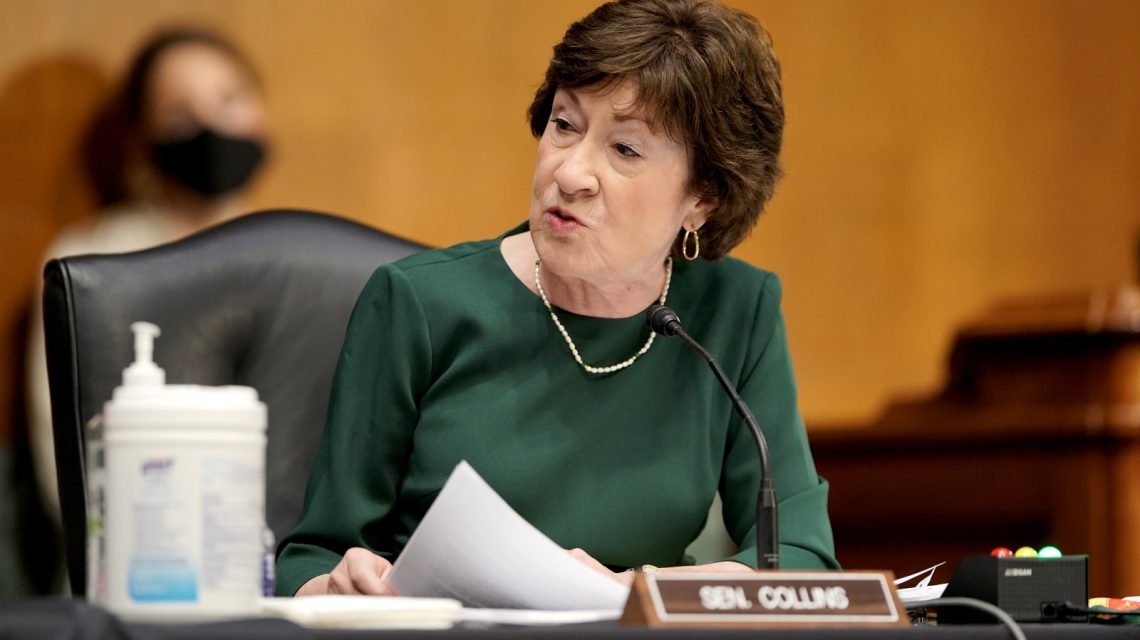
Senator Susan Collins is cautioning the Trump administration regarding an alleged move to politicize federal health research funding, escalating a conflict over control of National Institutes of Health (NIH) grants. This happens as Collins faces a challenging reelection race, with recent polling indicating the race as one of the most competitive in her career.
The Maine Republican’s criticism aligns with recent polling, which shows Democrat Troy Jackson narrowly leading in the Senate race against Collins. A CNN/SSRS poll revealed Jackson leading Collins 48% to 45% in the race rated as a toss-up by major election forecasters.
Dispute Over NIH Grants
The dispute emerged following a report from The Washington Post that President Donald Trump is contemplating an executive order to create a commission to review NIH grants. This commission might involve political appointees in deciding how the agency allocates about $50 billion in biomedical research funding. The Post noted that White House budget chief Russell Vought criticized the NIH for funding initiatives that clashed with Trump’s priorities, necessitating extra scrutiny.
Collins reacted to these developments by challenging the White House. In her Monday statement, she argued that the Trump administration would be crossing a line with such actions, emphasizing congressional intent and warning against politicizing grant-making at NIH or any other agency.
“The Office of Management and Budget (OMB) should not be involved in agency decisions on the awards of grants,” Collins wrote on X.
She highlighted that inserting political review into grants already vetted by scientists undermines the principle of funding based on scientific need and merit rather than political ideology.
Broader Political Context
The dispute is part of ongoing political tension as Collins navigates a competitive Senate race. Polls consistently indicate tight competition between Collins and Jackson. The CNN/SSRS poll indicated Collins with a 41% favorable rating and a 51% unfavorable rating. Jackson showed a 36% favorable rating and a 42% unfavorable rating. Trump’s approval remains low at 31% compared to 67% disapproval in Maine.
Senator Patty Murray and Representative Rosa DeLauro also expressed bipartisan opposition to giving the White House more control over NIH grant decisions. They warned political intervention might jeopardize lifesaving research funded by NIH, potentially influenced by Trump’s political aims.
Murray specifically criticized the idea of political appointees having the power to halt crucial studies without scientific justification. She called for Republicans to resist any effort to politicize scientific funding.
Long-Standing Concerns
Collins’ opposition dates back at least to July, when she sent a letter urging OMB to reconsider parts of its proposed rule on grant-making. Her objections focus on provisions that could allow political appointees to alter scientific evaluations in grant decisions and potentially terminate discretionary grants.
“For example, the termination of clinical trials would leave patients without treatment and could well result in significant scientific and financial losses,” Collins noted.
This history of opposition explains Collins’ strong response to the current executive-order proposal, perceiving a continuation of a fight against OMB over grant-making decisions.
Ongoing Political Developments
The controversy further intensified after an Oval Office meeting involving Trump, Vought, and NIH Director Jay Bhattacharya. Vought argued for additional oversight aligned with Trump’s agenda, while Bhattacharya defended the NIH’s merit-based review process.
NIH spokesman Joshua Pradko refused to discuss meeting specifics but assured the agency remains focused on funding congressionally supported biomedical research.
Congress has temporarily blocked OMB’s proposed grant-making rule through December, emphasizing Collins’ stance that executive orders aiming for similar outcomes oppose congressional intentions.
Impact on the Maine Senate Race
The NIH funding issue emerges amid Collins’ reelection race, marked by competitive polling. Fox News and University of New Hampshire surveys show tight margins between Collins and Jackson, underscoring the challenge for Republicans in Maine.
Despite past resilience, as demonstrated by her 2020 win against Democrat Sara Gideon, Collins faces significant voter disapproval against the Trump administration, adding complexity to her campaign.
For further inquiries regarding this story, contact Newsweek editor Edward T. Cummins.
 Missouri Congressional Map Controversy
  AI Fears Impact Trump-Xi Dialogue Amidst Challenges
  GOP Candidates Call for Ending U.S. War in Iran Amid Rising Fuel Costs
 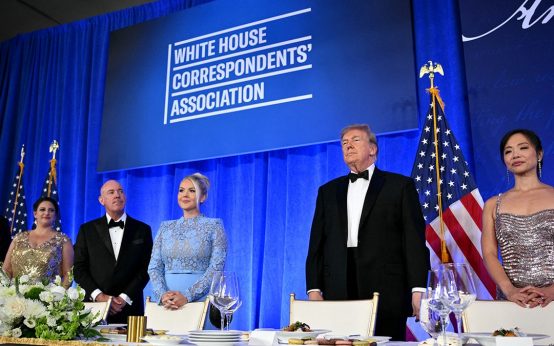 Details on Trump’s Response After WHCA Dinner Incident
  Political Influence over NIH Grantmaking Concerns
  Protest Following ICE Shooting in Austin: Investigation into Organized Activism