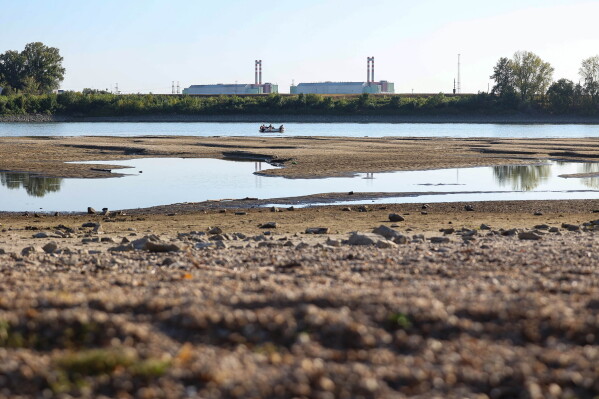
Climate change is playing a significant role in the extreme wildfire weather currently affecting Spain and France, according to two new studies. These studies highlight that human-induced climate change has drastically increased the likelihood of hot and dry conditions, which have worsened wildfires in Southern Europe over the past eight years.
Scientists at World Weather Attribution conducted a rapid analysis, concluding that climate change made the intense conditions for Spain’s record-sized wildfires 20 times more likely. In France, the chances of such extreme fire conditions have doubled. Over the past 26 years, warming has tripled the risk of severe fire conditions in Spain and increased the likelihood by 40% in France.
A separate study published recently found that the number of days with extreme fire-prone weather in Southern Europe has more than doubled compared to earlier decades. This research considered factors such as air temperature, drought conditions, humidity, and wind speed.
“The change in these fire weather conditions in Spain is really extremely strong and is, I think, one of the largest changes that I’ve seen,”
said Friederike Otto, a climate scientist at Imperial College of London, who coordinates World Weather Attribution. Spain experienced its hottest summer on record following a wet January, which encouraged plant growth before a severe drought hit, increasing wildfire fuel. Land abandonment led to unmanaged dry plants, worsening the problem. In France, dense groves of pine trees contributed to fire propagation.
World Weather Attribution’s international scientific collaboration assesses extreme events’ connection to climate change. While their findings haven’t undergone peer review, they used established scientific methods. These findings are often later published in peer-reviewed journals.
Warming Increases Fire Intensity
Otto’s team assessed how burning fossil fuels amplifies fire risks by comparing current levels to past data and what they would be in a cooler climate by 2.5 degrees Fahrenheit. Syracuse University fire scientist Jacob Bendix, not involved in the research, affirmed the findings, noting scientists have long understood that extreme heat and drought enhance fire spread, a trend intensified by human-induced climate changes.
Another study published in Scientific Reports observed the rise in extreme fire weather days in Southern Europe. Study author Raúl Cordero from the University of Groningen noted that extreme fire days have increased from 10 to about 25 annually, and these days have become 50% more intense from 1981 to 2010.
Managing Fires Amid Climate Change
From the 1980s to 2018, fires and burned land in Southern Europe significantly decreased due to improved management techniques. However, Cordero noted that climate change has recently reversed these gains. “It doesn’t matter how many resources or how much money you have, you just cannot stop the propagation of a fire when the weather is so extreme,” he stated.
John Abatzaglou, a fire expert from the University of California Merced, emphasized that climate change is an immediate concern. He stated, “these findings make clear that climate change is not just a future problem, it’s already here.”
Otto stressed the importance of stopping fossil fuel use to prevent worsening fire weather conditions, as global temperature increases set hard limits on adaptation abilities.
 Great Lakes Face Beach Hazards Due to Dangerous Currents
  Surprising Encounter with Gulf Sturgeon in the Suwannee River
  Potential Impact of Tropical Storm Polo on Southern California
  Communities Continuing Recovery from Hurricane Helene Explored through Graphic Novel
  Fat Bear Week 2026 Highlights: Meet the Competitors
  Annual Fat Bear Week Begins at Katmai National Park