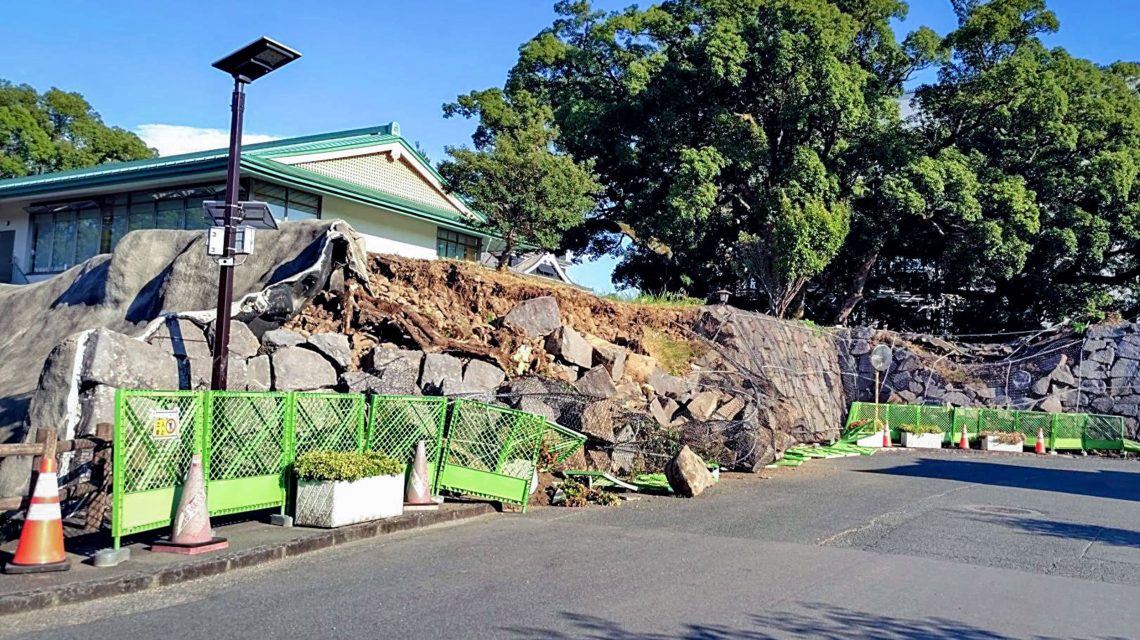
A significant earthquake with a magnitude of 7.1 struck southern Japan today, causing widespread damage and casualties. The earthquake’s epicenter was located in Kumamoto prefecture, with a depth of 10 kilometers. This event has led to a series of critical situations across the affected regions.
Casualties and Damage
Local media, citing police sources, reported multiple fatalities following an explosion at a mall shortly after the earthquake. Many employees at the Aeon Mall in Kumamoto remain unaccounted for. Rescue teams are endeavoring to ascertain if any people are trapped inside. The explosion is suspected to have caused several deaths, as reported by TBS and Fuji TV.
Infrastructure and Historical Sites Affected
The earthquake has also affected Kumamoto Castle, one of Japan’s oldest castles. Built in 1607 by Kato Kiyomasa, it suffered damage to its exterior walls. The castle is a major tourist attraction and was closed for the day. A video verified by media outlets showed damage to parts of the outer walls.
Industrial and Commercial Impact
In Yatsushiro city, a chimney at Nippon Paper Industries’ plant collapsed, leaving several people unaccounted for. Aerial footage confirmed the collapse. Officials are gathering information to determine if there are casualties.
Train services were impacted, with passenger congestion reported at JR Hakata Station due to suspended bullet train services. Additionally, numerous buildings, including a large commercial facility and a mall in Kumamoto prefecture, were reported to have collapsed. The disaster led to at least seven fires in the prefecture.
Government Response
In response to the disaster, Prime Minister Sanae Takaichi has dispatched 300 members of the Japan Self-Defense Forces to assist in the relief efforts. The Japan Meteorological Agency had initially issued a tsunami warning for the Ariake and Yatsushiro seas, which was later lifted.
Earthquake Risk in Japan
Japan’s position on the ‘Ring of Fire’ makes it one of the most earthquake-prone countries globally. It regularly experiences seismic activity due to the convergence of several tectonic plates. In 2011, a 9.0-magnitude earthquake and tsunami resulted in severe nuclear plant damage, leading to heightened awareness and improved disaster management protocols.
According to Japan’s nuclear authority, the Sendai nuclear power plant was not damaged in today’s seismic event, as reported to the International Atomic Energy Agency.
 Nikole Hannah-Jones Reflects on Educational Choices for Her Daughter
  Life and Challenges at Chennai’s Kasimedu Fishing Harbour
  Chicago Bears Eye Potential Move to Indiana: A Look at the Developments
  Amazon Offers Discounts to Employees at Whole Foods
  Inside the American Airman Rescue Mission in Iran
  Trump Comments on China’s Surveillance Amid Reports of Aid to Iran