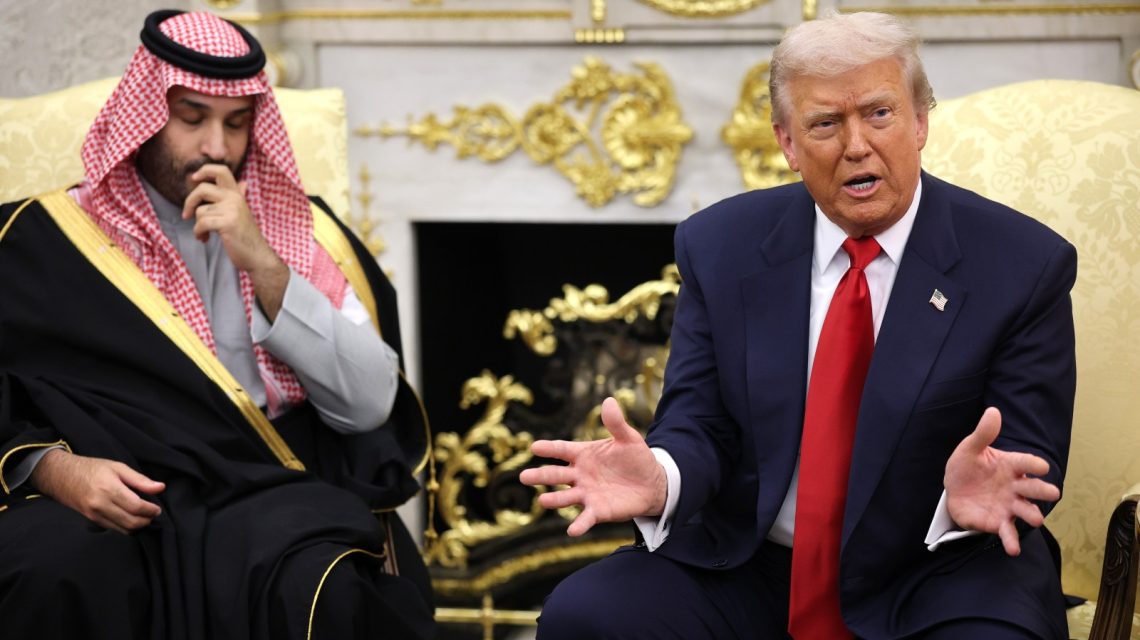
Republican Senator John Kennedy voiced unease over the Trump administration’s new civilian nuclear deal with Saudi Arabia. His skepticism is notable within the president’s party as Congress gears up to review the agreement. Kennedy’s reservations emerged after President Donald Trump announced the deal and introduced a requirement for Saudi Arabia to normalize ties with Israel before proceeding. This new condition, criticized by Democrats, raises doubts about the deal’s viability in Congress. Newsweek sought a comment from the Trump administration on Sunday.
Reasons for Kennedy’s Opposition
When interviewed on CBS News’ Face the Nation, Kennedy expressed discomfort with the deal, stating: “No. Maybe someday, but not right now.” The Senator from Louisiana argued that while the U.S. is at war with Iran, pursuing a Saudi nuclear agreement sends conflicting signals. “We’re bombing a country to prevent them from obtaining a nuclear weapon, yet making a deal with another” country viewed as potentially heading towards nuclear armament, he remarked.
Kennedy emphasized his concern was not with civilian nuclear cooperation itself, but with the deal’s timing. “The world’s on a hair trigger,” he said, highlighting global nuclear deterrence amidst instability in the Middle East, Europe, and beyond. Despite generally supporting Trump’s foreign policy, Kennedy criticized this agreement timing. He also advocated for continued pressure on Iran through sanctions and military efforts, not a larger ground war.
Details of the Deal
The agreement aims to set a framework for civilian nuclear cooperation between the U.S. and Saudi Arabia and requires congressional review before it can take effect. The Trump administration argues the deal would strengthen ties with a key Middle East partner and create opportunities for American businesses in Saudi Arabia’s nuclear energy sector. Proponents believe U.S. involvement could allow greater influence over Saudi nuclear development.
Concerns about a possible Saudi nuclear weapon program linger. Crown Prince Mohammed bin Salman previously vowed to pursue a bomb if Iran obtained one, adding scrutiny to the agreement in Washington.
Trump’s Condition of Israel Normalization
Discussion intensified after Trump added a requirement for Saudi Arabia to join the Abraham Accords and normalize relations with Israel. This condition raises doubts about the deal’s future due to Saudi Arabia’s stance on Palestinian statehood progress tied to normalization. Although Saudi discussions with Israel occurred, Riyadh ties any breakthrough to progress on the Palestinian cause.
Kennedy expressed doubt about meeting this condition, remarking, “I don’t think it’s going to happen anyway because the president’s conditioned it on Saudi Arabia recognizing Israel, and they’re not going to do that.” His comments indicate Republican skepticism about this new requirement.
Van Hollen’s Criticism
Democratic Senator Chris Van Hollen criticized the administration’s handling of the negotiations. Speaking on ABC’s This Week, Van Hollen said the White House altered the deal terms post-announcement. He described it as a “bait-and-switch scheme,” arguing it sends the wrong message to an important U.S. ally. Van Hollen focused not on Saudi nuclear assistance itself, but on Trump amending the political framework post-agreement.
Congressional Challenges
The dual criticisms from Kennedy and Van Hollen highlight challenges as the agreement reaches congressional review. Kennedy objected to the agreement’s timing amid U.S. engagement with Iran, while Van Hollen objected to the new conditions added after the deal’s announcement. This presents a significant issue for the administration in Congress.
Kennedy’s continued support of Trump’s Iran strategy further complicates narratives of overall foreign policy opposition. Democrats are expected to press the White House on forming a connection between the nuclear deal and Saudi-Israeli normalization.
Future of the Agreement
Congressional review will scrutinize the deal’s nonproliferation safeguards and strategic implications. The administration claims it would solidify a crucial partnership and expand U.S. influence in the Middle East. However, recent debates suggest lawmakers will question the need for this nuclear agreement when nuclear proliferation is central to the Iran conflict. The deal faces unique political realities, with Democrats criticizing the negotiation method and a notable Republican questioning its timing. This combination could complicate what was intended as a foreign policy success on Capitol Hill.
 Princess Diana’s Brother’s Book Sparks Royal Controversy
  Gov. JB Pritzker Reveals Type 2 Diabetes Diagnosis and Weight Loss Journey
  Cancellation of the Red Sea International Film Festival Amid Regional Conflict
  Trump’s Media Ban Affects Event Coverage
  Family Seeks Answers Following Elderly Woman’s Death Under Canada’s Assisted Dying Program
  A Critical Perspective on National Spending and Healthcare from Representative Eric Burlison