
Speaker of the House Mike Johnson, R-La., held a news conference at the U.S. Capitol Building this Tuesday. House Republicans passed a substantial $1.1 trillion military funding bill the following day in an effort to complete necessary tasks before they embark on a month-long recess.
The National Defense Authorization Act (NDAA), responsible for annual military policy, passed with a narrow vote of 216 to 212. Six Democrats joined Republicans to support the bill, which now faces an unpredictable future in the Senate.
In prior years, the NDAA usually received broad bipartisan support. This year, partisan divides are more evident. Republicans view the bill as a strategic investment in national defense, emphasizing innovation and readiness. However, Democrats, including steadfast military supporters, express reservations.
Rep. Adam Smith of Washington state, a leading Democrat on the House Armed Services Committee, stated concerns over $1.15 trillion in discretionary spending associated with the bill. He emphasized opposing any move that funds defense by substantially cutting vital domestic programs and reducing taxes.
In the Senate, Republicans need Democratic backing to reach the 60-vote requirement for most legislation. Senate Democrats recently halted a version of the bill, demanding limitations on Trump’s actions regarding Iran.
The NDAA discussion coincides with tension for the Pentagon amid the U.S.-Iran conflict, which has already exhausted $37.5 billion from taxpayers, as reported by Defense Secretary Pete Hegseth. The conflict has claimed 18 U.S. service members and left nearly 500 injured.
Gas prices in the United States have surged above four dollars per gallon, as reported by AAA.
Alternative Pentagon Funding Route
The same Wednesday, House Republicans advanced a $95 billion budget proposal. This framework, pending Senate approval, allocates over $70 billion for the Iran conflict, $12 billion in farmer support, and funding for the SAVE America Act. It passed narrowly with a vote of 216 to 214.
GOP fiscal conservatives criticized the proposal’s failure to offset spending with reductions elsewhere. Concerns also arise over continuing funds for the increasingly tense and unpopular conflict.
Nevertheless, Speaker Mike Johnson managed to rally support using parliamentary reconciliation, circumventing the usual Senate voting margin allowing a simple majority vote.
The Senate’s timing for addressing the reconciliation framework remains uncertain. Majority Leader John Thune, R-S.D., aims to focus on extending government funding beyond midterm elections. Though funding lapses at September’s end, Thune seeks to negotiate with Democrats. If unsuccessful, he may alter the budget framework for party-line passage.
The House extended government funding until December, but Thune noted missing White House requests in that plan.
Restricting Stock Trading by Lawmakers
By a vote of 232 to 198, the House supported a bill restricting lawmakers from acquiring new stocks while in office. They could maintain existing stocks, reinvest dividends, and sell stocks with the required disclosure.
The Stop Insider Trading Act faced opposition from non-partisan good governance advocates who argued it fails to address lawmakers profiting from stock trades or holding stocks.
Additionally, most Democrats opposed the bill due to perceived loopholes and a contentious voter ID provision included.
 American Public Opinion on Press Freedom
  Media Lawsuit Against Trump Administration for White House Ban
  The Cost of Challenging Beijing
  Analyzing Midterm Elections and Party Dynamics
  Allan Lichtman’s Framework for Assessing Presidential Greatness
 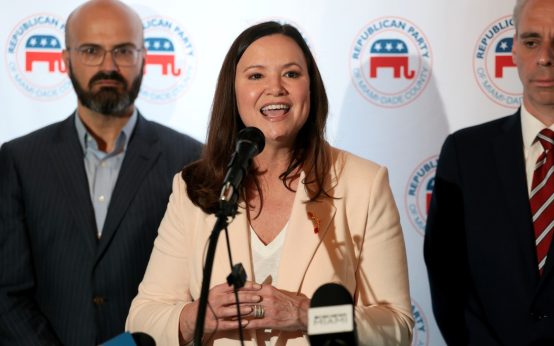 Florida Senate Race Tightens as Recent Polls Show Dead Heat