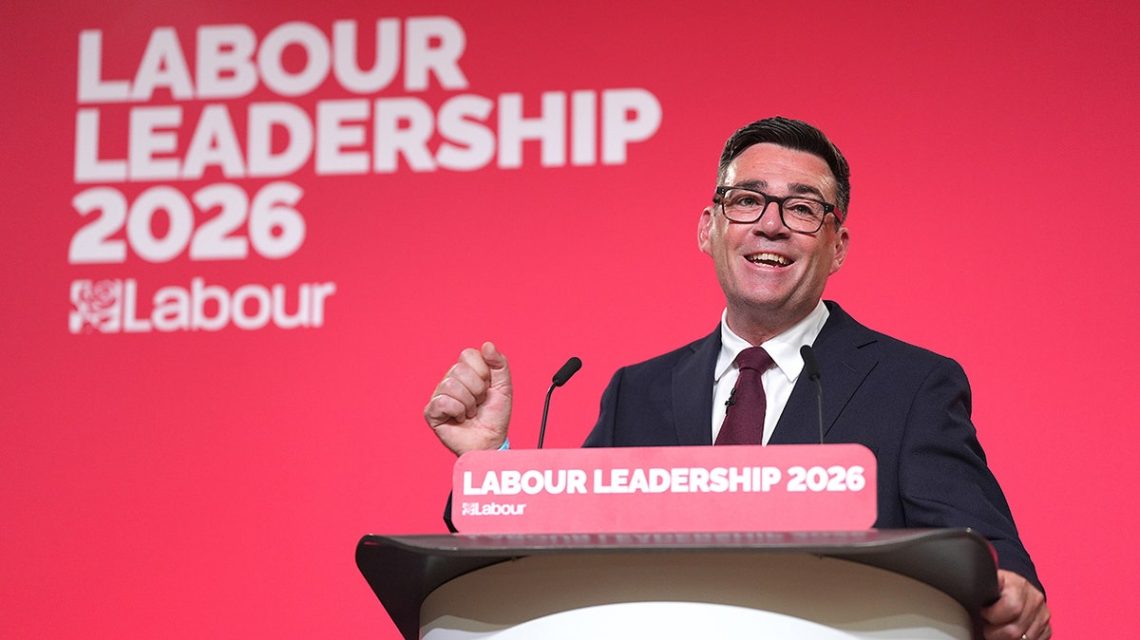
Britain’s incoming Prime Minister, Andy Burnham, criticized the economic framework set by Margaret Thatcher in his initial speech as Labour leader. He pledged to enhance public control over essential services, marking a shift to the left from the outgoing Prime Minister, Keir Starmer.
Burnham will officially become prime minister on Monday. He was the sole candidate for party leader, backed by 379 Members of Parliament. In his July 17 speech in London, he stated that Britain had taken several missteps in the 1980s, centralizing political power and transferring economic control to private entities.
“The country surrendered control of essentials — housing, water, energy, transport — leading to higher costs for the people,” Burnham remarked.
He argued that four decades of neoliberal policies had been detrimental to the working class and industrial communities that traditionally supported Labour. Burnham described his leadership as the most crucial political change in 40 years.
“The government I lead will confidently lay that path out starting next week,” Burnham declared. “This is the most significant change moment in our politics for 40 years.”
Alan Mendoza, from the Henry Jackson Society, noted that while Burnham’s speech signaled a clear ideological stance, it lacked details on implementation. “With Burnham, there is a lot of light and heat, but not much actual substance,” Mendoza said, urging clarity on Burnham’s plans.
Mendoza questioned the direction Burnham aims to take, pondering if it leans towards past socialism or a version of statism. Burnham’s speech indicated a move away from Starmer’s economic caution towards increased state ownership and regional empowerment in essential services.
Burnham assured that Labour would not attempt to outdo other parties like the Greens or Reform. Critics viewed his comments on Thatcher’s reforms as an inclination to revive state-centric policies from before her government.
The Winter of Discontent, a pivotal period from 1978-79, saw massive strikes disrupting various services in the UK. This unrest contributed significantly to Thatcher’s Conservative victory in 1979, as public sentiment turned against unions and Labour.
Following Burnham’s speech, the Adam Smith Institute defended the Thatcher era, citing achievements like tax reductions, privatizations, and increased homeownership.
The institute highlighted economic indicators such as a drop in the top income tax rate from 83% to 40% and a decrease in days lost to strikes from 29.5 million in 1979 to 1.9 million in 1990. Homeownership increased from 55% to 67%, while national debt fell from 47% of GDP to 28%.
Emma Schubart, a research fellow, criticized Burnham’s economic understanding, labeling his stance on Thatcher’s policies as “strange and needless.” She argued that Burnham’s narrative seemed contradictory, proposing a national renewal while hinting at a return to policies from the 1970s.
Despite these critiques, Burnham emphasized his intention to be a “pro-business leader” seeking greater public control, regional empowerment, and collaboration with the private sector.
Burnham’s ideological shift poses political risks, requiring him to unite various factions within Labour, stabilize financial markets, and address the challenge from Reform UK, all while assuming office without a national electoral win.
Mendoza warned that Burnham’s left-leaning stance might strain relations with the United States, especially under the Trump administration. Adopting U.S.-friendly policies may alienate certain voter demographics, while opposing the U.S. could harm national security and the UK-U.S. alliance.
Burnham is set to be sworn in as prime minister on Monday by King Charles III.
Efrat Lachter is an investigative journalist with extensive experience, having directed over 200 documentary segments globally. She received the Peres Center for Peace Award and is a Knight-Wallace Journalism Fellow.
 The War on Poverty: A Lesson on Intentions and Outcomes
  Reporters Blocked from White House by Trump Administration
  Universities Should Reject Political Influence on Research Funding
  Trump’s Approach to China: Trade Dynamics and Challenges
  Media Outlets Sue After White House Ban
  American Public Opinion on Press Freedom