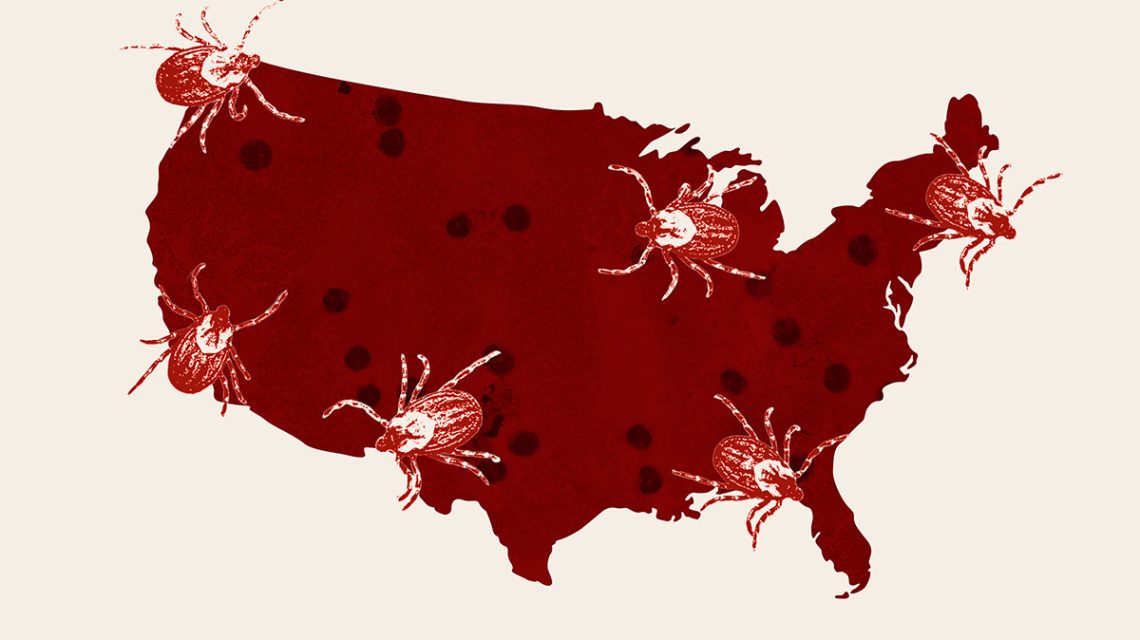
As temperatures rise, ticks spread diseases unfamiliar to many Americans, posing significant health risks. Dr. Natasha Wyndham Hanners, an infectious disease specialist, highlights the increase in vector-borne illnesses, potentially linked to climate changes and expanding tick habitats. She notes that global travel and advanced diagnostics reveal previously unknown pathogens.
New research reveals how orthonairoviruses, a group of tick-borne viruses, evade the human immune system, raising concerns about tick-borne diseases spreading in North America.
Three Tick-Borne Threats to Know
Anaplasmosis: This bacterial infection spreads through the blacklegged deer tick and causes fever, headache, chills, and muscle aches. Unlike Lyme disease, it lacks the characteristic bull’s-eye rash, making it difficult to identify without blood tests.
Orthonairoviruses: This group of viruses includes the dangerous Crimean-Congo hemorrhagic fever virus. Recent findings indicate that these viruses carry proteins that remove the immune system’s warning signals, assisting in evading detection.
Nairoviruses: A broader class, including orthonairoviruses, is called ‘tick-borne pathogens.’ Identified in the Pacific Coast tick, the PTNV virus is not yet confirmed in humans, but lab tests show its enzyme is highly effective in evading the immune system, posing potential exposure risks.
The Virus That Hides from the Immune System
A study from the University of California, Riverside, shows how orthonairoviruses suppress the body’s infection detection. Researchers examined viral proteins known as ovarian tumor domain proteases (OTUs) that strip away immune-signaling molecules like ubiquitin and ISG15. These molecules typically alert the immune system to an infection. Without them, the body doesn’t respond to the virus.
Enzymes from four nairovirus species were tested. The PTNV enzyme, carried by the Pacific Coast tick, was particularly effective at evading detection. Since this tick already spreads Rocky Mountain spotted fever, the study raises concerns about potential human exposure on the West Coast.
“The study reinforces the need for vigilance regarding tick bites,” said Scott Pegan, a study author.
Newsweek sought further comments from the Centers for Disease Control and Prevention, University of California, Riverside, and the American Chemical Society.
An Old Disease Spreading to New Places
Anaplasmosis, transmitted by the deer tick, is spreading to new areas. Craig Bober, a primary care physician, mentions that while Lyme disease receives the most attention, deer ticks also spread anaplasmosis and babesiosis. Blood tests are critical for appropriate treatment due to symptom overlap with Lyme disease.
The Asian longhorned tick, first found in the U.S. in 2017, is now common in New Jersey and Pennsylvania. While its human infections remain rare, its spread warrants public awareness for the diseases it carries.
How to Protect Yourself
Doctors advise wearing long sleeves, tucking pants into socks, using EPA-registered repellents like DEET, and treating gear with permethrin for those spending time outdoors. They suggest showering within two hours of being outside to remove unattached ticks and checking the body, especially the scalp, behind the ears, underarms, and knees. If a tick is attached, use fine-tipped tweezers to remove it close to the skin and clean the bite. Consulting a doctor soon after is recommended, especially if symptoms appear.
Reference: Gonzalez, D. S., et al. (2026). Insights into the Structure and Function of the OTU Protease Virulence Factors from Emerging Human Nairoviruses. ACS Infectious Diseases. https://doi.org/10.1021/acsinfecdis.6c00320.
Contact Newsweek editors: Kara Dolman and Emma Lee-Sang
 Presley Gerber’s Death Highlights Concerns in Addiction Treatment Approaches
  MAHA Activists Challenge Trump and RFK Jr. on mRNA Vaccines
  Fraud Task Force Saves Billions by Targeting Obamacare Fraud
  Understanding VA Disability Benefits and Latest Legislative Developments
  Nationwide Recall of Pasta Products Due to Listeria Risk
  Vice President JD Vance’s Task Force Targets Fraudulent Enrollments in Health Care Program