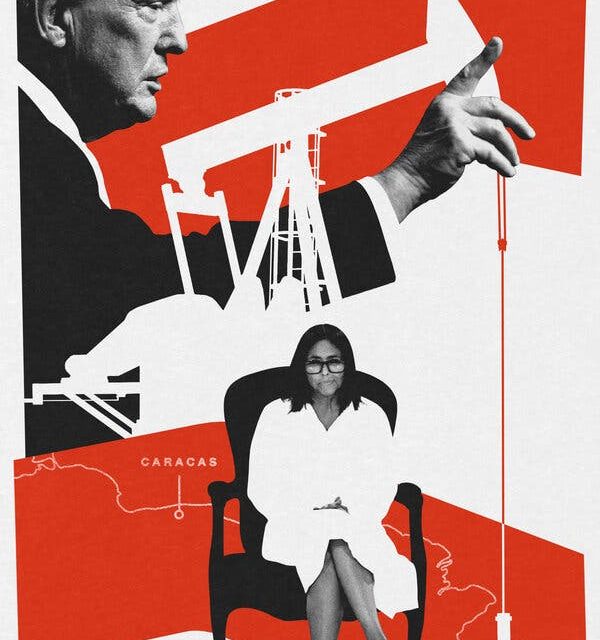
Since the capture of Venezuelan President Nicolás Maduro by U.S. Special Forces in January, American officials and oil executives have been frequently visiting Caracas. Their objective mirrors the actions of colonial administrators and businesspeople who historically managed other countries’ affairs. As noted by The Times, U.S. Secretary of State Marco Rubio exerts substantial influence over the acting president, Delcy Rodríguez, guiding her administration’s decisions, particularly regarding Venezuela’s oil revenue access.
Under Rubio’s direction, Rodríguez has opened Venezuela to U.S. companies. The Trump administration considers it premature to discuss democratic elections, stating these must wait until Venezuela’s energy sector stabilizes and its economy recovers.
Observers describe Venezuela’s relationship with the U.S. using terms like “puppet regime” or “American protectorate.” Carlos Mendoza Potellá, a former Venezuelan central bank advisor, claims Venezuela has surrendered its national sovereignty, saying, “We are not a nation anymore.” He argues that decisions are now made abroad rather than domestically, with Trump and Rubio pulling the strings.
Yet, these descriptions don’t fully capture Venezuela’s unique status. Through the lens of the 1933 Montevideo Convention, Venezuela still meets the criteria for statehood: a government, territory, population, and the ability to interact with other states. Despite the lack of a formal U.S. military occupation—though 900 American troops are present for earthquake recovery—the autonomy of Rodríguez’s government is questionable.
Political scientist Javier Corrales explains that while Venezuela isn’t occupied, it has effectively surrendered major economic assets to the U.S. This situation raises questions about Venezuela’s sovereignty—is it a sovereign state, a U.S. territory, or something in between?
The scenario in Venezuela typifies modern empires where traditional occupations are deemed unnecessary and costly. The Iraq and Afghanistan wars serve as examples, where the expenses of occupation drastically escalated. Consequently, major powers now control smaller countries without formally claiming them.
Historically, sovereignty was perceived as an indivisible asset. In today’s world, it resembles a “bundle of rights” that can be distributed, bought, or sold, according to Tom Long, a professor at the University of Warwick. Small states often outsource governance elements to foreign entities. Examples include British companies managing customs in Angola and Mozambique and Australia policing the Solomon Islands. Many nations have depended on international organizations, like the U.N. or I.M.F., for security and governance tasks when their capabilities fell short. China uses initiatives like the Belt and Road to exert influence over numerous nations. Furthermore, European member states of the EU have willingly given up certain sovereignty aspects.
 The Cost of Challenging Beijing
 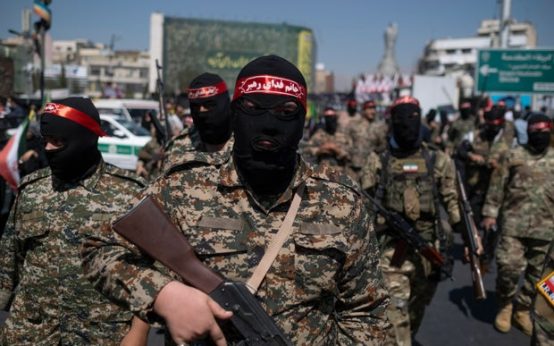 Tensions Escalate in Iran Conflict as Global Leaders Weigh Options
 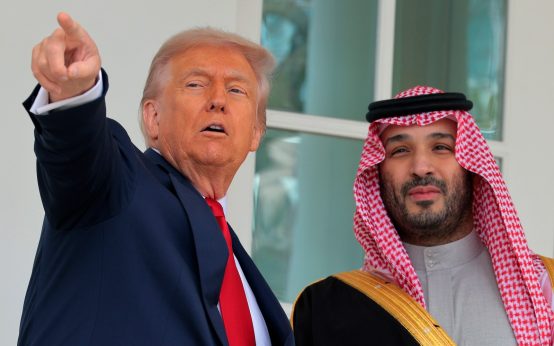 White House Approves F-35 Sales to Saudi Arabia Amidst Regional Tensions
  Inside the Secret Deals Powering the President’s Push to Deport Migrants to Countries Not Their Own
  Navigating the Challenges of Third-Country Deportations
  Midair Altercation on Bangladesh to London Flight