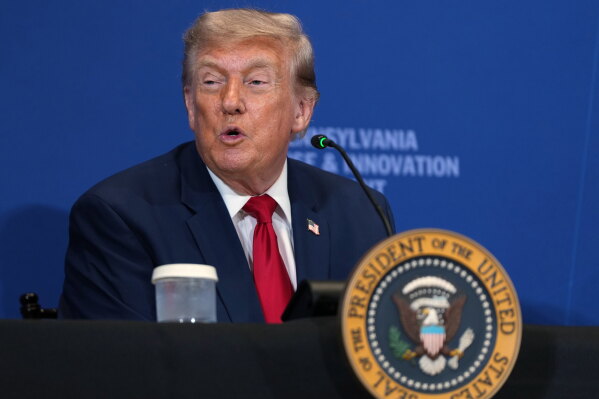
President Donald Trump dismissed the newly appointed U.S. prosecutor in Seattle less than an hour after his appointment by federal judges. This incident underscores ongoing tensions between the judiciary and the administration regarding influential roles.
Roger Rogoff, who previously served as both a judge and a prosecutor at state and federal levels, was officially sworn in as the U.S. Attorney early Wednesday morning at the U.S. courthouse in Seattle. During a phone interview, Rogoff described how he had gone to the U.S. Attorney’s Office to speak with Charles Neil Floyd, whose interim term concluded in February. While waiting in the lobby, Rogoff received an email from the Trump administration notifying him of his removal. He is now consulting with legal experts about pursuing legal action over his dismissal.
Typically, U.S. attorneys, the lead federal prosecutors for each judicial district, are appointed by the president and require Senate approval except for temporary roles. When such temporary terms expire without an approved nominee, district judges can appoint a U.S. attorney. Under the Trump administration, efforts were made to prolong the positions of acting prosecutors indefinitely utilizing novel methods. Acting U.S. Attorney General Todd Blanche explained that while judges can appoint a temporary U.S. Attorney, the President has the authority to dismiss them. He criticized the judges who appointed Rogoff for bypassing traditional consultations with the administration.
In October, Trump named Floyd, a former immigration judge, as interim U.S. attorney but didn’t advance his nomination to the Senate. After Floyd’s tenure expired, Trump altered his title, first naming him as the first assistant U.S. attorney, leaving the primary position vacant. This administrative tactic invited scrutiny from a U.S. appeals court panel questioning its legality.
Responding to the situation, federal judges decided to open applications for the position and appointed a bipartisan committee for review. Ultimately, Rogoff’s appointment was a unanimous decision by a panel of 17 active and senior judges.
Democratic Senator Patty Murray of Washington, who had objected to Floyd’s appointment, criticized Rogoff’s swift dismissal, stating his career shows a strong dedication to public service and that his appointment by federal judges was lawful. She further accused the administration of avoiding proper processes and promoting individuals with biased motives.
In recent months, similar situations occurred where several acting U.S. attorneys were deemed to be serving unlawfully. Alina Habba resigned as the top federal prosecutor for New Jersey following a court ruling against her appointment. Similarly, Lindsey Halligan resigned from her role in Virginia under similar circumstances. The administration has also dismissed court-appointed U.S. attorneys in other regions including northern New York.
Reflecting on his dismissal, Rogoff, who spent two decades in state prosecution and six years federally before transitioning to a judge role, said he was aware of the risk of being fired. However, he viewed the role as an exceptional opportunity for anyone in his profession. “I’m really proud of my career,” Rogoff shared. He expressed appreciation for the trust of the district’s judges, finding it both humbling and significant for his career.
 U.S. Considers Belarus for Potash Purchases to Cut Fertilizer Costs
  Gov. JB Pritzker Reveals Type 2 Diabetes Diagnosis and Weight Loss Journey
  Trump’s Media Ban Affects Event Coverage
  A Critical Perspective on National Spending and Healthcare from Representative Eric Burlison
  House Republican Criticizes Funding for Trump’s Arch Proposal
  House Bill Proposes Dual Benefits for Combat-Injured Veterans