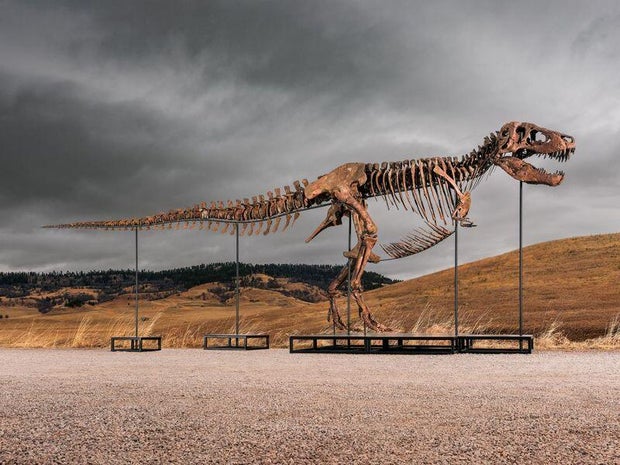
A Tyrannosaurus rex skeleton named Gus sold for $50.1 million at a New York auction, setting a new record for a dinosaur fossil sale. Hosted by Sotheby’s, this auction drew attention as Gus became the most valuable dinosaur ever sold.
Gus stands 12.5 feet tall and measures about 38 feet in length. It consists of 183 different bones and several rare rib specimens. Sotheby’s noted that it is one of the largest and most complete T. rex skeletons ever discovered. Previously, a similar stegosaurus skeleton named Apex sold for almost $45 million two years ago, surpassing its estimated value of $4 to $6 million.
Initially, Sotheby’s expected Gus to sell for $20 to $30 million. However, in just ten minutes of bidding, seven participants drove the price to a record level. Cassandra Hatton, Sotheby’s vice chair, highlighted the lengthy preparation required for this auction, crediting Thomas Heitkamp and his team for unearthing the T. rex in Harding County, South Dakota.
The name Gus honors the late Gary “Gus” Licking, whose land yielded this significant find. The T. rex dates back to the late Cretaceous period, about 67 million years ago. This area of South Dakota’s Hell Creek Formation is well-known for dinosaur discoveries.
Finding such a complete T. rex is rare. Since the first discovery in 1902 in southeastern Montana, only 32 have been unearthed. Before Gus, only two were at least 60% complete. Sue is displayed at the Chicago Field Museum and Stan at the Natural History Museum in Abu Dhabi. Gus, at about 61% complete, includes a remarkably preserved skull, according to Sotheby’s.
Dana Licking, widow of Gary Licking, expressed her excitement about others enjoying this piece of history, emphasizing the personal connection to the land where Gus was found.
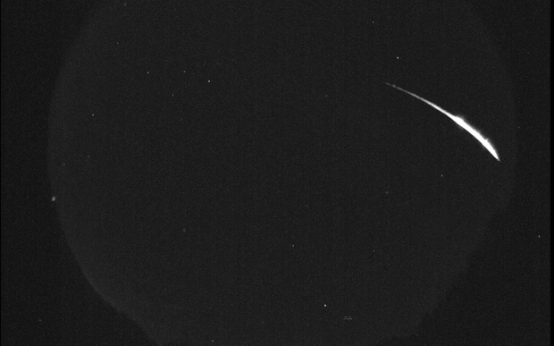 Meteor Lights Up Skies Over North Carolina and Tennessee
 Can AI Possess Consciousness and Emotion?
 NASA Opens Applications for Aspiring Astronauts
 Scrutiny and Leadership in Focus
 NASA Seeks Next Generation of Astronauts for Moon and Mars Missions
 Restoring Confidence in American Scientific Careers