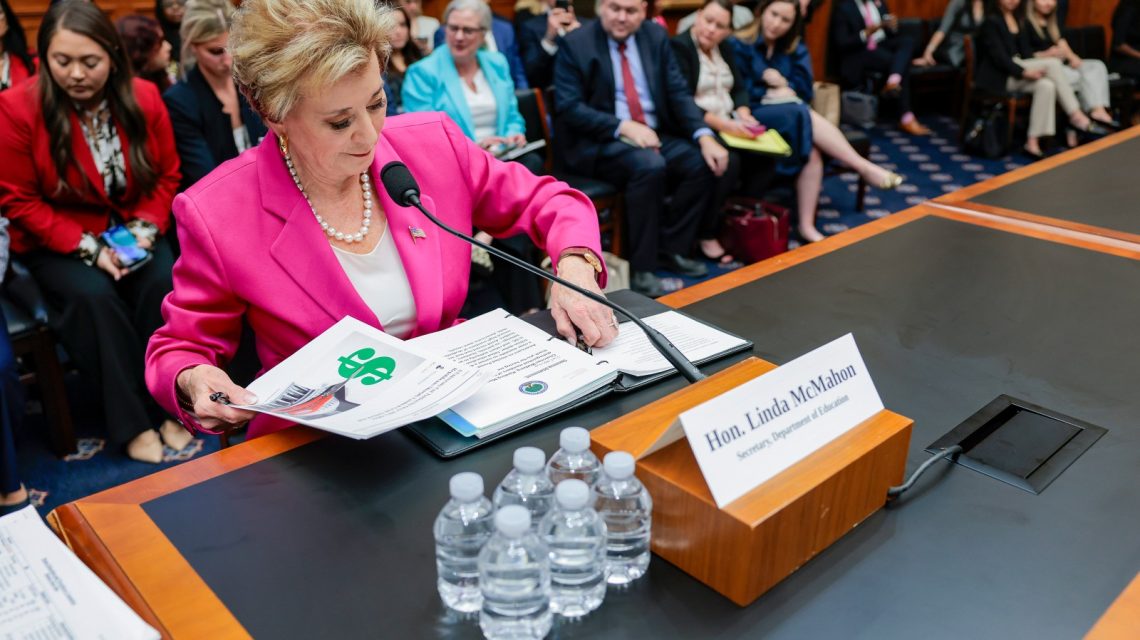
House Republicans have introduced a bill to formally transfer millions of federal student loan accounts from the Department of Education to the Treasury Department. This action seeks to establish in law the Trump administration’s attempt to reduce the Education Department’s involvement in student loan management.
Impact on Borrowers
This proposal could affect over 40 million Americans with federal student loans and significantly alter the administration of the government’s $1.7 trillion student loan portfolio.
Borrowers may wonder who will manage their loans and how repayment programs will function. Concerns also exist about whether the Treasury has the necessary infrastructure to manage millions of student loans.
Implementation Details
The transfer of student loans from the Education Department to the Treasury is expected to occur in stages. Initially, it will focus on borrowers who have defaulted on their federal student loans, as outlined in an agreement between the two departments released in March. Eventually, the Treasury will manage non-defaulted loans as well.
This legislation essentially codifies that earlier plan, specifying that the operational responsibility for servicing and collection of defaulted loans will shift to the Treasury, with potential expansion to other loan types in the future.
Statements from Advocates
According to Alex Beene, a financial literacy instructor, this change won’t erase student loans or alter what is owed. Instead, it concerns the management shift from the Education Department to the Treasury, starting with defaulted loans.
House Education and Workforce Committee Chairman Tim Walberg stated that these bills aim to realign responsibilities to better-equipped agencies, reducing bureaucracy and inefficiencies.
Expectations for Borrowers
Currently, borrowers should not expect immediate changes in payment methods. During the transition, they will continue making payments through existing loan servicers. Those initially affected will be borrowers with defaulted loans.
The Treasury has been preparing to take over responsibility for the defaulted student loan portfolio, with the Trump administration claiming this shift could enhance collections and taxpayer accountability.
Potential for Confusion
There are doubts about whether the Treasury possesses the required resources to manage complex repayment and forgiveness programs. Concerns include possible damaged credit and delayed financial relief if the transfer process faces difficulties.
Additionally, federal law assigns responsibility for student aid programs to the Education Department, suggesting there may be legal challenges to shifting these loan accounts to the Treasury.
Loan Shifts and Challenges
The government oversees about $1.7 trillion in student debt, with roughly $180 billion of defaulted loans accounting for about 11 percent of the federal portfolio. More than 40 million Americans hold these loans, and any dismantling of the Education Department could significantly impact them.
Next Steps
The proposal needs Congressional approval to become law. Meanwhile, the Trump administration is preparing for the transfer based on the March agreement. This preparation aims to improve financial discipline and accountability.
 American Public Opinion on Press Freedom
  Media Lawsuit Against Trump Administration for White House Ban
  St. Laurence High School’s Transformative Journey
  Interest Grows in High-Earning Non-Degree Careers
  The Cost of Challenging Beijing
  Analyzing Midterm Elections and Party Dynamics