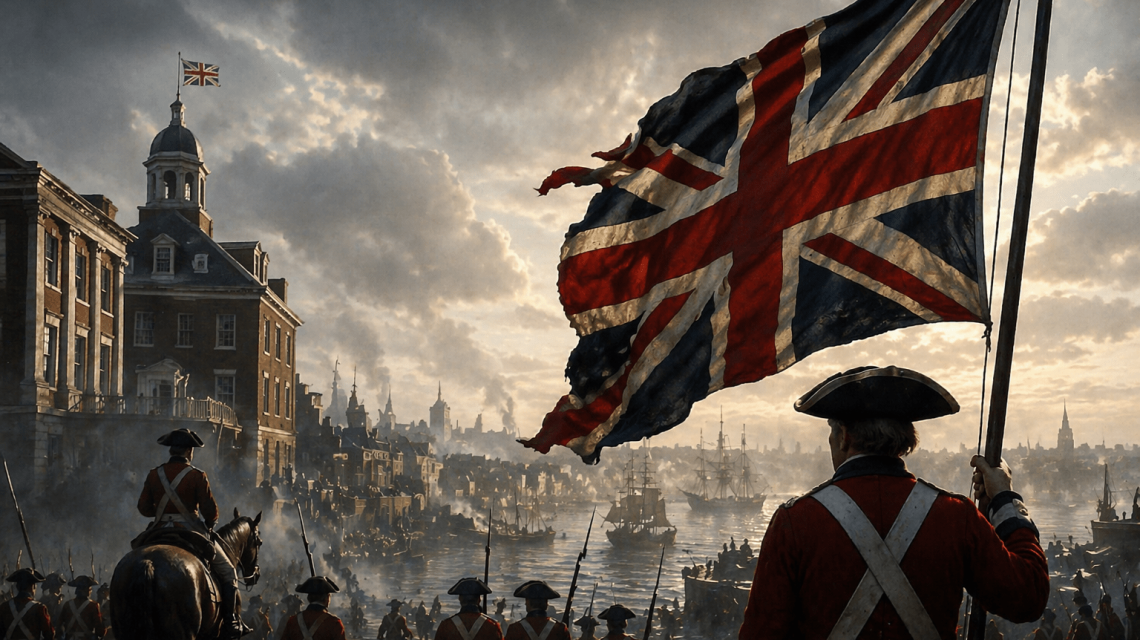
General George Washington’s victory over the Hessians at the Battle of Trenton in December 1776 marked a significant turning point in the American Revolutionary War. His success paved the way for America’s independence and its subsequent 250-year history. However, questions remain about how different the world would be if the outcome of the war had been different.
The Impact of a British Victory
If Washington had not succeeded and the colonies lost the war, the Declaration of Independence might have remained a mere document of hopes unfulfilled. According to historians, the present world could be vastly different if America had not gained independence in 1776. Yet, some daily life aspects might look similar even in an alternate universe where Britain won the Revolutionary War. As historian Nathaniel Philbrick noted, figures like Benjamin Franklin and their distinct American spirit might have persisted.
Independence Time Frame
Historians agree that America would have gained independence eventually, despite a British victory. Citing the British Empire’s changes since 1776, they point out that several countries, such as Australia, Canada, India, and Pakistan, eventually achieved independence. Joseph Ellis, a Pulitzer Prize-winning historian, believes that America’s land richness and growing population would have led England to eventually concede that ‘an island cannot rule a continent.’
Territorial Changes
The Revolutionary War’s outcome significantly influenced America’s rapid territorial expansion. After victory, the United States expanded west to the Mississippi River, and in 1803, President Thomas Jefferson orchestrated the Louisiana Purchase. Florida, Texas, and Oregon became part of the U.S. soon after, and the current U.S. map was completed with the Gadsden Purchase in 1853.
If America had lost, the map could feature a patchwork of French, Spanish, British, and even Russian territories. Russia once explored and established colonies in North America, and historian Serena Zabin speculates that Russian influence could have expanded further. Other historians believe Spanish and French territories might have endured, with Native nations remaining sovereign longer. Major tribes like the Mohawk, Seneca, and Cherokee sided with Britain during the war, hoping to curb colonial expansion.
Pressure for Expansion
Ellis posits that American expansion was inevitable, regardless of remaining under British rule. He argues that Spain lacked the power to resist expansion. Even if the colonies had remained part of the British Empire, expansion is believed to have continued.
The Slavery Issue
While Ellis believes American expansion would continue regardless of the war’s outcome, slavery’s fate is less certain. During the war, Britain offered emancipation as an incentive for escapees who fought for the crown, and the British eventually abolished slavery before the United States.
If Britain had won, they might have imposed emancipation on the colonies sooner, potentially causing a Civil War. The southern states strongly supported slavery, potentially leading to conflict with England. On the other hand, Nathaniel Philbrick suggests an earlier emancipation could have prevented the cotton gin’s invention, a pivotal change in American agriculture.
Parliamentary Influence
Influence in Parliament could have hindered abolition efforts if America remained a colony. Southern states like Virginia, South Carolina, and Georgia would wield economic and political power. Significant pro-slavery interests in Parliament would complicate passing reforms. Philbrick theorized that prominent slaveholders such as Jefferson and Washington might have held English Parliamentary seats, impacting the slavery debate.
Culture and Sports
If the colonists had lost, cultural changes, particularly regarding race, might have differed. While racial integration in sports came slowly to the U.S., many top athletes found better treatment abroad. According to historian Louis Moore, integration in sports could have happened sooner in America.
Ellis observes that sports like basketball and baseball might remain American staples, as seen in other British territories adopting sports. Sports historian Randy Robert believes American games improved on British models and cites evidence like baseball’s rise as the ‘sport of the masses.’
Women’s Rights
The outcome of the Revolutionary War wouldn’t significantly alter the timeline of women’s suffrage. Women gained voting rights in 1920 with the 19th Amendment. Despite Founding Fathers maintaining British common law on women’s rights, movements gained traction in both countries. Historians suggest women in Great Britain looked to America for inspiration in suffrage achievements.
Convenience and Infrastructure
Without breaking from Britain, American infrastructure might resemble Europe’s more than its modern state. Drive-throughs, an American concept born out of the need to serve military personnel, exemplify the country’s focus on convenience. Had the U.S. remained a British colony, the trend toward suburban sprawl might not have developed.
Historian Kathleen Duval notes that British law initially banned industrialization in the colonies. The loss of American independence at that time might have dramatically altered development and innovation.
An Alternate Timeline
Ultimately, the hypothetical scenario of America losing the Revolutionary War leaves much to the imagination. While independence might still have occurred, the path there and subsequent global events would differ greatly. As evidenced by sports, civil rights, business, and geopolitical superpowers, much of the modern world may have taken unexpected turns if America’s fight for freedom had failed.
 Historical Discrepancies and Diplomatic Sensitivities in U.S.-China Relations
  Escalating Tensions: Russia’s Nuclear Threat and the Kaliningrad Conundrum
  Marco Rubio Discusses Thwarted UK Terror Plot and Global Threats
  New Leads Emerge in 2014 Ayotzinapa Student Disappearance Case
  Concerns Over U.N. Secretary-General Candidate’s Alignment
  Possible Shipwreck Exposed After Nor’easter in Nantucket