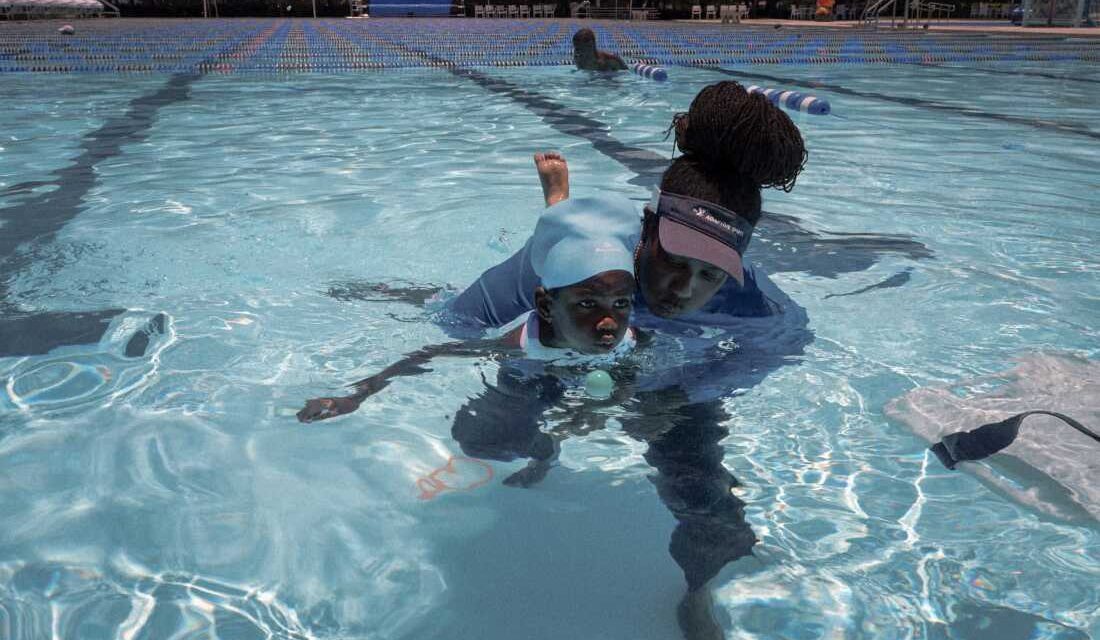
In Weston, Florida, 5-year-old Mackenzie Wesley regularly attends swim lessons wearing her bright Lilo & Stitch swim gear. Her love for water is clear, similar to many children on the autism spectrum. Water offers a sensory experience that provides comfort through its pressure and sparkle.
Mackenzie’s father, Steven Wesley, notes how much she enjoys swimming, whether at the pool or the beach. Her mother, Brittany Bucknor, knows the risks associated with Florida’s numerous water bodies. Children with autism face a 160 times higher risk of drowning compared to others, as a 2017 Columbia University study found. Many autistic children tend to wander, and those near water are particularly vulnerable.
Recognizing the need for safety, Mackenzie’s parents enrolled her in the YMCA of South Florida’s Swim Buddies. This affordable program supports children with disabilities. To further assist, Florida is expanding a voucher initiative beginning July 1. This aims to provide children aged 1-7 with autism prioritized access to subsidized swim lessons.
“These [tragedies] are so preventable,” states Florida state Rep. Anna Eskamani, an advocate for the legislative change.
When the law changes, healthcare providers will offer drowning prevention information to new parents. Vouchers could help cover about $200, enough for up to eight swim sessions.
The YMCA program’s individual-focused approach stands out. Alison Bregman-Rodriguez, the vice president, mentions that over 60% of their participating youth have autism diagnoses. Staffers assess and customize lessons for each child’s needs.
During a Swim Buddies session, Tania Santiago Perez, a professor at Florida International University, studies how swim lessons impact autistic children. Research indicates significant improvements in swim skills after just a few lessons. Session activities start with group introductions to build trust and cohesion. For many kids who struggle with social behavior, this step is key.
Safety is paramount. Instructors stay close, as autistic children can often “elope” or suddenly run away. Santiago Perez notes the use of toys for engagement during lessons. In one instance, a child is coaxed back into a pool with a toy, demonstrating a practical approach to challenges.
Garland Jones, a program director, mentors Mackenzie on water breathing techniques. Mackenzie practices blowing bubbles, advancing from previously having trouble underwater. Jones witnesses Mackenzie’s progress, expressing pride in her achievements.
High demand persists for swim lessons, with many families reliant on the swim voucher programs to afford instruction. However, some facilities lack enough specialized instructors, creating a gap in availability. Programs like the YMCA’s are often overwhelmed with requests but strive not to compromise on lesson quality.
Researcher Santiago Perez stresses the importance of access. Many families seeking vouchers miss out due to limited supply. Despite efforts, ensuring sufficient support for all remains a pressing issue.
As Mackenzie finishes her swim lesson, her newfound confidence is evident. Her participation in a recent pool party marks a significant milestone, showcasing her growth as a swimmer. This transformation reflects the program’s positive impact on safety and skill development for children embracing their love for water.
 Patrick Clancy Shares Insights into Tragic Family Loss
  Independence of Research from Political Agendas
  Unsupervised Play: The Benefits Over Commercialized Youth Sports
  Colleges Should Handle Tuition with Care
  Federal Relief Funds Used for Anti-Racism Training in Albuquerque Schools
  Midair Altercation on Bangladesh to London Flight