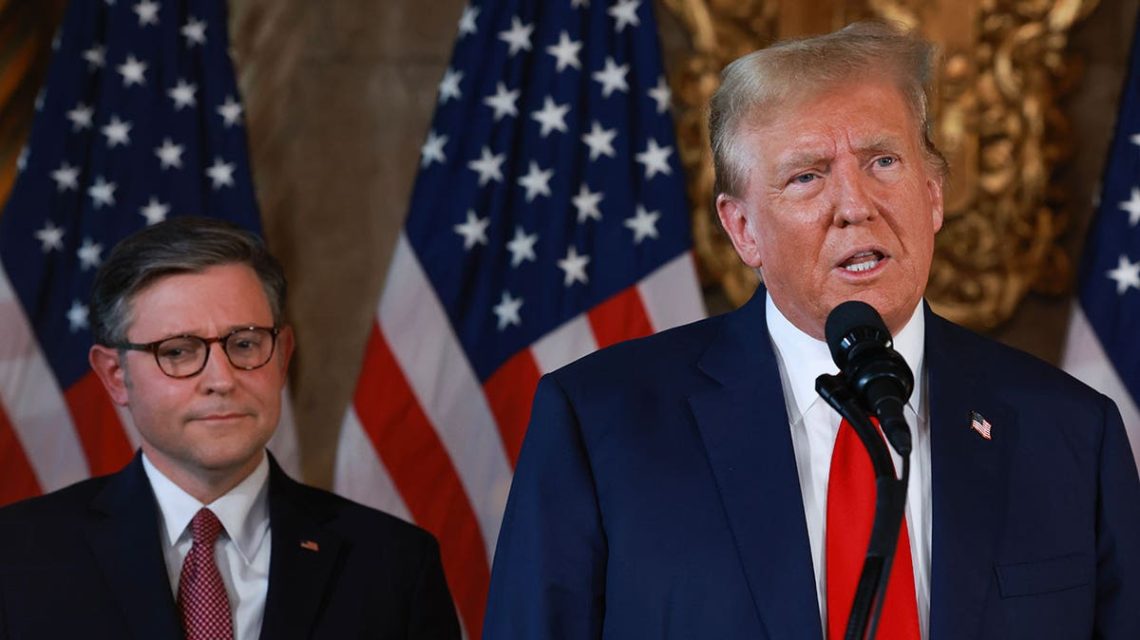
An Obama-appointed federal judge recently invalidated significant portions of President Donald Trump’s executive order on election integrity. This move sparked a strong reaction from White House Deputy Chief of Staff Stephen Miller regarding the judiciary’s direction.
Judge’s Decision on the Executive Order
U.S. District Judge Denise J. Casper ruled that Trump’s order, titled “Preserving and Protecting the Integrity of American Elections,” exceeded presidential authority. It violated the Constitution’s separation of powers by trying to create or change election rules independently of existing laws.
“While the Constitution grants the President ‘executive Power’ and mandates him to ensure laws are executed faithfully… it does not give the President specific powers over elections,” Judge Casper stated.
Response from Officials
In response, Stephen Miller expressed hope that Supreme Court Chief Justice John Roberts would recognize the judiciary’s course following this ruling. Criticism from conservatives has pointed to the Supreme Court’s perceived inadequacy in addressing lower-court rulings that have halted Trump administration policies.
Background of the Lawsuit
The legal battle stemmed from a lawsuit initiated by 19 states challenging the executive order. This case was heard in the U.S. District Court for the District of Massachusetts. California Attorney General Rob Bonta, a lead plaintiff, celebrated the decision as a triumph over what he viewed as an attempt by Trump to impose voting restrictions nationwide.
“We sued President Trump over his attempt to unilaterally impose voting restrictions across the country — and we won,” Bonta commented.
Provisions Blocked by the Ruling
Judge Casper’s ruling prevents the administration from enforcing provisions requiring documentary proof of citizenship on federal voter registration forms and altering voting requirements for military and overseas voters. It also blocks withholding federal election-related funds from states defying certain rules, such as not counting late ballots.
Casper declared these sections “unconstitutional and void” for overstepping constitutional boundaries and violating separation of powers.
Conflicts with Existing Laws
The ruling highlighted conflicts between Trump’s order and existing federal statutes like the National Voter Registration Act and the Uniformed and Overseas Citizens Absentee Voting Act.
Executive Order’s Intent and Further Judicial Actions
Trump signed the order in March 2025, asserting that enhanced safeguards were necessary to maintain election integrity. He argued state officials were not sufficiently adhering to court decisions and federal laws.
The executive order aimed to reinforce public trust in elections and bolster citizenship verification for voters. However, it faced significant judicial obstacles, with Judge Casper’s ruling being the second to challenge it.
Earlier, another judge blocked parts of the order, saying it imposed proof-of-citizenship requirements that fell outside presidential authority.
Legislative Efforts on Election Integrity
As Republican lawmakers press forward with the SAVE Act, which would mandate documentary proof of citizenship for federal voter registration, Casper’s decision adds a layer of complexity. The House passed a version of the act, but its fate in the Senate remains uncertain.
Trump emphasizes the SAVE Act as a priority and advocates for Senate Republicans to eliminate the filibuster to advance this legislation.
The judge allowed parties until July 10 to decide on continuing litigation over conditions attached to election-related funding.
Fox News Digital reached out to the White House for comment. Elaine Mallon writes for Fox News Digital and Fox Business on national politics.
 Marco Rubio’s Expanding Role in Trump Administration
  Byron Donalds Adjusts Campaign Strategy as Florida Governor Race Intensifies
  Trump’s Engagements at the UN: Focus on Ukraine and White House Developments
  Collins Faces Scrutiny in Tight Maine Senate Race Amid Donor Allegations
  Trump’s Vision for Global Security: Iran, AI, and the Role of the U.S.
  Nevada Attorney General Faces Questions Over Clemency Bid