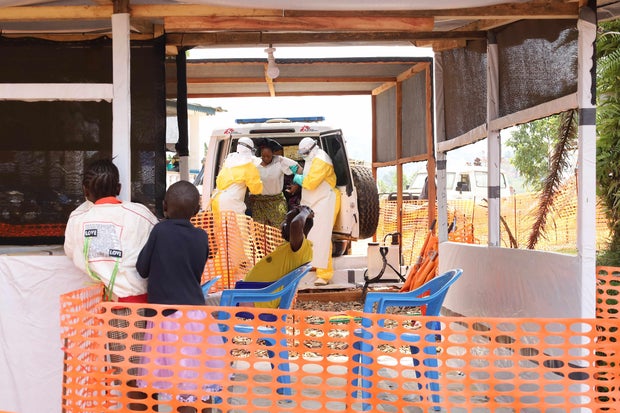
The Ebola outbreak in eastern Congo has reached a critical point, with 1,003 confirmed cases, including 254 fatalities, according to the latest report from Congo’s Ministry of Health. The outbreak, concentrated in the Ituri province, was declared on May 15, and as of now, 100 individuals have recovered. However, 365 patients remain hospitalized or in isolation.
This outbreak, driven by the Bundibugyo virus, has become the most severe in its initial month due to the absence of vaccines or specific treatments. Authorities admit that the actual number of cases might be higher, and the peak of the outbreak is still anticipated.
Medical workers are working tirelessly in locations such as Mongbwalu in the Ituri province to manage the situation.
The process of contact tracing is proving difficult for local authorities, with only a 55% success rate. Dr. Jean Kaseya, Director-General of the Africa Centers for Disease Control and Prevention, emphasized that controlling such an outbreak requires knowledge of the index case, which remains unidentified.
Efforts to trace over 35,000 people who had contact with infected individuals are hampered by regional violence, particularly in areas like Ituri. The presence of the ISIS-backed Allied Democratic Force further complicates access to villages, causing people to flee and seek refuge in overcrowded camps.
At the Kigonze displacement camp in Bunia, officials noted a troubling rise in deaths last week, though no Ebola case has been confirmed there. Given the camp’s population of over 20,000 displaced individuals, the situation is alarming.
The U.N. refugee agency expressed concern over the rapid spread of the virus, emphasizing the heightened dangers for the displaced communities across the affected areas. The agency estimates around 2 million displaced individuals, including 320,000 refugees, live in regions at risk from Ebola.
The prevailing conditions make any potential disease spread a catastrophe for those in camps, commented Charité Banza, a civil society leader in Ituri.
 Artist Speaks Out on Rare Condition Impacting Her Career
  Durham’s HEART Program: A New Approach to Public Safety
  Mindfulness: Manage Stress by Embracing the Present
  Missouri’s Abortion Policy: Conflicting Amendments and Voter Decisions
  The Impact of Extended Job Searches on Mental Health
  Philanthropic Shift Towards Supporting Women in Midlife