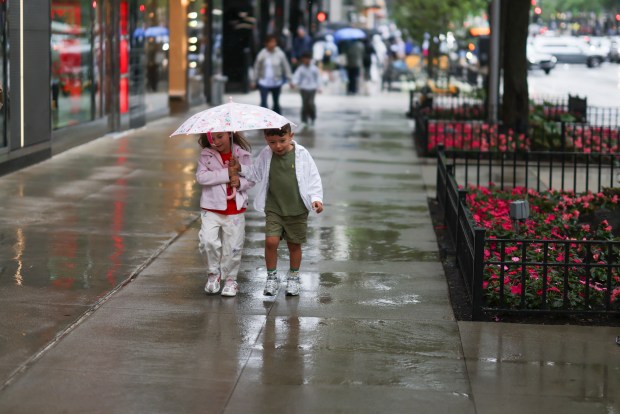
Severe thunderstorms recently hit Illinois, followed by reports of 10 tornadoes. This marks the state’s tornado count this year at 147, setting a new record. Historically, Illinois averaged 54 tornadoes per year from 1990 to 2020, with the previous record of 142 occurring in 2024. The National Oceanic and Atmospheric Administration (NOAA) data suggests a consistent rise, as only 91 tornadoes were recorded by this time in 2024.
In contrast, federal data shows 121 tornadoes in 2023, 142 in 2024, and 126 last year. This three-year stretch contrasts sharp with previous records that saw only four years with over 100 tornadoes since 1990. Illinois State Climatologist Trent Ford refers to this as a ‘step change’ rather than a trend.
NOAA’s Storm Prediction Center places Illinois at the top of tornado occurrences nationwide, surpassing traditional Tornado Alley states like Iowa, Kansas, and Texas. Recently, the state faced more severe weather, particularly in northern Illinois, compounded by threats of localized flooding. Thankfully, meteorologists predict a calmer week ahead despite some risks of life-threatening currents in Lake Michigan.
Lee Carlaw from the National Weather Service in Chicago noted a hyperactive tornado season start, with significant activity occurring in March, April, and June. Sunday afternoon saw tornado watches and warnings for areas in east central and southeast Illinois. Supercell thunderstorms increased the risk of large hail, damaging winds, and tornadoes, with possible rainfall exceeding 3 inches.
The weather service confirmed specific tornado incidents: an EF-2 in Charleston and Mattoon, an EF-0 in Pawnee Junction, and an EF-3 in Effingham. EF ratings categorize tornado severity, with EF-3 having winds up to 165 mph. The recent Effingham tornado caused severe damage, including house roof removals and snapped tree trunks. It spanned nearly 26 miles, causing minor injuries and significant property damage.
Further tornado confirmations include four EF-1 incidents in Springfield, Blue Mound, Bethany, and Grove Township, particularly with the Springfield path closely mirroring another from June 10. Blue Mound’s elementary school roof suffered, with a falling tree damaging a local residence, revealing substantial home damage.
Recent tornado confirmations in Grayslake involved an EF-0 tornado with 80 mph winds. Earlier in the day, the Chicago office confirmed two more tornado occurrences. Despite records pointing to increasing tornado frequency, especially compared to previous years, exact causes are still under scrutiny.
Ford indicated that neither random weather variability nor climate change entirely clarify the current tornado surge. While climate change could partly account for increased frequency due to humidity from fossil-fuel emissions, it doesn’t sufficiently explain all phenomena. Tornado counts correlate with improved technology and recordkeeping but don’t fully satisfy explanations of the recent spike.
Studies indicate that tornadoes now happen more often in previously quieter months. While typically occurring between April 1 and June 30, nearly half the recent tornadoes have occurred in fall or winter. Ford points to favorable weather patterns facilitating unusual tornado occurrences in nontraditional months, contributing to rising numbers.
The La Niña climate pattern could partially explain active tornado seasons, which might ease with the upcoming El Niño presence. La Niña’s impact causes wetter, colder northern U.S. winters, whereas El Niño can lead to warmer and drier northern conditions. Observers remain cautious, monitoring trends closely to see if activity subsides.
 Debate Over ICE Action in Austin Escalates
  Fatal Car Crash in Grand Rapids Involving ICE Agents
  Orland Park Plans Traffic Enforcement Measures
  Congressional Hearing Addresses Fatal Shootings Involving Federal Agents
  Texas Man Arrested in Shooting of 5-Year-Old Girl
  Star Meat Delivery Inc. Recalls Over 167,000 Pounds of Meat