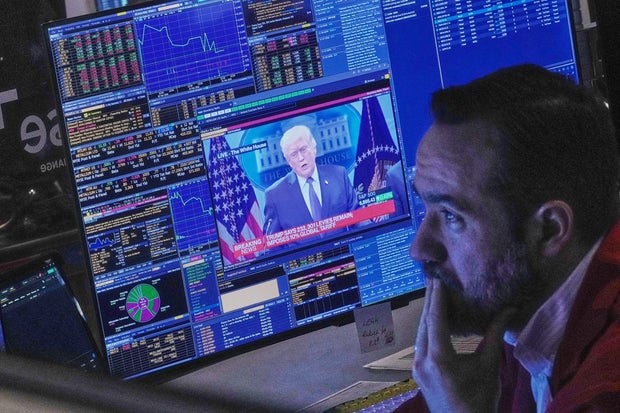
Washington — President Trump’s investment accounts engaged in trading activities valued between $212 million and $695 million over the first quarter of the year. This marks an unprecedented level of trading for a sitting president. CBS News has showcased these transactions in a newly developed interactive dashboard. The data reveals that the president’s accounts conducted 2,346 purchases and 1,296 sales from January 6 to March 30, 2026. Individual transaction amounts are presented in ranges, leading to significant disparities between the minimum and maximum values.
Ethics experts and congressional Democrats have raised concerns over the president’s active financial portfolio. Sen. Elizabeth Warren has advocated for an inquiry into potential insider trading. According to investment professionals consulted by CBS News, the trading strategy might aim to reduce tax liabilities. One expert expressed disbelief at the volume of trading, remarking on the lack of a strategy to justify it.
The Trump Organization stated that the president’s portfolio management is exclusively handled by independent third-party managers, leaving the president and his family uninvolved.
Detailed Financial Activity
CBS News sifted through data from the OGE Form 278-T to provide a comprehensive view of the multitude of trades executed on the president’s behalf. Federal law mandates officials, including the president, to report securities transactions exceeding $1,000 within 45 days to the Office of Government Ethics, which subsequently makes these reports public.
President Trump’s disclosure, signed on May 8, lists 3,642 transactions across diverse firms and funds. Prominent technology companies and exchange-traded funds are predominantly involved in these transactions. Frequent trades involve firms like Microsoft, Amazon, Meta, Netflix, Oracle, and AMD, with each receiving between 17 and 22 trades.
The total stock acquisitions ranged from $126 million to $399 million, alongside sales valued between $86 million and $296 million. The most typical transactions fell within a range of $15,001 to $50,000, embodying 998 purchases and 393 sales. Notably, high-value transactions occurred with companies like Amazon, Meta, Microsoft, and a Vanguard ETF.
Companies from technology, financial, consumer, industrial, and healthcare sectors were substantially engaged in these trades. Technology firms alone accounted for purchases of at least $43 million and sales of around $24 million.
Timing and Implications of Trades
Unusual spikes in trading were noted during February and March. On February 10, large stocks from Microsoft, Amazon, and Meta were sold, each transaction valued between $5 million and $25 million. March witnessed a sharp increase in purchases, with 1,565 transactions compared to approximately 400 in each preceding month. March 23 observed a noteworthy 283 purchases and 17 sales.
This disclosure records the most intense trading volume for the president since his tenure began. Earlier disclosures reflected slower trading, especially in municipal and corporate bonds. For example, his January disclosure cited 191 transactions over the last two months of 2025, contrasting with the 3,642 in the May filing.
Trade analysis unveiled cases preceding policy changes by Trump’s administration, stirring headlines upon the form’s public release. Notably, the accounts purchased Nvidia stock followed by relaxed export controls that benefited the company. Similarly, stock in Palantir, a defense contractor, was acquired around the time Trump praised it publicly.
Potential Conflict and Ethics Concerns
While stock trading isn’t illegal for a sitting president, the involvement in active trading has raised ethical concerns. Accusations of potential insider influence have surfaced, with decisions impacting stock prices potentially influenced by President Trump’s public statements.
Experts argue that modern presidents typically employ blind trusts to avoid conflicts of interest, a move Trump opted against. The decision allows possible insight into investment activities, potentially influencing decisions.
At a Senate hearing, Treasury Secretary Bessent resisted investigation calls, suggesting outsourced management of the trades. Sen. Warren argued this undermines transparency, as Trump signed the comprehensive disclosure detailing stock trades.
In legislative efforts, proposals like Sen. Andy Kim’s Restoring Trust in Public Servants Act and the HONEST Act aim to limit stock ownership and trading by government officials. These proposals face challenges in the legislative process.
 Universities Should Reject Political Influence on Research Funding
  Trump’s Approach to China: Trade Dynamics and Challenges
  Media Outlets Sue After White House Ban
  American Public Opinion on Press Freedom
  Media Lawsuit Against Trump Administration for White House Ban
  The Cost of Challenging Beijing