
The House has approved a bill to allocate nearly $70 billion for immigration enforcement. This measure now awaits President Donald Trump’s approval, strengthening the administration’s deportation efforts. The legislation passed narrowly with a vote of 214-212, relying on Republican support. Democrats largely opposed the bill. The expected signing by Trump will solidify the funding priorities for immigration agencies.
The bill allocates $38 billion to Immigration and Customs Enforcement (ICE) and $26 billion to the Border Patrol. An additional $5 billion is set aside for unforeseen expenses. The funding covers operations for the next three years, supporting the administration’s goal of deporting one million people annually. Speaker Mike Johnson described the bill as essential for border security and immigration enforcement.
“It’s long overdue,” said Johnson. “We have to fund border security and immigration enforcement.”
The approval follows lengthy efforts to negotiate bill components. Initially, proposals for White House security and compensations for Trump’s allies caused delays. These elements were ultimately removed to advance the legislation.
Homeland Security Secretary Markwayne Mullin testified on the budget request for the Department of Homeland Security, emphasizing the importance of the funding. However, Democratic leaders voiced concerns. Rep. Lloyd Doggett criticized the funding as a “slush fund” for ICE, while Democratic Rep. Hakeem Jeffries argued that Republicans were neglecting core public needs.
“Republicans have now come back for more, to give ICE and Donald Trump’s violent mass deportation machine another $70 billion blank check,” Jeffries said.
House Majority Leader Steve Scalise argued that the bill was critical for law enforcement and public safety.
“Make no mistake, if you’re voting yes, you’re not only voting to secure America’s border, you’re voting to fund law enforcement,” Scalise said.
The package comes after extended negotiations and a history-making shutdown of the Department of Homeland Security due to funding disputes. Attempts to reform ICE operations failed, leading to a procedure that bypassed the filibuster, passing the bill without Democratic support.
Budget Committee Chairman Jodey Arrington stressed that the funding was essential for regular operations, extending across three years to avoid repeated debates.
In the Senate, the bill passed mostly along party lines, with Sen. Lisa Murkowski opposing it. The funding coincides with critical changes in the Department of Homeland Security’s leadership. New Secretary Markwayne Mullin is under pressure to uphold Trump’s promises of significant deportation efforts.
The administration also faces challenges in its approach to Temporary Protective Status and green card procedures for some immigrants. The House vote highlighted tensions between parties, with Democrats accusing the Department of Homeland Security of resource misuse.
“Republican leadership likes to talk about common sense, but where is the common sense in giving this federal agency essentially unlimited funds without a single reform in place?” asked Rep. Pete Aguilar.
Despite these criticisms, Republicans emphasized their commitment to national security and supporting law enforcement personnel.
“What it’s about is public safety. What’s it about is keeping Americans safe,” said Rep. Michelle Fischbach.
 Israeli Leader’s Upcoming U.N. Assembly Speech Marked by Controversy
  Republicans Call for Quick Resolution to Iran Conflict
  United States Secures Arctic Defense Pact
  Senator Warren Seeks to Restrict Private Equity in Restaurant Chains
 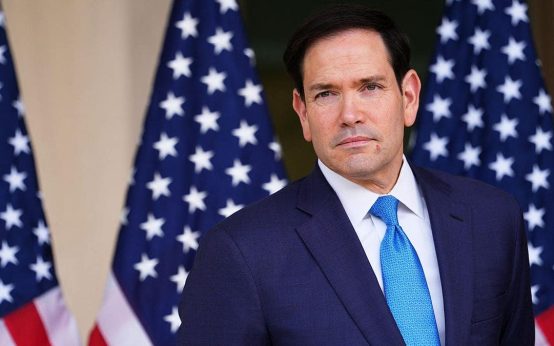 Marco Rubio’s Expanding Role in Trump Administration
  Byron Donalds Adjusts Campaign Strategy as Florida Governor Race Intensifies