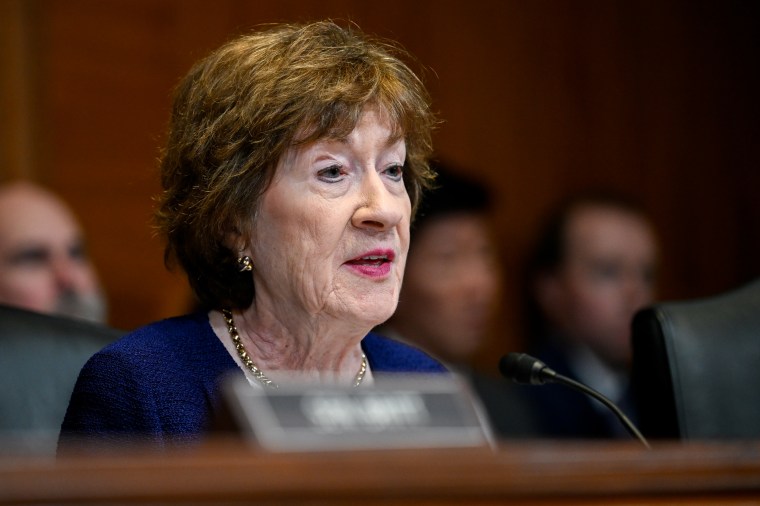
Republican Senator Susan Collins will face Democratic challenger Graham Platner in a high-profile election this fall. NBC News projects this race as a pivotal contest in the battle for control of the Senate.
Both Collins and Platner secured their primary victories on Tuesday. Collins, a long-serving Senator first elected in 1996, ran unopposed as she seeks her sixth term. Platner, a newcomer to politics and a veteran oyster farmer, faced minimal Democratic opposition. Two-term Governor Janet Mills had suspended her campaign after struggling to gain momentum.
While the primary outcomes were anticipated, the upcoming general election is unpredictable. The contest is a focal point over the Democratic Party’s future and voter priorities. Platner faces scrutiny over past controversies, adding to the election’s complexity. The real campaigning between Collins, a seasoned incumbent, and Platner, an audacious outsider, is only beginning.
Maine plays a crucial role in the Senate majority battle. Democrats currently hold 47 seats, needing a net gain of four to achieve a majority. Collins stands as the sole Republican senator from a state Trump lost in 2024, making her a prime target.
Despite challenges, Collins has demonstrated political resilience. In the 2020 election, she outperformed polls and won by over 8 points, even as Trump lost Maine by around 9 points. The President expressed support for Collins, emphasizing the importance of retaining the majority to preserve their achievements.
In previous elections, Democrats nominated center-left candidates who failed to unseat Collins. Platner, however, introduces a new dynamic as a populist outsider. He calls for overhauling the status quo, increasing taxes on the wealthy, expanding the social safety net, and removing money from politics. However, he carries significant controversies.
Platner recently covered a chest tattoo he claimed unknowingly had a Nazi association. Past Reddit posts criticizing police and suggesting some victims of sexual assault bore responsibility have resurfaced. Platner dismisses these as outdated “Internet s—posting,” not reflecting his current beliefs. Additionally, allegations from ex-girlfriends about “toxic” behavior have emerged, though Platner denies any “physicality.”
The checkered past has led to discomfort among Democratic leaders in Washington. Some initially endorsed Platner but now avoid discussing him. Party figures have suggested he withdraw from the race. However, Platner has insisted he will not quit before the July 13 deadline for a potential replacement.
Prominent backers like Senators Bernie Sanders and Elizabeth Warren continue to support him. Polls indicate a competitive race with Collins following his recent controversies.
Collins aims to downplay her party affiliation, focusing instead on local issues. She highlights financial benefits she has secured for Maine as chair of the Senate Appropriations Committee. Last week, she achieved her 10,000th consecutive vote in the chamber.
 Trump Pressures Republicans on Filibuster Threat
  Rep. Golden Endorses Rep. Lawler for Re-election
  Public Perception and Political Impact of Data Centers
  Jewish Democrats in Michigan Shift Support to GOP Candidate in Senate Race
  Mayor Mamdani and President Trump Discuss Major Housing Project in NYC
  Poll Reveals MAGA’s Increasing Popularity Over DSA as Democrats’ Future Debated