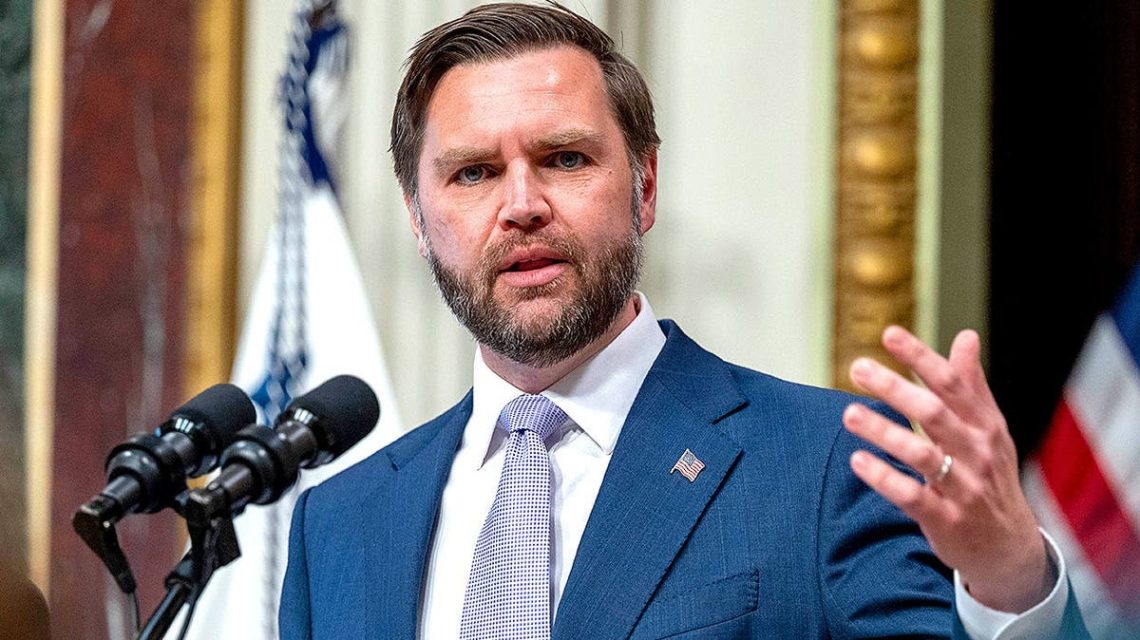
Vice President JD Vance provided an overview of the United States’ diplomatic relationship with Israel, particularly in light of recent strains in the partnership between President Donald Trump and Prime Minister Benjamin Netanyahu. Vance spoke on these matters during an appearance on “Jesse Watters Primetime.” He highlighted that while the U.S. and Israel share many interests, there are areas where their objectives differ.
According to Vance, the U.S. is primarily focused on preventing Iran from obtaining a nuclear weapon. This standpoint has influenced the ongoing discussions related to Iran’s nuclear capabilities. Vance’s comments followed recent U.S. intelligence findings that raised concerns about Israel’s surveillance activities targeting American diplomats involved in talks with Iran.
Notably, there have been reports of tensions between Trump and Netanyahu, with Trump reportedly using strong language to express his dissatisfaction with Netanyahu over Israel’s military actions in Lebanon. This has contributed to the growing tensions between officials from both nations over the approach to negotiations with Iran. The Pentagon has consequently identified Israel as a significant counterintelligence concern.
Vance acknowledged Israel’s security issues but emphasized that U.S. policy on Iran remains centered on American interests. Over the past eighteen months, efforts have been made to establish an environment conducive to achieving a long-term resolution involving Iran’s nuclear program. Vance expressed confidence that these negotiations could be successful, even if they don’t fully align with Israel’s preferences.
The situation remains tense as Israel and Iran have temporarily ceased military exchanges, following Israel’s pressure on the U.S.-brokered Middle East ceasefire. This pause in hostilities came after resumed military confrontations over a weekend and marks the first such exchange since the ceasefire began in April.
Vance mentioned promising signs from the negotiations, noting that Iran seems to be earnestly engaged in the discussions and is proposing substantial offers. The aim is to avoid a prolonged conflict, which is not in the best interest of Tehran.
Fox News host Jesse Watters inquired whether Vance believes Iran might be attempting to manipulate the U.S. during negotiations. Vance suggested a general caution, indicating that every party tries to advance their interests, and stressed that not everyone acts in good faith.
Vance reiterated optimism that a comprehensive Middle East peace agreement could be realized. He emphasized the importance of strict monitoring and inspection processes to ensure Iran adheres to the terms of any nuclear agreement. Vance remarked on past failures, such as the absence of a rigorous inspection regimen in the Obama-era deal, to prevent nuclear weapon development by Iran.
Achieving a U.S.-Iran peace agreement, according to Vance, would represent a significant victory for the United States. He illustrated that if such a deal comes to fruition, it would be a major success for American interests.
Nora Moriarty is a Production Assistant at FOX News.
 Court Rules Against Third-Country Deportation Policy
  Trump Administration Bars News Networks from White House
  Claims to Nazi-Looted Art Spark Legal Battle in California
  Lawsuit Filed Over Preeclampsia Death in Texas Amid Abortion Ban Controversy
  U.S. Secures Strategic Control Over Greenland
  U.S. and Denmark Move Towards Security Agreement Over Greenland