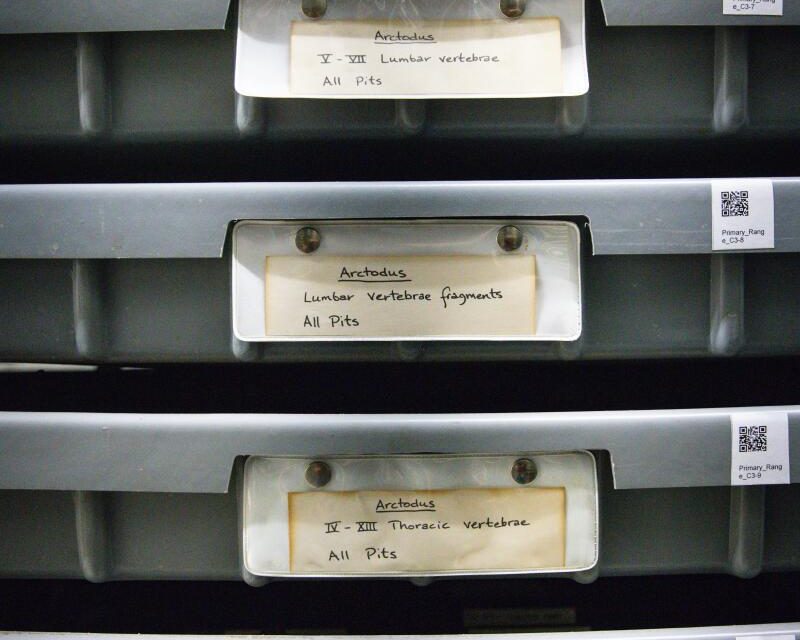
The La Brea Tar Pits are currently buzzing with activity in preparation for a major renovation. Workers are busy packing crates labeled with items like “bison skulls” and “camel hip.” Every fossil, including sloth jaws, sabertooth fangs, and dire wolf ribs, requires careful wrapping in custom foam. This meticulous process will continue over the next two years.
On July 6, the La Brea Tar Pits will temporarily close for renovations. When it reopens in summer 2028, the revamped museum in Hancock Park will become the central hub of the Samuel Oschin Global Center for Ice Age Research. This facility will focus on natural history, especially the Ice Age, a period significantly represented at the site.
The renovation plans include enhancing how the museum displays its collection. The goal is to highlight the ecosystem preserved in the tar pits and its relevance today. Fossils will be packed—around 3.5 million in total—as the museum prepares for its transformation.
The relocation of the museum’s contents is a task of immense scale. Nature’s choice of the site remains irreplaceable, having been formed naturally 60,000 years ago. Over centuries, these tar pits captured a wide range of life, from tiny grains of pollen to giant Columbian mammoths.
Regan Dunn, a paleobotanist and curator at the Tar Pits, stressed the unique nature of this natural archive. This site offers insights into past climate change, extinction events, and human interactions with nature.
Research by Dunn and Emily Lindsey in 2023 highlighted the connection between human arrival and biodiversity loss during the Ice Age. This makes the Tar Pits an essential educational resource.
Lori Bettison-Varga, president of the Natural History Museums of Los Angeles County, emphasized the relevance of the Ice Age story to today’s climate challenges. Current exhibits in the George C. Page Museum, established in 1977, show outdated representations like the iconic Lake Pit mammoth sculpture.
Plans for new exhibits will include accurate depictions of Ice Age life and the role of smaller but crucial components, such as insects and plants. Modern displays will replace old illusions, using updated scientific understanding.
Community input influenced the design of the new museum. Popular features like grassy hills and interactive tar pull exhibits will stay. The outdoor mammoth sculptures will also remain but altered for scientific accuracy.
Inside, the new design will optimize space, offering more room for exhibits, storage, and educational activities. The inner courtyard will feature plants akin to those from the late Pleistocene.
- Some exhibits will return with additional species like a giant ground sloth and the complete skeleton of Zed, a Columbian mammoth.
- Volunteers have been crucial, assisting with packing and organizing the massive collection.
Despite the closure, excavations and fossil conservation will persist, albeit under different conditions. Efforts are underway to provide educational mobile programs for the tens of thousands of schoolchildren who visit annually.
The familiar experience of children interacting with scientists through lab glass walls will be part of the experience. Plans for expanded labs are included in the redesign.
Staff have expressed nostalgia about performing their duties without an audience of curious visitors. Senior Preparator Laura Tewksbury reflected on the unique connection formed with local children who frequent the museum.
 SpaceX Starship Completes Orbital Test Flight and Satellite Deployment
  Studying Black Bears’ Hibernation at Virginia Tech
  Tackling Plastic Pollution: A Shift Toward Flax-Based Alternatives
  Understanding the Impact of a ‘Super’ El Niño
  Largest Viking Age Silver Hoard Found in Finland
  Dogs Use Human-Like Strategy to Process Speech