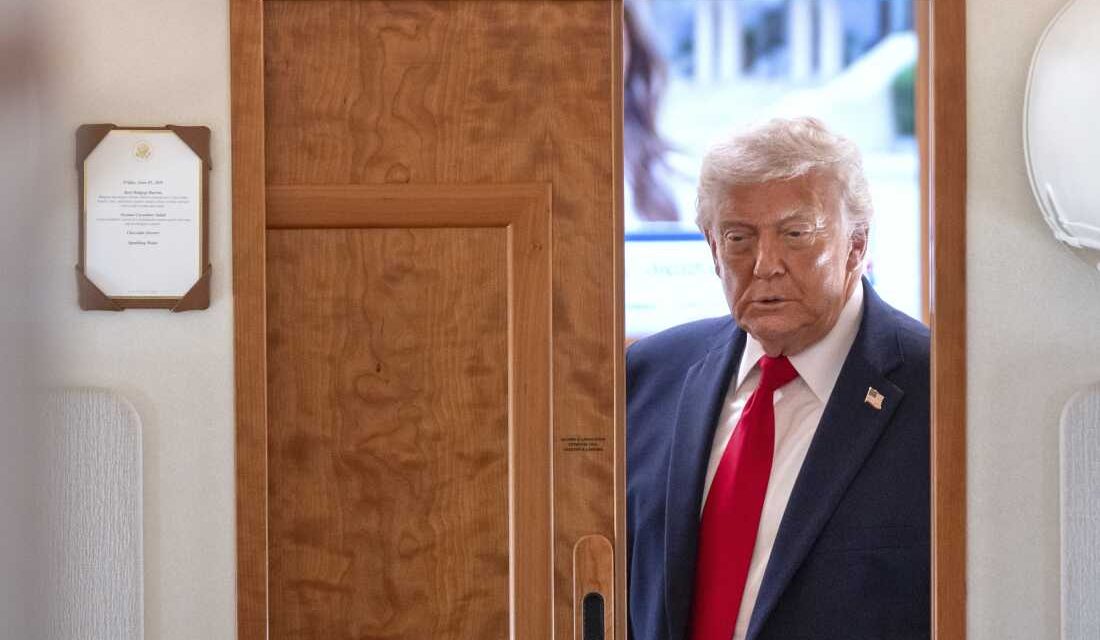
President Donald Trump traveled aboard Air Force One from Joint Base Andrews, Maryland, to Eau Claire, Wisconsin, on Friday, June 5, 2026, amid rising tensions with Iran. The U.S. military announced it intercepted Iranian ballistic missiles and drones aimed at the Strait of Hormuz and Gulf allies, while retaliating against Iran’s coastal radar sites. This exchange heightened the delicate ceasefire with Tehran.
The exchange occurred as the Trump administration increased pressure on Iran to reach a resolution to the conflict. U.S. Central Command disclosed on social media that Iran launched seven ballistic missiles at Kuwait and Bahrain. U.S. forces intercepted six, with the seventh failing to strike its target. There were no reported casualties among U.S. personnel.
Earlier, the U.S. had shot down four Iranian drones sent toward the Strait of Hormuz. According to Central Command, the drones posed an immediate risk to regional maritime activities. Kuwaiti military forces responded to the attacks, while Bahrain activated air raid sirens, instructing residents to seek safety and follow official guidelines.
Iran’s Revolutionary Guard stated they aimed at the Ali Al Salem airbase in Kuwait, which houses U.S. forces, and the U.S. Navy’s 5th Fleet stationed in Bahrain, as per IRNA, a state-run news outlet. In retaliation for Iran’s strategies to control the corridor for oil and gas shipments, U.S. forces have imposed a blockade on Iranian ports. These tensions have impacted energy costs, posing challenges for the Trump administration ahead of the midterm elections.
Efforts continued to maintain the truce despite the rising hostilities. Iranian drones had recently damaged a passenger terminal at Kuwait’s main airport, resulting in casualties and temporary closure of the airfield. Despite these attacks, Trump expressed optimism about the situation with Iran, assuring a swift resolution. He indicated the outcome might involve negotiations or force, but anticipated reduced prices for farmers’ fertilizers soon.
The conflict appears stagnant as U.S. and Iranian officials agreed to a 60-day ceasefire extension and entered discussions on Iran’s nuclear program. Trump has demanded changes without specifics, and Iranian negotiators haven’t publicly agreed to terms. In an interview with NBC’s “Meet the Press,” Trump emphasized Iran’s resistance due to their pride and independence, suggesting their adjustment to new demands might take time.
The administration celebrated a ceasefire between Lebanon and Israel following U.S.-led talks. However, renewed Hezbollah hostility risks this truce. Israeli forces targeted southern Lebanon, issuing evacuation warnings. The strikes resulted in casualties, while Hezbollah’s opposition jeopardizes the stability of ongoing peace efforts.
Additionally, U.S. military operations involved boarding a sanctioned oil tanker linked to Iran in the Indian Ocean, aiming to prevent profit from Iranian oil exports. The U.S. also imposed sanctions on Iran’s energy sector, targeting individuals, companies, and vessels involved.
 Conservative Activists Aim to Shape Judicial Perspectives on Birthright Citizenship
  Impact of Deregulation on Air Travel
  Jorge Messi, Father of Soccer Star Lionel Messi, Passes Away at 68
  Nigerian Hostage Rescue Unveils Harsh Reality of Captivity Under Jihadists
  Jorge Messi, Father of Lionel Messi, Passes Away at 68
  Russian Attacks on Kiev and Surrounding Area Result in Casualties