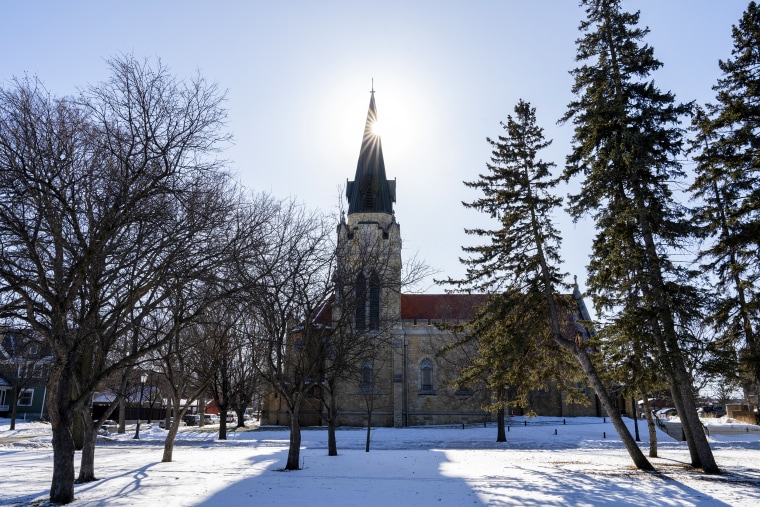
In St. Paul, Minnesota, a group of anti-immigration enforcement protesters, including former CNN journalist Don Lemon, will not face state charges for their actions during a church service protest in January. The decision was announced by St. Paul City Attorney Irene Kao, who stated that current evidence does not meet the necessary standard for criminal charges under Minnesota state statutes.
Kao emphasized that the decision does not endorse unlawful behavior or public disorder. She highlighted the importance of protecting both the right to peacefully protest and the right to exercise religious beliefs, calling it a balancing act in making the decision.
This decision should not be interpreted as an endorsement of unlawful behavior or public disorder.
The protest took place at Cities Church in St. Paul and was part of a response to a specific incident involving the fatal shooting of Renee Good, a mother of three, by a U.S. Immigration and Customs Enforcement (ICE) agent in Minneapolis. The protesters had discovered that one of the church pastors was also an ICE official involved in the operation.
The U.S. Justice Department had previously brought federal civil rights charges against 39 individuals, including Lemon and another journalist. Attendees of the service reported that the protesters interrupted proceedings by chanting slogans like “ICE out” and “Justice for Renee Good.”
Jonathan Parnell, the lead pastor at Cities Church, expressed criticism of the city attorney’s decision. He questioned the implications of allowing similar disruptions in other religious settings, highlighting concerns over ensuring the safety and sanctity of religious gatherings.
While the demonstration did not involve violence, property destruction, or threats to public safety, Kao noted these concerns remain significant. Attorneys for the church argued that the lack of physical damage does not negate the potential legal violations.
Notably, legal measures have been taken in some states to address religious disruptions. This year, states such as Idaho, Louisiana, Oklahoma, and Kansas have enacted laws criminalizing the disruption of worship services.