The closure of the Strait of Hormuz highlights how critical it is for the United States to achieve energy independence. Relying on foreign entities for energy needs is risky, whether it involves fossil fuels, nuclear power, or renewables. Global instability can create ripple effects that impact American workers and weaken the economy.
Recognizing this, President Trump has made restoring American energy dominance a priority. During his first term, U.S. policies enabled the nation to become a net energy exporter. Now, efforts are being made to further expand domestic production and enhance grid resilience.
Domestic Energy Sources
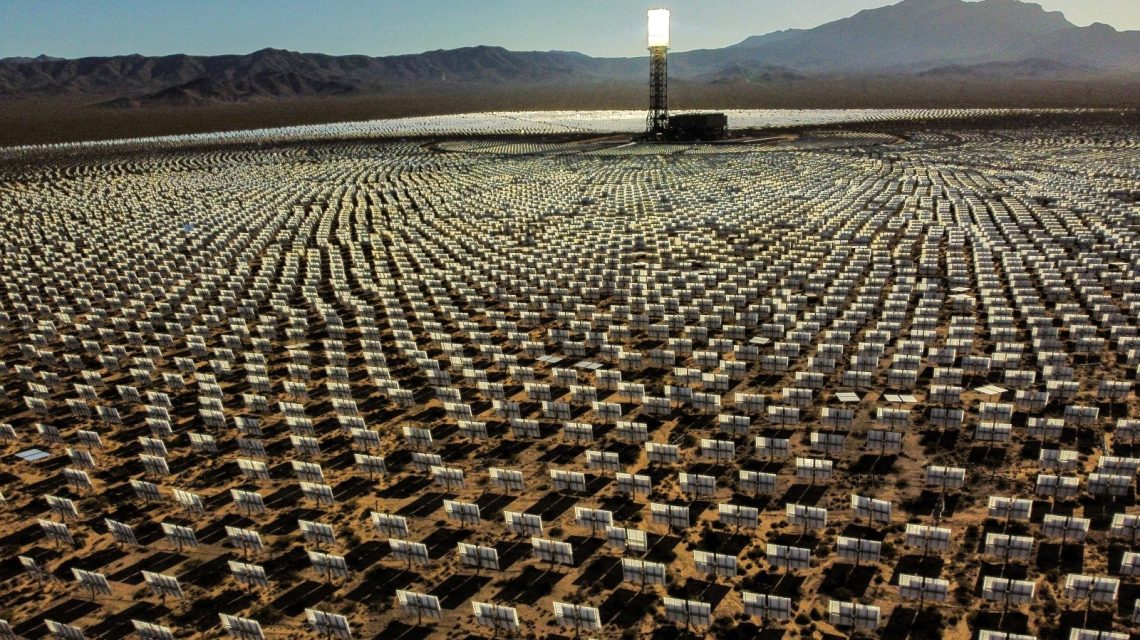
The United States possesses abundant energy resources. These include solar power, which plays a crucial role in national security, particularly in competition with China. China is aggressively pursuing global solar manufacturing and battery supply chains. If the U.S. doesn’t lead in this area, it risks becoming dependent on an energy source controlled by Beijing.
Solar energy, combined with storage technology, offers reliable and affordable power even after sunset, as noted by the U.S. Department of Energy. It’s also the fastest-to-build power source available, allowing for quick scaling of energy capacity. In a national security emergency, having control over our energy sources is vital.
The Threat of Energy Weaponization
Countries like China and those aligned with Iran are working to outproduce the U.S. to gain leverage over our economic security. A report from Time highlights the expanding toolkit used to weaponize energy, including control over infrastructure and supply chains.
To counter this, the U.S. must produce more energy domestically across all sources. Diversifying supply chains and increasing domestic supplies of rare-earth metals, critical for renewable energy technology, is essential. Currently, China controls a significant portion of rare-earth mining and processing globally. For example, the U.S. must reduce dependence on China for lithium, crucial for electric vehicles and advanced weaponry.
Modernizing the Energy Grid
Updating the energy grid is equally important. A diversified and distributed grid would be more resilient to crises. Efforts are underway to strengthen the national power grid and increase domestic energy production. Cutting through regulatory obstacles will enable the development of more energy types, including solar.
The Significance of Fossil Fuels
As a net producer of oil and natural gas, the U.S. supports a robust industry with about 11 million jobs. Eliminating imports of what we already have in abundance is logical. Domestic energy production is vital for economic stability and national security.
The views expressed in this article reflect those of the author, Ambassador Robert O’Brien, who was the 27th U.S. National Security Advisor and currently serves on the President’s Intelligence Advisory Board.
 Debate Continues Over Virginia’s Data Center Energy Plans
  Trump Suggests Renaming AI to ‘Super Intelligence’
  The Rise of Data Centers and AI Development
  How China Uses AI to Challenge U.S. Dominance
  Controversy Surrounding Automated License Plate Readers (ALPRs)
  U.K. Test-Fires U.S. Torpedo from XV Excalibur