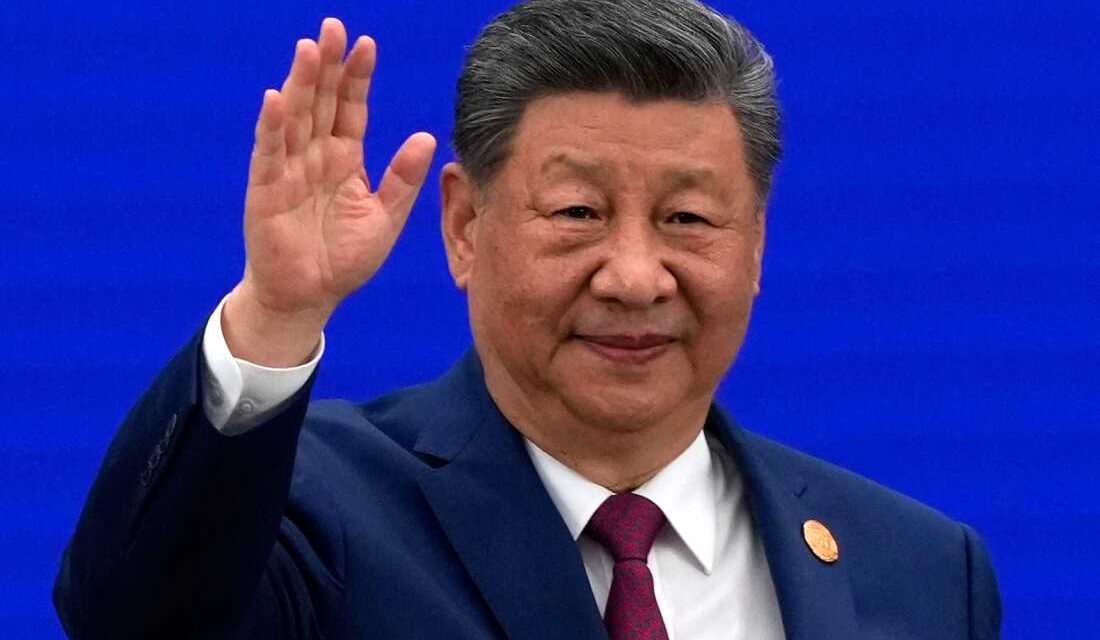
Chinese President Xi Jinping addressed the World AI Conference in Shanghai on Friday, July 17, 2026. He emphasized the need for global collaboration in the development and governance of artificial intelligence.
Xi expressed concerns over what he described as the excessive focus on national security, which he believes hinders technological advancement. He noted that AI should be a collective global effort rather than dominated by a single country.
US restrictions have limited China’s access to advanced technologies, prompting the nation to advance its own AI capabilities. This has intensified competition between the two largest economies.
“The development of artificial intelligence should not be a solo performance by any single country but rather a symphony of global cooperation,” Xi stated during the event. Attendees included leaders from Kazakhstan, Cambodia, Thailand, and U.N. Secretary-General António Guterres.
Xi reiterated China’s opposition to prioritizing one nation’s security over others in AI development. Over the next five years, China plans to offer 5,000 AI training opportunities to developing countries.
Countries in the Association of Southeast Asian Nations, the League of Arab States, the African Union, the Community of Latin American and Caribbean States, the Shanghai Cooperation Organization, and the BRICS countries will see expanded AI cooperation with China.
Additionally, China plans to provide 30 countries access to a Chinese-developed AI meteorological system for early warnings.
A day prior, 29 countries, including Pakistan, Russia, and Kazakhstan, signed an agreement with China to form a World Artificial Intelligence Cooperation Organization. This intergovernmental entity, headquartered in Shanghai, aims to promote global AI governance.
The annual AI conference featured over 1,100 companies and 1,400 guests. Tech giant Huawei showcased its Atlas 950 SuperPoD AI computing system.
Analysts suggest China is becoming an innovator in AI rather than trailing behind the U.S. The nation’s five-year plan until 2030 prioritizes advancements in AI among other scientific fields.
China’s open-source AI models, like DeepSeek, are gaining popularity as affordable alternatives to U.S. closed-source models, especially in the developing world.
 Israeli Leader’s Upcoming U.N. Assembly Speech Marked by Controversy
  United States Secures Arctic Defense Pact
  Debate Continues Over Virginia’s Data Center Energy Plans
 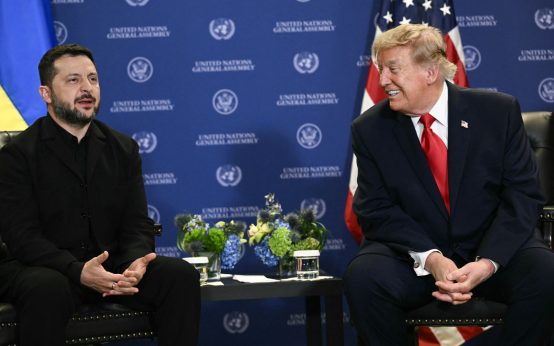 Trump’s Engagements at the UN: Focus on Ukraine and White House Developments
  Trump Administration to Admit 17,500 Afrikaner Refugees from South Africa
 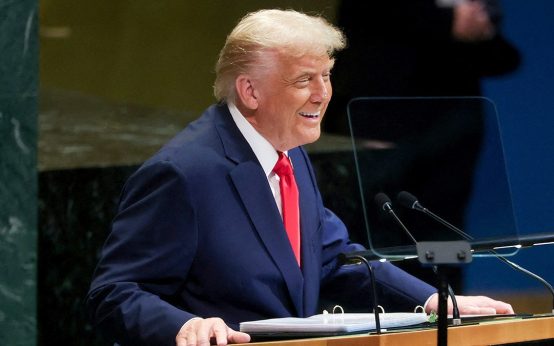 Trump’s Vision for Global Security: Iran, AI, and the Role of the U.S.